
Annual Report – April 1, 2025 - March 31, 2026
© His Majesty the King in Right of Canada, as represented by the Law Commission of Canada, 2026.
Cat. No. JL1-1E-PDF (Electronic PDF, English)
Cat. No. JL1-1E (Paper, English)
ISSN 1700-6120
Vision: The Law Commission of Canada is an independent agency providing innovative leadership and guidance for the responsive evolution of law in the lives of Canadians.
Mission: The Law Commission connects law and justice actors with expert research to identify pathways and possibilities for Canada’s future.
Engaging Canadians in the ongoing and dynamic evolution of law.
Shauna Van Praagh, President - Sarah Elgazzar, Commissioner and 2025 Vice-President - Renée Cochard, Commissioner - Aidan Johnson, Commissioner and 2026 Vice-President - Kevin O'Shea, Commissioner

About our emblem: The complex beauty and depth of the maple leaf both represent and inspire the work of the Law Commission. The Law Commission’s raison d’être – living law, pursuing justice, renewing hope – is captured by the colours and reflected in the experience and commitments of people across this land. The four intersecting and unfinished circles, etched in gold along the veins of the leaf, indicate the intersecting vocations of our projects – dream, repair, build, share – each carried out through conversation and collaboration.

President's Message
 Shauna Van Praagh, President
On behalf of the Law Commission of Canada, I am delighted and truly proud to present this Annual Report for the 2025-2026 year. The Commission will celebrate its third birthday this June and readers of this Report will recognize the determination, energy, and development typically associated with that age. Our projects are in full swing; we are forging and nourishing connections across the country; and we are responding and contributing to the world around us. Living law, pursuing justice, renewing hope: all inform everyday experience for Canadians and all shape central commitments of their Law Commission.
Puzzle-making offers an evocative metaphor for the work of the Commission in its third year. It can feel both daunting and exhilarating to identify and combine the many moving pieces of our projects and programs. Over this past winter, I participated in puzzle-making in four different contexts. During a visit to a public library, I spent time seated at the communal puzzle table. At the home of friends, I enjoyed helping their young children with shapes and colours. At the faculty lounge of a Canadian law school, I watched as professors paused, coffee in hand, to contribute pieces to a shared puzzle. Finally, the lunch table of the Law Commission's Ottawa office has recently turned into the site of ongoing puzzle activity. Across these varied contexts, puzzle-making incorporates abundant creativity and collaboration, interpersonal exchange and constant learning.
As demonstrated by this Annual Report, a remarkable number and range of people – including emerging scholars, university teachers, experienced jurists, public-serving organizations, and justice leaders – contribute to the Law Commission's puzzle-making work. We have commissioned original research papers, championed innovative workshops, and called on law schools across the country to support enriched public understanding of the importance of rule of law in our lives. We have supported imagination and discovery on the part of young jurists; we have shared the insights and vision of inspiring Canadians through our Obiter podcast; and we have encouraged journalists in investigating and sharing justice-related stories.
In a memorable moment during one of our roundtable discussions with community actors this year, a participant – asked what motivated the personal dedication on display – responded "I like building things." Across Canada this year, the Law Commission has witnessed, engaged with, and supported ambitious building projects in law and justice. Readers of this Annual Report will appreciate how we too like building things! Our research spaces and outreach initiatives are filled with extraordinary activity and accomplishment, all of which keeps us going and growing. Together with my fellow Commissioners, I offer warm thanks and appreciation to members of our formidable Advisory Council, to our important institutional partners, and to the Commission's energetic, high-achieving and devoted staff.
"The Commission will celebrate its third birthday this June and readers of this Report will recognize the determination, energy, and development typically associated with that age … With a unique responsibility and opportunity to act as catalyst for ongoing conversation and construction, we look forward to continuing to serve the people of Canada."
Puzzle-making captures many facets of this past year at the Law Commission. As a metaphor for law itself, however, it has significant limits. The pieces can't be gathered on one table. There is no fixed or predetermined image to follow. Instead, the picture is evolving, made up of parts that take shape in many sets of creative hands. There are countless contributors, all committed to responding to the law and justice needs and dreams of people across this land from generation to generation. The Law Commission of Canada is honoured to be one of those contributors. With a unique responsibility and opportunity to act as catalyst for ongoing conversation and construction, we look forward to continuing to serve the people of Canada.
Shauna Van Praagh
President
At a Glance – Snapshot of LCC Activity
The Law Commission of Canada has visited 31 locations since June 2023
| British Columbia |
|
|---|---|
| Alberta |
|
| Saskatchewan |
|
| Manitoba |
|
| Ontario |
|
| Quebec |
|
| New Brunswick |
|
| Nova Scotia |
|
| Prince Edward Island |
|
| Newfoundland and Labrador |
|
| Yukon |
|
| Northwest Territories |
|
| Abroad |
|
Highlights from the Law Commission of Canada between April 1st, 2025 and March 31st, 2026 include …
- 9 Listen & Learn roundtables in 5 provinces, 2 territories, and 11 cities
- 14 speaking events across the country (conferences and educational engagements)
- 3 Intergenerational Conversations in Law
- Research & Scholarly Development
- 4 commissioned research papers for the Charity and Law in Canada Project
- 9 commissioned reports for the Prison Law in Canada Project
- 4 commissioned reports for the Beyond Tomorrow Reports initiative
- 7 doctoral candidates from Canadian universities supported as part of the LCC Emerging Scholars Program
- 35 conferences and events supported across Canada
- 2 Rule of Law as Practice and Potential public lectures supported
- Publications & Knowledge Sharing
- 5 episodes of the Obiter podcast
- 4 quarterly LCC Bulletins
- 7 Charity Briefs
- Targeted Project Engagement
- 7 discussion circles for the Charity and Law in Canada Project
- 6 focus circles for the Prison Law in Canada Project
- Met with representatives from 106 organizations, including 8 organizations or institutions in other countries
Number of outreach and engagement activities recorded during the year: 90
Connected with approximately 2,500 individuals
The Work of the Law Commission of Canada
The Law Commission of Canada was established by Parliament in the spring of 1997 to consider the changing needs of Canadian society through the study, review, and innovative development of Canada's law and legal systems.
The Commission was re-established in June 2023 following a 17-year closure period. In its first publication Recall to Reimagine: (Re)Creating the Law Commission of Canada (2024), the Commission drew guidance and insights from its pastFootnote 1 to inspire and shape reimagined potential and pathways. Intergenerational exchange, Indigenous presence, the integration of local with global, the connections between guiding principles and evidence-based findings, innovative forms of outreach and dialogue: all are part of the contemporary landscape within which the Law Commission of Canada operates.
The Law Commission serves as meeting place and reference point on the dynamic map of law and justice in Canada. We provide space for the intersections of research, reflection, and reform. Our work intersects with that done within the distinctive spheres of legal practice, legal education, policymaking, regulation, litigation, and judicial decision-making. The framework for law and law reform adopted by the Law Commission is grounded in intersections of substantive realms, structures, systems, and jurisdictions.
Raison d'être: Living Law, Pursuing Justice, Renewing Hope
Living law underscores the dynamic engagement of Canadians with law in their lives.
Pursuing justice recognizes a shared endeavour ongoing across Canadian society.
Renewing hope signals optimism and regrowth, and responsiveness to future generations.
Consistent with the Law Commission's raison d'être, our projects are guided by the following intersecting questions:
- Have we considered input from and impact on people's lives?
- Have we connected law reform to the shared pursuit of justice across Canadian society?
- Have we incorporated inquiry from the perspective of our next generation(s)?
Intersections as Framework
Our intersections framework reflects an approach to law that guides the dimensions and scope of the Law Commission of Canada's projects and programs.
- Law in an intersection – Often perceived as a tool or mode of problem solving, law also serves an accompaniment or support function like that of a crossing guard in a busy and potentially dangerous intersection. Law can help people get to where they need to be.
- Law at an intersection – The paths of law intersect with other paths to expertise, knowledge, and capability. The operation of law may be marked by unique considerations and constraints, but it coexists with other modes of understanding, exploring, and organizing social life.
- Law as an intersection – Law is a site of movement and activity that incorporates the complex identities, power dynamics, and segments of the societies within which it evolves. In a context of constant exchange, law supports and shapes human relations and endeavours from generation to generation.
- Law of an intersection – The law of an intersection is not contained in any one formal document. Legal traditions, systems, jurisdictions, and languages encounter and coexist with each other throughout Canada. Any given space may include a mix of formal regulations, informal practices, written rules and unwritten norms.
Compass: Dream, Repair, Build, Share
Four distinct yet intersecting vocations of the Law Commission's program of research and outreach serve as points on a compass to navigate the reflection and engagement associated with meaningful law reform.
Dream: The Commission's work anticipates and may play some role in influencing future directions and development of law. It invites us to look to the horizon, to embrace uncertainty, to move beyond the visible challenges of the moment.
Repair: The Commission may identify areas in which structures, rules or practices appear to be broken, and where a restart or rethink might be needed. Here, the accounts and suggestions of people with tangible experience are particularly significant, and concrete recommendations are particularly valuable.
Build: The Commission may strengthen connections or forge links across spheres including those of research, practice, policymaking, regulation, litigation, and judicial decision-making. Especially important in the face of divisive polarization in public discourse, the creation or reinforcement of such bridges works to support productive exchange and ongoing conversation.
Share: The Commission can contribute to meaningful legal literacy and enrichment of legal knowledge. Obviously but not exclusively the domain of formal university programs, learning about and understanding law is important for all participants in Canadian society – at all ages and for all kinds of reasons.
Working at the LCC – In the words of our fellowsFootnote 2
As the third cohort of Fellows, we have joined the Law Commission of Canada at a moment defined by both continuity and transition – still refining how projects move through successive stages of development.
Building on the work of the Law Reform Commission of Canada (LRCC) and the first nine-year period of the LCC, the renewed Commission has adopted intersections as a central framework for understanding and carrying out its mandate, linking its research and outreach to intersecting commitments to living law, pursuing justice, and renewing hope. That framework invites us to think in polycentric terms about how institutions exercise authority and how the Commission can best participate in conversations about the evolution of law. We see the Commission as a catalyst for legal change that understands law reform as more than the search for technical fixes to discrete legal problems.
As Fellows we work with the nature of social problems, voices and experiences of communities, and effective facilitation of constructive exchange. We understand our efforts to underpin the broader task of stewarding dynamic legal norms in Canadian society.
- Tiran Rahimian Bajgiran, Stephanie Belmer, Mackenzie Claggett, and Amélia Souffrant, 2025-2026 Fellows
The strength of the Law Commission of Canada may well reside in the fact that it wields no power. In this, it can attend to the subtle forces that shape the law: those that unfold in the everyday gestures through which each person – often without realizing it – bends the course of things, and in so doing, creates and transforms norms. Released from the urgency of the present and the imperatives of power, the Commission can turn its gaze toward wider, higher horizons, and question the law as it is and as it might yet become. Elsewhere, the law is declared, decided, and imposed; here, it is encountered in listening, pursued through inquiry, and held open to the force of persuasion.
- David D'Astous, 2024-2025 Fellow
LCC Projects and Programs
2025-2026 has been marked by multifaceted initiatives and developments at the Law Commission of Canada. Activities associated with the LCC's programs and projects are described in the coming pages, presented as components of the intersecting parts of our raison d'être: living law, pursuing justice and renewing hope.
Readers will notice the LCC's signature combination of reliance on scholarly research, engagement with community-based actors, and outreach to members of the Canadian public.Footnote 3 The intensity and dynamism of projects and programs at the LCC rely on imagination, integrity and energy: readers will discover that all are amply evident.
The principal highlight of this year comes in the form of the Law Commission's Rule of Law Commitment. Responsive to this moment in our history, and uniquely situated to contribute to a shared responsibility, the LCC is proud to take on a significant role in nourishing knowledge, reflection and participation related to the meaning and practice of rule of law in Canada. Readers will learn of our forthcoming "Rule(s) of Law(s) Collage", preparation of Foundations of Canadian Law materials for lawmakers, and organization of a public lecture series entitled "Rule of Law as Practice and Potential".
The LCC's ongoing major projects on Charity and Law in Canada and Prison Law in Canada rely on a combination of the commissioning of research papers and the hosting of focused discussions. As readers will discover, this year was marked by productive engagement with both expert authors and experienced actors, and the LCC looks forward to sharing their insights as these projects evolve. In addition, readers will find that our series of Beyond Tomorrow Reports – devoted to looking to issues in law over the horizon – is well underway in the form of five forthcoming commissioned papers complemented by community outreach. So too is our Emerging Scholars program aimed at doctoral students as tomorrow's law teachers and researchers. Further evidence of the LCC's emphasis on youth, intertwined with the integration of Indigenous insights, comes in the form of Intergenerational Conversations in Law. Readers will learn that the LCC was honoured to support 35 conferences, workshops, and seminars across the country, all of which enrich law-related knowledge and nourish justice-building participation. They will be reminded of the Commission's continuing partnership with the Canadian Bar Association in the form of a Journalism Fellowship, and we are happy to share in-depth law and justice pieces written by 2025 Journalism Fellow Linda Besner. Finally, readers will feel encouraged to listen to the five newly recorded episodes of the LCC's podcast, Obiter, featuring hope-filled dialogues with inspiring leaders.
As demonstrated throughout this section of the Report, the Commission aims to support constructive conversations and innovative pathways in the constant evolution of law and justice in Canada. As existing projects move to completion, new directions will be explored; as ongoing programs develop, they will remain dynamic and responsive to the people and country they serve.
Rule of Law Commitment
In launching its Rule of Law Commitment in January 2026, the Law Commission took on a significant and unique role in supporting enriched understanding and perpetual renewal of rule of law in Canada.
Framing the LCC's Rule of Law Commitment
Over this year, "rule of law" has received intense and deserved attention. While Canada ranks highly with respect to rule of law in its institutions, structures, and culture – public literacy, confidence, and participation related to the notion require constant investment.
Elements of rule of law generally include structure and stability, consistency and fairness, accountability and restraints on the exercise of authority. Foundational in nature and thus somewhat invisible, these are principles that require ongoing attention for their vitality. They can be identified and implemented in all corners of our lives: from kindergarten to high school, sports teams to workplaces, townhalls to legislative assemblies to international bodies. People are subject to the rule of law, but they are also responsible – individually, collectively and institutionally – for shaping and nourishing it. In other words, sustaining the rule of law is an undertaking shared by all of us: a collective obligation exercised in our daily lives and interactions.
In Canada, the multifaceted meaning and potential of rule of law is underscored by the coexistence of several legal traditions. All legal traditions, including common law, civil law, and Indigenous legal orders, have their own stories and sources, formats for decision-making, modes of ensuring structure, and mechanisms for change. All provide constraints in the name of strength and sustainability while supporting constant and creative adaptability. Together they reflect and reinforce a plural, always shifting, and even multi-directional, reality and promise for rule of law in our country – perhaps captured more accurately by "rule(s) of law(s)".
The LCC's outreach and engagements this year underscored the desire to nourish public understanding of, and participation in, rule of law. The LCC heard that Canadians are keen to think and talk about rule of law in concrete and productive ways. The LCC was urged to open space for deeper and more nuanced understandings of rule of law – going beyond reference to trust in state institutions to ways in which our everyday lives incorporate meaningful principles and structures of law and justice.
Our Rule of Law Commitment recognizes that stewardship of rule of law in Canada and beyond is a broad, never-ending, and necessarily shared endeavour. Through a series of interlocking initiatives and projects – some newly launched, and others already in place – the Commission aims to foster knowledge, connection, exploration, reflection and participation related to the meaning and practice of rule of law.
|
From the LCC's What We Heard Report (July to December 2025):
|
Elements of the LCC's Rule of Law Commitment
Rule(s) of Law(s) – A Cross-Canada Collage
An opportunity for Canada's law professors to contribute to a collection of short, compelling essays for the Canadian public, the Collage will illustrate rule of law challenges and possibilities across a wide range of domains and perspectives in a thought-provoking and accessible format. Essays were received by the LCC in spring 2026 and will be published later this year.
Foundations of Canadian Law – A Resource for Lawmakers
A guide setting out resources and materials focused on the foundational elements of Canada's constitutional framework, legal traditions, and administrative and regulatory systems that will help build a critical understanding and knowledge on the part of those responsible for governance throughout our country. The LCC looks forward to making this resource available to both lawmakers and members of the Canadian public.
Public Lectures – Rule of Law as Practice and Potential
Hosted throughout 2026 by faculties of law across the country, the public lectures are intended to explore a wide range of dimensions, issues, and themes related to rule of law. 15 institutions answered the LCC's call, reflecting the substantive, generational, regional, and linguistic perspectives of Canada's law schools.
Lectures delivered in March 2026 (2):
- Lecture delivered by Supreme Court of Canada Justice Andromache Karakatsanis at the University of Manitoba
- Lecture delivered by Bob Rae at Osgoode Hall Law School
Forthcoming lectures in 2026 (13):
- University of Victoria
- University of British Columbia
- Thompson Rivers University
- University of Saskatchewan
- University of Windsor
- University of Toronto
- Toronto Metropolitan University
- Queen's University
- University of Ottawa
- McGill University
- Université du Québec à Montréal
- Université Laval
- Dalhousie University
Charity and Law in Canada
The Law Commission of Canada's first major collaborative research project, Charity and Law in Canada, includes (1) a collection of commissioned papers by academic scholars and expert practitioners, and (2) cross-country community outreach and engagement.
In 2025-2026, the LCC organized and hosted six discussion circles with members of Canada's charitable sector in Calgary, Charlottetown, Montreal, Niagara, St. John's, and Yellowknife. Reflections and insights from each discussion circle are captured in Charity Briefs prepared by the LCC in collaboration with participants and posted on our website. As of March 2026, the LCC had commissioned 19 research papers by 24 authors on topics ranging from the role of charitable organizations in Canada's democracy to the history of charity and related concepts within Canada's legal traditions, from potential directions for governance reform to relationships between legal rules and charitable behaviour.
Charity is part of everyday life for people across Canada. Charitable behaviour, charitable giving, charitable interactions: all are understood to reflect human generosity and concern for collective welfare. Charity is central to an extraordinarily wide range of sectors, actions, commitments, and projects. Charities are the organizations that make this possible. They too are part of everyday life for Canadians. The Law Commission of Canada looks forward to sharing this project with policymakers, charitable organizations, and the Canadian public, and to inviting meaningful reflection, discussion, and action to support charity and charities in Canada.
In addition, the Wahkohtowin Law and Governance Lodge at the University of Alberta, with the support and collaboration of the LCC, hosted an online discussion circle to explore gifting, generosity, and care within Indigenous legal orders and what these concepts illuminate for the broader study of charity and law in Canada. On February 27, 2026, Indigenous legal scholars, practitioners, and knowledge-holders came together to share insights grounded in Indigenous legal traditions including Cree, Anishinabek, Mi'kmaq, Inuit, Coast Salish, Dene, and Gitxsan. The conversation incorporated reflections on how practices of giving and reciprocity function as foundational legal norms that structure authority, sustain relationships, and enable collective well-being.

What role do generosity, giving and care, within individual, family, community
and group interactions, play within Indigenous legal traditions? How do
Indigenous laws foster and support generosity, giving and care?
As underscored by the 2025 report from CanadaHelps (Trends in Charitable Giving 2018-2024), "charitable giving doesn't follow a steady path – it responds to the world as it is. Crises spark generosity, but they also expose fragilities… all point to a sector that's being reshaped".Footnote 4 This project at the LCC reflects this complex, shifting landscape.
People across Canada encounter charity every day. Charities employ roughly 11% of Canada's full-time workforce and represent about 8% of our gross domestic product.Footnote 5 From small to large, local to international, they exercise significant responsibility in the governance and flourishing of a contemporary and diversified society. Whether and how law in Canada – in multiple forms and at various levels – permits, encourages, facilitates, organizes, and regulates charitable activities and entities is the central question driving the LCC's work on this project.
Guided by scholars and experts, the range and substance of the research papers have been developed with the active support of the Commission. We look forward to publishing the papers over the coming months and to sharing the insights and pathways identified by the authors.
|
"[T]he Law Commission's ongoing project dedicated to charity in Canadian law continued to connect us to extraordinary individuals who support communities in a wonderfully diverse range of ways … [T]hey shared a truly infectious commitment to positive change – whether by encouraging young people through basketball, providing shelter for individuals and families, or influencing directions in social justice. There are real successes day after day, they told us. At the same time, significant hurdles underscore the need for constant flexibility and resilient collaboration." - Letters from the LCC President, Letter 29 (19 February 2026) |
Forthcoming Working Papers on Charity and Law
- Agroecology and Charitable Purpose in Canada's Agricultural Landscapes (Jamie Baxter)
- Canada's Legal Framework for Charity and Charities (Donald J. Bourgeois)
- Seizing the Opportunity: A Path to Meaningful and Future-Focused Funding Reform for Canada's Charitable Sector (Joanne Cave)
- Discretionary Decision-Making under the Registered Charity Regime (Kathryn Chan)
- Charity and Law: A Distinctively Canadian Past, Present and Future (Kathryn Chan)
- Caritas, Love, and Welfare: Foundations of 'Charity' in the Western Tradition (Helge Dedek)
- Humanitarian Charities under Canada's Anti-Terrorist Financing Regime (Anver Emon)
- Cruel Laws and Heartless Compliance: International Humanitarian Assistance Blocked by Economic Sanctions and AML/ATF Regulatory Frameworks (Marc Lemieux)
- Muhw stem tsu' thu' thaam u tu suleluhwtst, ts'I ts'u watul ch: The Obligation to Help One Another in the Island Hul'qumni'num Legal Tradition (Sarah Morales)
- Sustaining Charity (Peter Oliver)
- Advocacy by Charities and the Best Interests of Charitable Corporations (Benjamin Miller and Manish Oza)
- Regulating Charitable Activities – Why The Status Quo Is Not Working (Adam Parachin)
- Charity and the Charter: Aligning Charity Law with Constitutional Values, Rights, and Freedoms (Benjamin Perrin)
- Reframing Charity in Canadian Tax Law: Public Benefit and the Case for Statutory Reform (Donn Short, Michelle Gallant, and Darcy L. MacPherson)
- A Brief History of the Notion and Practice of 'Charity' through the History of English Common Law (Jennifer Sigafoos)
- The Canada Revenue Agency as Canada's Charity Regulator (Samuel Singer)
- The Varieties of Public Trusts: Charitable and Non-Charitable (Lionel Smith)
- An Independent Charitable Sector: The Need for a Coherent Framework to Distinguish Charity from Government (Deina Warren and Derek Ross)
- It's time to banish the for-profit ghosts from the Canada Not-for-profit Corporations Act (Lynne Westerhof and Heather Keachie)
Continuous outreach and engagement have complemented the research from the start. An initial discussion circle held in Ottawa in March 2025 was followed by circles over the 2025-2026 year in Edmonton, AB, Calgary, AB, Yellowknife, NT, Niagara, ON, Montreal, QC, Charlottetown, PEI, and St. John's, NL. They provided the LCC an opportunity to hear directly from people delivering the support and services on which individuals and communities depend. Readers of the Charity Briefs, prepared following the discussion circles, will find a portrait of the nature and needs of the charitable sector today, along with an account of the challenges and hopeful possibilities that lie ahead.
| Discussion Circles | Participating Organizations |
|---|---|
| Niagara, ON May 29, 2025 |
Southridge Community Church, Fort Erie Native Friendship Centre, Positive Living Niagara, OUTNiagara, Future Black Female, and Birchway Niagara |
| Yellowknife, NWT June 4, 2025 |
Arctic Indigenous Wellness Foundation, NWT Literacy Council, and the Yellowknife Women's Society |
| Charlottetown, PEI September 19, 2025 |
Canadian Mental Health Association (PEI Division), PEI Humane Society, PEI Association for Community Living, Queen Elizabeth Hospital Foundation, University of PEI Department of Development and Alumni Engagement |
| Calgary, AB December 1, 2025 |
ActionDignity, Aboriginal Friendship Centre of Calgary, Alpha House Society, Calgary Homeless Foundation, and Miskanawah |
| St. John's, NL November 26, 2025 |
Community Sector Council of Newfoundland and Labrador, Community Foundation of Newfoundland and Labrador, Saunders, Collins and Loeb LLP, and First Light – St. John's Friendship Centre |
| Montreal, QC January 30, 2026 |
Chez Doris, Équiterre, Montreal Community Cares Foundation, and Old Brewery Mission |

LCC-CBA Journalism Fellowship
In fall 2024, the Law Commission of Canada partnered with the Canadian Bar Association (CBA) to establish the LCC-CBA Journalism Fellowship. The one-year fellowship supports the production of a series of original pieces exploring critical issues in law and justice, while fostering awareness and appreciation of the role and future of Canada's laws and legal institutions. Through fact-driven inquiry and storytelling, journalists shed light on the challenges, tensions, and possibilities shaping contemporary society.
2025 LCC-CBA Journalism Fellow
Linda Besner held the inaugural LCC-CBA Fellowship. Through the 2025 year, she researched and wrote four in-depth articles, two of which were published in the winter of 2026:
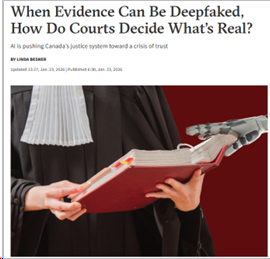
How Do Courts Decide What's Real?"
Published in The Walrus (January 23, 2026)
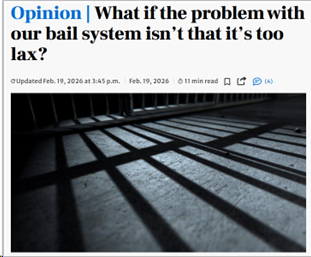
isn't that it's too lax?"
Published in the Toronto Star (February 21, 2026)
Besner's final two articles scheduled for publication in spring 2026 consider:
- the codification of Indigenous family and child welfare traditions; and
- the effects of the demise of regional news on the open court principle.
2026 LCC-CBA Journalism Fellow
Erik Pindera has been selected as the LCC-CBA Journalism Fellow for 2026. Pindera is a reporter for the Winnipeg Free Press whose journalism focuses on justice issues related to courts, corrections, law enforcement, and policymaking.
Through his fellowship, Pindera will produce a series of four articles exploring justice challenges in northern Manitoba. They will highlight challenges common to remote communities across Canada tied to logistics, infrastructure, resources, and cultural sensitivity.

in the weekend Features section of the Winnipeg Free Press.
LCC Journalism Hub
The Commission looks forward to launching the LCC Journalism Hub in spring 2026.
As a space for original law and justice reporting in Canada, the Journalism Hub will emphasize stories that align with the LCC's substantive projects (for example, Charity and Law in Canada, Prison Law in Canada) or reflect the LCC's commitment to incorporating Indigenous worldviews across its program of work. We hope to provide particular support to journalists in their first five years in the field.
The LCC Journalism Hub will feature both short-form and long-form pieces published on a Substack platform managed by the LCC.
|
"Lessons and insights are no doubt being drawn from the Blue Jays in many corners and contexts in the aftermath of this year's World Series. For the Law Commission of Canada, this year's baseball season leaves a significant imprint. It offers a challenge to an image of law as something only experts can truly understand. … Right off the bat, let's notice how people became followers of the Blue Jays regardless of how well they understood the complicated rules of baseball. No in-depth prior expertise was required to watch and cheer, ask questions when things got confusing, or develop an appreciation of the different kinds of pitches and the speed at which a fastball can travel. A very specialized vocabulary exists in baseball. … True appreciation of the rules that structure the game of baseball is possible even without deep expertise or experience." - Letters from the LCC President, Letter 27 (5 December 2025) |
Called to Action at the LCC
Integrating an Indigenous presence across and through projects and partnerships
Working in a land and country called to truth and reconciliation, the Law Commission is committed to incorporating and learning from Indigenous individuals, communities, and organizations throughout its projects, programs, meetings, and collaborations. This transversal approach guides every dimension of the LCC's work.
In 2025-2026, the Commission's projects and programs demonstrated this commitment in the following ways:
| The Charity and Law in Canada project includes a focus on Indigenous legal traditions and charitable organizations serving Indigenous communities. In February 2026, the Commission hosted a discussion circle in partnership with the Wahkohtowin Law and Governance Lodge at the University of Alberta, bringing together scholars to discuss notions of care, giving, and support within Indigenous communities. |
| The project on Prison Law in Canada integrates Indigenous perspectives and experience into the organization of focus circles and the selection of report topics. A focus circle with previously incarcerated Indigenous women highlighted experiences and challenges within the carceral system. |
| The 2025 LCC-CBA Journalism Fellow, Linda Besner, wrote about the codification of Indigenous family and child welfare traditions. The 2026 Fellow, Erik Pindera, will explore justice challenges in northern Manitoba, including those faced by remote Indigenous communities. |
| Emerging Scholar Andrea Menard (Royal Roads University) surveyed Indigenous legal professionals and academics on the alignment of legal profession consultation processes with the United Nations Declaration on the Rights of Indigenous Peoples. Emerging Scholar José Saldaña Cuba (McGill University) organized an intercultural dialogue among speakers from Mexico, Peru, and Treaty Six (Saskatchewan) on the revitalization of Indigenous justice in the Americas. |
| The Obiter podcast featured Duncan McCue in an episode exploring Indigenous journalism and storytelling as an act of reconciliation and bridge-building. |
| The LCC supported conferences and initiatives with significant Indigenous content and participation (for example, Feeding the Fire Gathering, Parole aux premiers peuples, Next Steps: Rebuilding Indigenous Law and Legal Orders). |
| Throughout our travels, the LCC prioritized meeting with actors involved in Indigenous law and justice (for example, the Teslin Tlingit Justice Council, the Mi'kmaq Confederacy of PEI, and the Indigenous Wellness Foundation in Yellowknife). |
Intergenerational Conversations in Law: Marking the 10th Anniversary of the TRC
|
"This year, as we look ahead to Truth and Reconciliation Day, September 30th, we mark a decade since Canada's Truth and Reconciliation Commission issued its Final Report and 94 Calls to Action. As we celebrate this 10th anniversary, the Calls are still sounding, action is still required, commitments are still crucial. The rhythm continues, generation after generation." - Letters from the LCC President, Letter 25 (30 September 2025) |
2025 marked the 10th anniversary in Canada of the Truth and Reconciliation Commission's (TRC) Calls to Action. For the Law Commission of Canada, the year marked a connected anniversary: 25 years since the publication of its first substantive report, Restoring Dignity: Responding to Child Abuse in Canadian Institutions.
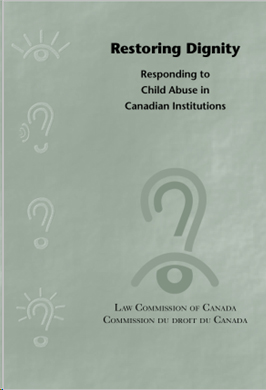
Responding to Child Abuse in Canadian Institutions" (2000)
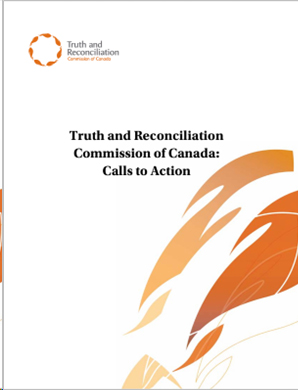
Calls to Action (2015)
In September 2025, the LCC launched Intergenerational Conversations in Law: Marking the 10th Anniversary of the Truth and Reconciliation Commission's Calls to Action.Footnote 6 Through this initiative, the LCC supported a series of intergenerational dialogues between current law students and Elders or other experts in Indigenous legal traditions.
Hosted by Canadian law faculties, the Intergenerational Conversations conversations explored the evolution of Indigenous legal traditions and Indigenous legal orders in Canada over the course of the Elder's lifetime; progress in the ten years since the TRC's Final Report; and the ongoing challenges and opportunities looking ahead to the next generation. Law students were invited to write short papers reflecting on lessons learned, continuing questions, and hopes for the future.
Participants in the Waskapitan Pimatisiwin Otci roundtable at the University of Ottawa (December 2025), the Dialogue intergénérationnel : traditions juridiques et savoirs autochtones at the Université de Montréal (March 2026), and the Voices of Truth and Future Pathways conversation at the University of Victoria Centre for Indigenous Law (March 2026) examined existing and renewed approaches to strengthening relationships and reconciliation.
The coincidence of these two anniversaries in 2025 offered the Commission an occasion to support learning and exchange about remaining and renewed commitments to the dialogue and relationship-building on which meaningful reconciliation depends. The Intergenerational Conversations in Law initiative will unfold over the coming year, extending the reach of these dialogues and deepening our understanding of law's role in recognition, repair, and renewal.

Voices of Truth and Future Pathways
Hosted by the University of Victoria (Victoria, BC, March 12, 2026)
Restoring Dignity (2000): 25 years since publication
Restoring Dignity: Responding to Child Abuse in Canadian Institutions, published in 2000 as the first substantive report of the Law Commission of Canada, provided a constructive and wide-ranging framework of analysis aimed at the general Canadian public. Structured around eight identified human needs (remembrance, acknowledgement, apology, accountability, access to therapy or counselling, access to education, financial compensation, prevention and public awareness), it constituted an extensive and thoughtful exploration of potential responses to institutional abuse of children.
The report identified a range of mechanisms in Canadian law and society to repair harm and restore dignity. Recommended actions specific to the context of residential schools for Indigenous children included a comprehensive settlement scheme, official apologies, and the establishment of a Truth and Reconciliation Commission. Beyond the responses and the developments that followed the publication of Restoring Dignity, the report is connected to a broader cultural and societal shift in Canada's understanding of harm and accountability.
Prison Law in Canada
The Law Commission of Canada's Prison Law in Canada project seeks to examine incarceration in this country, to inspire reflections about the carceral system, and to contribute to ongoing efforts to build a just, safe, and secure Canada. Launched in August 2024, the project consists of (1) a series of reports on selected topics on prison law and (2) a series of focus circles with individuals bringing expertise in, or experience with, the carceral system. Topics selected for commissioned reports have been informed by the focus circles and aim to illuminate invisible or underexplored issues related to incarceration.
We look forward to sharing the 13 commissioned reports starting in fall 2026.
Selected Topics on Prison Law
2025-2026 – 9 reports were commissioned:
- Marie Manikis on Gladue principles and the Canadian Victims Bill of Rights
- Kate Mitchell on the effectiveness of prisoner grievance systems
- Chloé Leclerc and Charlotte Bouchet on the use of short terms of imprisonment
- Catherine Rossi on regional disparities in access to alternative measures programs
- Debra Parkes on the role of life sentences in sentencing law
- Adelina Iftene on the health needs of elderly inmates
- Michael Law-Smith on the notion of prison as "last resort"
- Lisa Kelly on youth incarceration
- Efrat Arbel on the contours of punishment in immigration
2024-2025 – 4 reports were commissioned:
- Lisa Kerr on access to post-secondary education in carceral institutions
- Jeffrey Kennedy on diverse normative structures within the correctional system
- Robin Hansen on the intersection of the rights of mothers and children
- Philip Goodman and Fernando Avila on prison visitation processes
In 2025-2026, the LCC convened six focus circles with participants from across the country, including academic experts, formerly incarcerated individuals, family members of incarcerated individuals, and interested civil society organizations. Our conversations underscore how the pursuit of justice and the renewal of hope animate this project.
2026 marks the 30th anniversary of the coming into force of the sentencing reforms introduced by Bill C-41. The legislation introduced the codification of sentencing principles in the Criminal Code, with the goal of reducing reliance on incarceration as a punishment and expanding the use of restorative justice in sentencing. Those changes have played a pivotal role in contemporary conversations about when incarceration is appropriate and the form non-carceral punishments should take. This historical context underscores the importance of this project and the intersection of Canada's carceral system with fundamental values including liberty, equality, human dignity, and security of the person. The far-reaching consequences of incarceration are felt not only by those who are imprisoned, but by all Canadians inevitably affected by decisions about who is incarcerated and how incarcerated individuals are treated.
Conference Support Program
In 2025-2026, the Law Commission of Canada provided support to 35 conferences, seminars and workshops across Canada. The LCC is proud of its role as a facilitator of dialogue and engagement on issues related to law and justice.
The LCC's conference support program was launched in fall 2024 in accordance with section 4(c) of the Law Commission of Canada Act, which provides that the Law Commission may "sponsor or support conferences, seminars and other meetings". Submissions are invited on a triannual basis for modest financial support of conferences and initiatives, including seminars, workshops, meetings, and other events that fall within the LCC's mission of engaging the people of Canada in the ongoing and dynamic evolution of law. The chosen conferences align with the LCC's vision of living law, pursuing justice, and renewing hope.
Events supported by the LCC are regularly promoted through its social media channels to enhance visibility, broaden public engagement, and support knowledge dissemination.
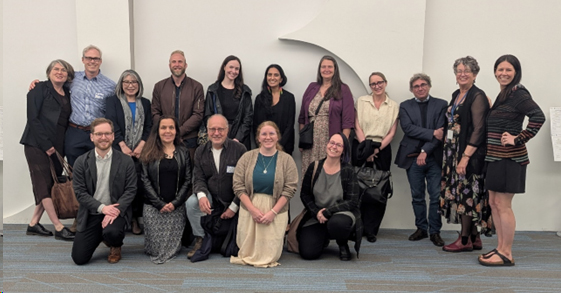
Hosted the 2025 People-Centred Justice Workshop at the
University of British Columbia's Peter A. Allard School of Law,
May 30-31, 2025
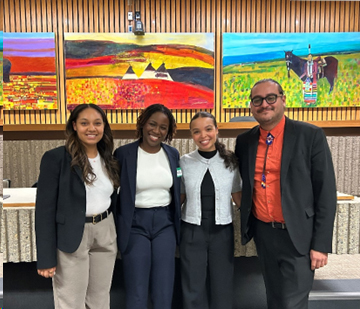
was an invited speaker at the "See Yourself Here" conference
Hosted by the University of Manitoba's Black Law Students' Association
in collaboration with the Manitoba Indigenous Law Students' Association,
March 5, 2026
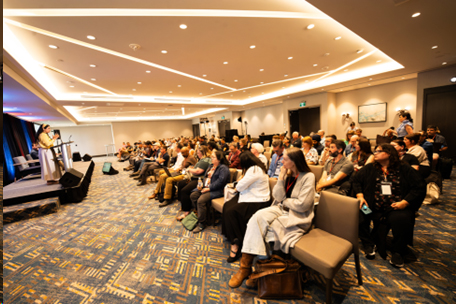
held its annual conference in Calgary, with a focus
on the complex and evolving role of journalists
in serving the Canadian public
May 30-31, 2025
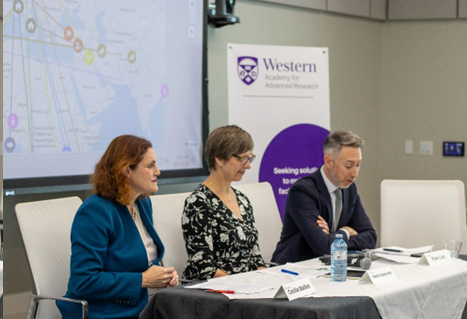
"Possibilities for Peace Conference"
– an interdisciplinary discussion among leading
academics, diplomats, policymakers, and artists
from across Canada and beyond
October 2-3, 2025
Obiter: The LCC's Podcast
The Law Commission of Canada's podcast, Obiter, continues as a vibrant and accessible platform for reflection and conversations about law and justice.
In 2025-2026, the LCC recorded five episodes featuring guests spanning diverse disciplines, lived experiences, community affiliations, and levels of public recognition. Our podcast listeners will learn about journalism in Indigenous communities, the shaping of Canadian post-secondary education, the bridging of faith and civic engagement, the dimensions of justice reporting, and the importance of writing in law.
The term obiter, from the phrase obiter dicta, refers to words not understood to be crucial to what a case in law stands for. Passages labelled "obiter" sometimes become the most important and enduring. Inspired by this idea, the Obiter podcast highlights perspectives otherwise overlooked or unseen. By introducing listeners to a rich intersection of individuals, ideas, and issues, the podcast episodes invite us into the many spaces in which law operates, evolves, and generates hope.

Stories of Justice: Law, Journalism, and Indigenous Perspectives with Duncan McCue
Duncan McCue is an award-winning journalist known for his work with CBC, including as host of Cross Country Checkup and correspondent for The National. The conversation explores his career in journalism alongside his current work running an innovative program at Carleton University focused on journalism in Indigenous communities.
Through his work, McCue demonstrates that telling stories with respect, integrity, and care is not only an ethical responsibility, shared by journalists and jurists alike, but also a powerful act of reconciliation and bridge-building.

Education, Law and Democracy with Daniel Jutras (episode recorded in French)
Daniel Jutras is the Rector of the Université de Montréal. Drawing on his personal and professional path, he reflects on the fundamental role of universities in shaping citizens, transmitting knowledge, and sustaining a vibrant public debate.
The conversation explores the transformations affecting the academic world, including challenges related to teaching, the impact of growing skepticism toward expertise and knowledge in a context of rising populism, and the risks this poses to democratic institutions and the rule of law.

Hope Is a Muscle: Faith, Law, and Living Together with Rabbi Lisa Grushcow
Rabbi Lisa Grushcow is a distinguished author and public thinker who contributes regularly to conversations on pluralism, interfaith dialogue, and the evolving role of religious voices in civic life. In this episode, she brings scholarly insight and practical wisdom to questions of how institutions navigate difference, uphold tradition while embracing reform, and advocate for justice in an increasingly secular society.
Her reflections remind us that law does not stand apart from the human story – it evolves alongside individuals and communities, shaped by courage, compassion, and a willingness to engage meaningfully with perspectives beyond our own.

Journalism, the Law, and Safeguarding Democracy with Yves Boisvert (episode recorded in French)
Yves Boisvert has been a journalist with La Presse since 1988. His writing brings together individual stories and broader social issues, helping make law and justice more visible, more understandable, and more accessible to the people they serve.
The discussion invites listeners to appreciate that law and justice do not live only in statutes or in courtrooms, but also in the stories that we tell, the questions that we ask, and the exchanges that we seek out.

The Power of Law, Writing and Global Engagement with the Right Honourable Beverley McLachlin
Beverley McLachlin is the longest serving Chief Justice of the Supreme Court of Canada and the first woman to hold that role. From the small prairie library in Southern Alberta to the classroom, from the bench to the page and global stage, her remarkable journey illustrates the ways in which law is lived across places, roles, and generations.
The exchange invites listeners to consider how narrative and imagination can deepen our understanding of challenges, humanize complex questions, and open new pathways for thinking about justice.
Each podcast episode explores distinctive and often unexpected ways in which law both shapes, and is shaped by, the lives of featured guests. In doing so, Obiter reveals the complexity, creativity, and human impact of law. By broadening perspectives on law and justice, the podcast helps listeners, jurists and non-jurists alike, understand that they, too, can influence the shape and direction of law. They too are law reformers.
Emerging Scholars
The Emerging Scholars Program stands as a cornerstone of the Law Commission of Canada's commitment to renewing hope by investing in the next generation of law reformers. Designed as a structured, four-month opportunity for selected doctoral candidates at Canadian universities, the program invites emerging scholars in law and law reform to bridge their thesis research with meaningful community engagement.
The program's format is both rigorous and supportive. Scholars receive $10,000 in financial support and are invited to present their dissertation project to the LCC, prepare a detailed concept note for a proposed engagement activity, implement that activity (which may take the form of a workshop, public presentation, podcast episode, or community roundtable), write a brief reflection paper for the Commission, and participate in a roundtable with their peers. These elements encourage our Emerging Scholars to solicit perspectives from affected communities, collaborate with organizations or groups beyond the academy, and experiment with public facing formats.
In 2025-2026, the LCC selected four doctoral candidates for the program.
Summer 2025 term

University of Ottawa
Natasha organized a series of four workshops delivered in partnership with the Law in Action within Schools (LAWS) program and the Ontario Justice Education Network (OJEN). Through dialogue and art, youth reflected on their experiences and perspectives on justice, contributing to a permanent exhibit in the Downtown Legal Services building in Toronto.
Fall 2025 term

McGill University
José organized a virtual intercultural dialogue featuring speakers from Mexico, Peru, and Treaty Six on the revitalization of Indigenous justice in the Americas, highlighting comparative approaches to Indigenous legal traditions and their interaction with state legal orders.

Université de Montréal
Sébastien produced and posted a series of videos on YouTube and on LinkedIn sharing his research and reflections on normative practices in digital environments, particularly on how corporate compliance efforts impact the effective exercise of individual rights.

Royal Roads University
Andrea conducted a pulse survey of Indigenous legal professionals and academics examining whether recent legal profession consultation processes met the standard of Free, Prior and Informed Consent (FPIC) under the United Nations Declaration on the Rights of Indigenous Peoples (Article 19).
Our Emerging Scholars offer examples of cutting-edge doctoral work in Canada and illustrate various venues and formats used to engage people in conversations about law and justice. Through the program, the LCC is proud to foster innovative legal research and encourage meaningful public engagement with law reform.
Beyond Tomorrow Reports
Commissioned and published on a periodic basis, Beyond Tomorrow Reports – an initiative launched in early 2025 – identify and address challenges and issues in law for Canada's next generations.
In 2025-2026, the LCC commissioned four reports to follow the one report commissioned the previous year. We look forward to sharing the Beyond Tomorrow Reports with members of the Canadian public curious about the evolution of law beyond the horizon.
Commissioned March 2025
- "Immigration Law and Governance in Quebec and Canada": France Houle (Université de Montréal) explores the future of Canadian immigration law and governance, drawing lessons from the contemporary Quebec-Canada model and experience.
Commissioned June 2025
- "Involuntary Psychiatric and Addiction Treatment in Canada": Emmanuelle Bernheim and Jean-Laurent Domingue (University of Ottawa) explore the legal and policy frameworks of involuntary psychiatric and addiction treatment across Canada.
- "Corporate Restructuring in a Changing World": Stephanie Ben-Ishai (York University) explores shifting power dynamics in corporate restructuring under the Companies' Creditors Arrangement Act and related legal frameworks.
Commissioned January 2026
- "Governance of Human-Derived Data in Canada": Teresa Scassa (University of Ottawa) and Jay Shaw (University of Toronto) explore gaps in Canada's legal framework for data governance of human-derived data.
Commissioned March 2026
- "The Future of Freedom of Expression": Richard Moon (University of Windsor) will examine the place of freedom of expression in Canada's changing communication landscape.
Elements of Beyond Tomorrow Reports:
- Ambition and capacity to explore underexamined issues and sites in law
- Embrace of complexity of the issues at stake and an ability to explain and work with that complexity (including dimensions along a spectrum from global to local)
- Research methodology that integrates multiple disciplines, sectors and / or legal traditions
- Commitment to articulating reform pathways in the ongoing evolution of law
- A plan for public engagement in the form of a partnership or outreach activity including at least one community-based actor
The LCC accepts proposals on an ongoing basis from established scholars at Canadian universities. Selected proposals are focused on law and justice for tomorrow and beyond. Authors are invited to draw on critical informed research to articulate constructive pathways and possibilities for law reform. In keeping with the Commission's intersections framework for engaging with law and shaping law reform, commissioned authors incorporate collaborative engagement with community-based actors into the production of their reports.
| "With the Beyond Tomorrow Reports, we count on senior scholars to guide law reform with lasting impact for future generations. With the Emerging Scholars Program, we support the next generation of law reformers by including the Law Commission of Canada on the path of tomorrow's teachers and researchers. The authors of Beyond Tomorrow Reports might be likened to mature trees, solidly rooted and responsible for sending out seedlings for the future. The Emerging Scholars are more like young saplings, past the seedling stage but still in need of care as they grow and stretch." - Letters from the LCC President, Letter 22 (May / June 2025) |
Collaboration and Engagement
Listening and Learning
Initiated in 2023, the Law Commission of Canada's Listen & Learn sessions with groups of scholars, jurists, and law and justice actors identify issues of the day or on the horizon. Listen & Learn events, big and small, provide an opportunity to hear directly from individuals with a wide range of interests and ideas; for participants, they serve as a site of beneficial exchange, allowing them to learn from each other and to form or strengthen connections.
In 2025-2026, the LCC held nine Listen & Learn roundtables across five provinces and two territories. The LCC anticipates organizing a Listen & Learn visit to Nunavut in the upcoming year, after which the LCC will have hosted sessions in all provinces and territories. In addition, the LCC has hosted Listen & Learn roundtables at almost all faculties of law across the country. This year's sessions included civil society organizations from a variety of sectors and law faculties at the University of Sherbrooke, the University of Calgary, the Université du Québec en Outaouais, the University of New Brunswick, McGill University and the University of Windsor.
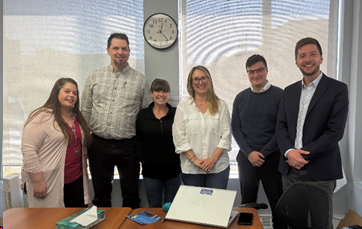
(pictured first and second from the right), with members of the Court Services Branch and
the Specialized Courts Team, Department of Justice, Government of Northwest Territories
(Yellowknife, NT, June 3-4, 2025)
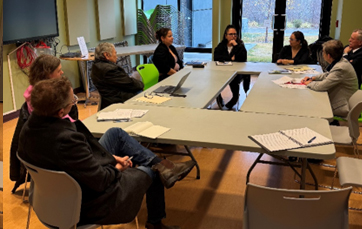
Special Prosecutions Unit (Government of Yukon),
the Yukon Public Legal Education Association,
and the Council of Yukon First Nations
(Whitehorse, YT, October 21-22, 2025)
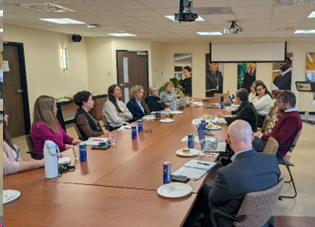
(Sherbrooke, QC, November 14, 2025)
The LCC's What We Heard reports set out the projects, preoccupations, and possibilities that emerge from our engagements in listen and learn mode. These documents paint a portrait of hopes, aspirations, commitments, responsibilities, priorities, and directions found across the diverse range of actors involved in the evolution of law in Canada.
Two What We Heard reports were released this year: a first covering the period from January to June 2025, and a second report covering the period from July to December 2025. Reports covering these same periods for 2026 will be published on the LCC website. These reports document both recurring and newly emerging themes across a range of areas, including the rule of law and democracy, health and law, poverty and housing, meeting community needs, trust in institutions and accountability, access to justice and community connections, self-government and reconciliation, and the evolution of society and its impact on future generations.
| "Faculties of law are exploring initiatives in experience-based teaching and learning within and beyond classrooms; researchers are designing justice-related projects into which voices and experiences of youth are incorporated; community organizations are enriching the work of student volunteers in legal information clinics. We heard from appellate court judges grappling with principles and precedents to respond to multifaceted problems, from law deans embracing the responsibility of leadership and innovation, and from lawyers providing guidance in a climate of uncertainty. In the world of law and justice, team players are showing up, learning from practice, investing in long-term growth and value, and inspiring each other and the people whose lives they might touch. They are contributing to the changing ways in which issues are examined, stories are shared, and responses are shaped." - Letters from the LCC President, Letter 27 (5 December 2025) |
Talking and Teaching
In 2025-2026, the Law Commission of Canada participated in 14 speaking engagements reaching diverse academic, professional, and public audiences. These activities fall into two categories: teaching and pedagogical engagement, and conference and public-facing contributions.
Teaching and Pedagogical Engagements
Over the year, LCC President Shauna Van Praagh engaged with students and educators, strengthening the relationship between legal education and law reform. Examples include: Réimaginer les liens entre la réforme du droit et l'éducation juridique, a workshop at the University of Ottawa; Approaching Law Reform with a Legal Pluralist Sensibility, a seminar at the University of Saskatchewan; and Tort Law, Legal Education and "Law Reform", a lecture at the University of New Brunswick.

as presenters for the workshop entitled
Réimaginer les liens entre la réforme du droit et l'éducation juridique
(Ottawa, ON, June 5, 2025)
Conference and Public Engagements
Throughout the year, the LCC President participated in conferences, symposia, and public events, contributing to national and international conversations on law reform.
Spring and summer 2025:
- Dialogues on Private Law: Bijuralism at the Supreme Court of Canada, held as part of the 150th Anniversary Symposium of the Supreme Court of Canada.
- Legal Pluralism as Frame for Law Reform (Imagined Conversations with Rod Macdonald) at the Annual Meeting of the Federation of Law Reform Agencies of Canada.
Fall and winter 2025:
- Public Legal Education and Law Reform: Rule of Law in Action (keynote address) at the 2026 Annual Conference of the Public Legal Education Association of Canada.
- The Law + Architecture: Reimagining Lincoln Alexander Law exhibition at Toronto Metropolitan University.
- The Annual Meeting of the American Society of Comparative Law, hosted by McGill University Faculty of Law.
- The Role of Law Schools in Advancing the Rule of Law conference hosted by Osgoode Hall Law School.
- Democracy, the Rule of Law, and Independence organized by the Canadian Institute for the Administration of Justice.
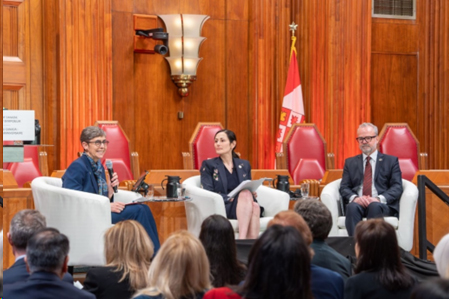
and Lionel Smith at the 150th Anniversary Symposium of the Supreme Court of Canada
(Ottawa, ON, April 11, 2025)
A full list of speaking engagements by members of the Commission is provided in the section below LCC across Canada.
|
Commissioners on the move Over the year, Commissioners Renée Cochard, Sarah Elgazzar, Aidan Johnson and Kevin O'Shea engaged in a wide range of outreach and knowledge-sharing activities across the country. They were present in key national forums, including the Federation of Law Reform Agencies of Canada (FOLRAC) annual meeting and the Canadian Institute for the Administration of Justice (CIAJ) conference on Democracy, the Rule of Law, and Independence. The participation of Commissioners in important interdisciplinary and community-based initiatives underscores the LCC's support for law reform initiatives throughout Canada. A conference on Joyce's Principle highlighted ongoing efforts to advance equitable and culturally appropriate healthcare for Indigenous peoples; the launch of the "Next Steps: Rebuilding Indigenous Law & Legal Orders" program at the University of Victoria demonstrated the importance of revitalizing Indigenous legal systems. Across these activities, Commissioners encountered diverse perspectives on justice – from carceral reform to positive peace – reinforcing a shared commitment to fairness and a shared appreciation of the fact that, while justice is difficult to define, its absence never goes unnoticed. All these experiences inform and enrich the LCC's work. |
Ongoing Outreach
The LCC Bulletin continues to support the Commission's outreach activities as a quarterly platform for sharing updates, highlighting partner initiatives, and tracking developments in law reform across Canada. As an ongoing series, the President's monthly letters continued to serve as a bridge between our engagements and research and the broader public – while providing glimpses of the day-to-day work of building and sustaining the Law Commission of Canada.
| "In Whitehorse in late October, we learned how the Public Law Library combines personalized front desk service with thoughtful care for rare books and strong support for the entire justice sector. Lawyers with the Department of Justice shared the cutting-edge and always dynamic nature of their concrete engagement with First Nations across the Yukon. From the Association franco-yukonnaise, we heard about efforts in place to strengthen support for the significant francophone community in the Territory. … Hosted on their territory by the Teslin Tlingit Council in their light-filled Heritage Centre, we learned of the striking accomplishments combined with high expectations tied to the negotiated and recently established community safety and corrections programs within the Nation's Administration of Justice agreement." - Letters from the LCC President, Letter 26 (30 October 2025) |
Who We Are
At the heart of the Law Commission are the people who bring its vision to life. The dynamic, multi-shaded maple leaf, intersected by four circles, symbolizes not only the LCC's guiding principles but also the collaborative spirit of those who drive its work.
The Commissioners, the members of the Advisory Council, the staff members – including Fellows and summer students – form the backbone of the LCC's success. Their collective energy, expertise, and commitment to the principles of living law, pursuing justice, and renewing hope enable the Commission to create meaningful, lasting change. It is through their collaboration that the LCC continues to evolve, adapt, and expand our influence, ensuring that our work remains relevant, inclusive, and forward-thinking in the face of an ever-changing legal landscape.
Commissioners
2025-2026 marked the first full year in which the Commission benefited from a full complement of Commissioners, as mandated by the Law Commission of Canada Act. It also marked the first occasion on which the LCC's Commissioners were able to meet with the President and the LCC team, in person at the Ottawa office. Commissioners Sarah Elgazzar (LCC Vice-President, 2025), Renée Cochard, Aidan Johnson (LCC Vice-President, 2026), and Kevin O'Shea provide ongoing, meaningful guidance and support in advancing the Commission's work.

and Commissioners Sarah Elgazzar and Kevin O'Shea
(Ottawa, ON, November 21, 2025)
Advisory Council
As stipulated by the Law Commission of Canada Act, the Advisory Council consists of 12-24 members, each appointed by the Commission to hold office for a term of up to three years with the possibility of reappointment. Members of the Advisory Council, demonstrate a wide variety of backgrounds, interests, languages, trajectories, responsibilities, and workplaces, all of which inform the wisdom and insights they bring to the Commission. In fall 2025, Bianca Kratt was reappointed as Chair of the Council.
Advisory Council members come together virtually twice a year for formal meetings. In 2025-2026, meetings were held in April and October. In addition, one-on-one dialogues were scheduled between each Council member and the President, and members were invited to participate in informal conversations on general themes including media interactions and today's rule of law challenges. Members of the Advisory Council offer wise counsel and generous support.
The membership of the Advisory Council reflects true richness of experience, diversity of perspectives, and depth of commitment, remaining an invaluable source of insight and guidance to the Commission.
- David Asper
- John Borrows
- Camille Cameron
- Brent Cotter
- Shirley Cuillierrier
- Elobaid Elobaid
- Hadley Friedland
- Lisa Grushcow
- Derek Green
- Arlene Hache
- Daniel Jutras
- Bianca Kratt (chair)
- Lisa LaFlamme
- Audrey Macklin
- Raji Mangat
- Camille Nelson
- Serge Rousselle
- Carl Stychin
- Wendy Wong
- Shalene Curtis-Micallef (ex officio member until January 2026)
- Marie-Josée Hogue (ex officio member as of February 2026)
The Council includes, among others, a journalist and a faith community leader, a commercial lawyer and a university president, a senior Indigenous legal scholar and a past provincial government minister, a former chief justice of a provincial court, a gender equality advocate, and the federal deputy minister of justice. Across Council members, we find experience with international human rights organizations and academic leadership in legal education and interdisciplinary graduate level research. Expertise areas range from immigration and refugee policy to Indigenous legal traditions and governance, from emerging technologies to critical theories, from civil procedure to linguistic communities, from law and sexuality to human rights in the digital age. The group includes many writers, teachers, and advocates, and its members are committed to a spectrum of projects: fostering interfaith dialogue, supporting charities and public libraries, addressing homelessness, advancing nation to nation reconciliation, championing lifelong learning and furthering international exchange, collaboration and development.
The Council counts within its membership an individual who came to Canada as a refugee, and others who are children and grandchildren of immigrants to this country. It proudly includes individuals whose family trees in Canada can be traced back over a dozen generations, and members of communities – the Chippewa of the Nawash First Nation and the Huron-Wendat First Nation – who have lived on this land for uncounted centuries.
As the Advisory Council grows and shifts over time, the LCC continues to strive for significant depth and breadth, for geographic diversity, and for domains and sectors not always or usually associated with law.
LCC Alumni
Individuals who have contributed to the Commission and whose influence continues to resonate after their departure, join the ranks of LCC Alumni. We are delighted our alumni – having moved on to various roles in academia, government, private practice, or the judiciary – maintain strong supportive connections to the LCC. Over the 2025-2026 year, nine members of our staff officially became LCC alumni.
- Tara Berish – Director of Research
- David D'Astous – Fellow (2024-2025)
- Istahill Daoud – Junior Administrative Officer
- Nicholas Waltenbury – Spring Research Intern
- Maxwell Brodie – Summer Research Intern
- Diana Ebadi – Summer Research Student
- Adhithya Krishnan – Summer Research Student
- Charlotte Ruffo – Summer Research Student
- Gajanan Velupillai – Articling Student
LCC Staff
Through their dedication, knowledge, and innovative styles, members of the staff make the LCC a dynamic force. Characterized by diverse expertise, education, and contributions aligned with the Commission's mandate, this outstanding group operates in a bilingual and bijural work environment, providing a rich exchange of ideas and perspectives that drive the Commission's research, and outreach efforts.
| "We followed our inventory of 'out-of-office' LCC-related moments with a collective sharing of New Year's wishes for the Law Commission. The list was impressive and heartfelt. We heard warm wishes for ongoing discussions and learning, for continued maturing, for enjoyment of close work and big ideas. There was a wish for fun and progress, a wish for collaborative pride, and a wish to take time to notice inspirational moments. We wished for the right mix of sprint and marathon running in the months ahead, successful execution of the LCC's plan to have visited every province and territory by the end of 2026, and a productive mix of support, optimism and hope. Finally, the Commission was wished good adventures guided by our compass with its four points – dream, repair, build, share – that characterize our ever-growing mix of projects and programs." - Letters from the LCC President, Letter 28 (23 January 2026) |
Our Team – As of 31 March 2026
- Tracey O'Donnell, Executive Director and Chief Financial Officer
- Robert Sampson, Director General and Deputy Chief Executive Officer
- Brian Peebles, Director of Outreach and Engagement
- Amy Preston-Samson, Acting Director of Research
- Fady Shamsoun, Manager of Finance and Planning, Deputy Chief Financial Officer
- Isabelle Palad, Research Officer
- Janelle McDougall, Finance Officer and Projects Manager
- Stefanie Moeller, Senior Administrative Officer
- Gabrielle St-Juste, Junior Administrative Officer
Fellows
The Law Commission of Canada Fellowship Program provides outstanding recent law graduates with intensive and extensive research experience, as well as an opportunity to develop critical analysis and writing abilities. Fellows take on central roles and responsibilities for our research and engagement projects, while contributing to the ongoing foundational work of rebuilding and reimagining the LCC.

and Amélia Souffrant, with Commissioner Kevin O'Shea (second from right)
The LCC is grateful for the thoughtful and wide-ranging contributions over the past year of David D'Astous (2024-2025) and the 2025-2026 cohort: Amélia Souffrant, Mackenzie Claggett, Stephanie Belmer, and Tiran Rahimian Bajgiran. The reflections that follow offer a glimpse into their insights and experiences.
Reflections from our 2025-2026 Fellows
From our perspective, Fellows play an active role in both forming and reforming the LCC. We have witnessed firsthand the LCC's nimbleness in adapting to the maturation of its work, to changing institutional needs, and to the evolving legal questions that matter most to people across Canada. Our work has ranged from research and drafting to the development of public legal education materials meant to support Parliamentarians and other institutional actors as they navigate fast moving legal and democratic issues.
As young professionals, we recognize ourselves in the dual process of forming and reforming. Our fellowship at the LCC marks both the beginning of our careers as jurists and a formative opportunity to refine our skill sets. Coordinating the Commission's research projects has taught us how to mediate among diverse perspectives, objectives, and constraints in a multifaceted legal landscape like Canada's. We have also learned how to express our ideas in accessible language that communicates complex issues of law reform with clarity to people who encounter law not as experts, but as part of their everyday lives.
We are also changing as people. Working at the Commission has sharpened our awareness of and intellectual sensitivity to what Rod Macdonald would call "everyday law": a way of thinking about law that is pluralistic, interdisciplinary, and expansive. Previously held assumptions about how to approach legal issues have been questioned and rethought through conversations with colleagues, community members, and institutional partners. In that sense, our time as Fellows has been shaped by the same commitments that guide the Commission as an institution: to remain open to learning, to attend carefully to the intersections where law is lived, and to participate responsibly in the ongoing work of renewing legal norms in Canada.
In helping to rebuild this institution, we glimpse the possibility of inspiring a new cohort of jurists to embrace an ethic of public service. Our work has been a sustained reminder that law is meant to serve people – and that as people, communities, and institutions change, so too must the law.
Student Support for the Commission
Research interns and students Nicholas Waltenbury, Maxwell Brodie, Diana Ebadi, Charlotte Ruffo and Adhithya Krishnan joined the team over spring and summer 2025. In supporting our work, they brought fresh perspectives and ideas to the LCC all while gaining valuable legal experience they will carry with them throughout their careers. We were delighted to have Gajanan Vellupillai join the LCC for the fall of 2025 as our inaugural Department of Justice articling student through the department's Legal Excellence Program.

| "As our four Law Commission of Canada summer students came to the end of their time in the Ottawa office, they were each handed tiny colorful squares of origami paper on which to write responses to the following prompts: What is something you helped 'build' this summer? How do you see the Law Commission in 'repair' mode? Do you have a 'dream' for the Law Commission? Is there something special the Law Commission can or should 'share'? … |
 |
|
Here is a small sample: 'I helped build a culture of learning and collaboration … I helped build the LCC's last What We Heard report … My dream for the LCC is that it continue to grow in its ability to reach and resonate with all Canadians open to engaging with its work … The LCC could help repair artificial polarization and restore meaningful conversations about law…The LCC can contribute to rebuilding public trust … The LCC will continue to repair by daring to do things differently and to make the invisible visible … The LCC should share a love of law, the power of law for both stability and change, and a vision to inspire hope and interest…The LCC should share its ethos and reimagined view of law … I dream that the LCC becomes a fixture known by lawyers, judges, law students, and lay Canadians.'" - Letters from the LCC President, Letter 24 (28 August 2025) |
LCC Associates
LCC Associates are contributors, mentors, and advisors to the people and projects of the Commission. Their biographies are available on the LCC website.
| Efrat Arbel | France Houle | Peter Oliver |
| Fernando Avila | Adelina Iftene | Manish Oza |
| Jamie Baxter | Heather Keachie | Debra Parkes |
| Stephanie Ben-Ishai | Lisa Kelly | Benjamin Perrin |
| Emmanuelle Bernheim | Jeffrey Kennedy | Derek Ross |
| Linda Besner | Lisa Kerr | Catherine Rossi |
| Charlotte Bouchet | Michael Law-Smith | Teresa Scassa |
| Donald J. Bourgeois | Chloé Leclerc | Jay Shaw |
| Sarah Buhler | Marc Lemieux | Donn Short |
| Joanne Cave | Darcy McPherson | Jennifer Sigafoos |
| Kathryn Chan | Marie Manikis | Lionel Smith |
| Helge Dedek | Benjamin Miller | David Stevens |
| Mathieu Devinat | Kate Mitchell | Joao Velloso |
| Jean-Laurent Domingue | Richard Moon | Deina Warren |
| Anver Emon | Richard Moon | Joao Velloso |
| Michelle Gallant | Sarah Morales | Deina Warren |
| Phil Goodman | Val Napoleon | Lynne Westerhof |
| Robin Hansen | Sarah-jane Nussbaum |
Connecting and Building
Evolution of law and engagement with law reform do not happen in isolation. They require a web of relationships sustained over time: among institutions, among sectors, among generations. The Law Commission of Canada's Connecting and Building work in 2025 2026 supported that web: by attending events and maintaining a calendar of engagements, certainly, but also by investing in the institutional infrastructure that allows diverse actors in Canada's legal landscape to find one another, recognize shared purposes, and collaborate. During a year in which democratic institutions faced unusual pressures and public trust in law and governance was a recurring preoccupation, the LCC's connecting and building role in the broader law reform ecosystem took on particular significance.
Over the year, the LCC's work took it to a range of locations across Canada and beyond. Through roundtables, conferences, workshops, and bilateral meetings, the LCC met with scholars, policy makers, Parliamentarians, community organizations, law faculties, Indigenous nations and leaders, members of the judiciary, and charities. These encounters allowed the LCC to hear about pressing concerns and promising initiatives, to identify potential partners, and to situate its own projects within broader networks of activity in law and justice.
Many of the themes that surfaced through this work are synthesized in the LCC's most recent What We Heard report (July to December 2025). Partners highlighted preoccupations related to rule of law and democracy, including the erosion of democratic norms, a broad decline in civic literacy, and difficulties faced by Parliamentarians in accessing independent, non partisan legal expertise. They drew attention to complex intersections of health and law, such as the opioid crisis, mental health supports, and the contours of medical assistance in dying, as well as to poverty and housing, where growing vulnerability and rising homelessness raise ethical, political, and constitutional questions about access to justice. Across these conversations, the Commission heard both urgency and hope, and was reminded of the collective responsibility to care for democratic institutions and legal frameworks.
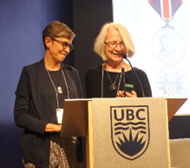
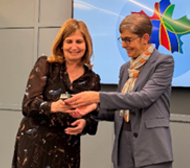
The LCC presented King Charles III Coronation Medals to two recipients in spring 2025:
Dr. Val Napoleon (left), for her contributions to legal education and the revitalization of Indigenous laws (Vancouver, BC);
and the Honourable Nathalie Des Rosiers (right), for her longstanding and significant leadership in public service,
and her rich contributions to the academy, law, and justice in Canada (Ottawa, ON).
Connecting and building also involved a focus on particular sites of innovation and leadership. Engagements in Yukon, for example, underscored the significance of modern treaties and self government agreements, and highlighted the Teslin Tlingit Justice Council's work in developing a justice model rooted in its traditional form of government and clan system. Conversations with law faculties and student groups drew attention to the challenges and possibilities facing clinical legal education and community oriented legal services. Meetings with Parliamentarians and participation in conferences provided opportunities to situate the Commission's work within national and international debates about institutional resilience and democratic renewal.
Law Reform Community at Home and Abroad
The Federation of Law Reform Agencies of Canada (FOLRAC) includes eight member agencies:
- Alberta Law Reform Institute
- British Columbia Law Institute
- Law Reform Commission of Saskatchewan
- Manitoba Law Reform Commission
- Law Commission of Ontario
- Institut québécois de réforme du droit et de la justice
- Nova Scotia Access to Justice & Law Reform Institute
- Law Commission of Canada
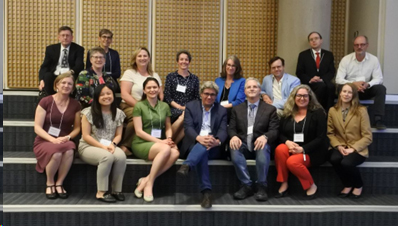
(Vancouver, BC, May 28-29, 2025).
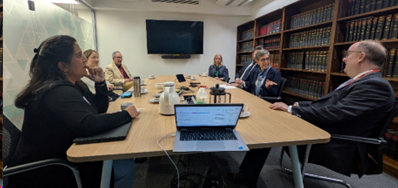
as part of its 60th anniversary celebrations (September 30, 2025).
The LCC belongs to the Commonwealth Association of Law Reform Agencies (CALRAs).

Sir Peter Fraser, Chair, and Professor Penny Lewis, Commissioner (fifth and eighth from the right)
(January 27, 2026).
|
"On the first day of October, the world lost Jane Goodall (1934-2025), remarkable anthropologist and primatologist best known for her lifelong and groundbreaking work with chimpanzees. At the Law Commission of Canada, we marked the loss by reflecting on how one individual can serve as source of inspiration well beyond the domain in which that person dedicates their energies and entire lives. We noted Jane Goodall's insistence that young people are key to enriched understanding and curious exploration. And we underlined some of the quotes included in the stories remembering and celebrating Jane Goodall's path and impact: "Hope isn't just wishful thinking" and "It's no good just talking – we've got to flipping well do it! … Frontline narratives and actions serve as reminder that it would be a mistake to develop or present the Law Commission of Canada as an isolated, removed, or somehow sacrosanct site of knowledge creation or policy directing. Instead, it acts as caretaker, steward, translator, connector, and – if truly successful – long-term and intergenerational spark for valuable questions and conversation. Every encounter becomes part of the work of law reform: the impact of the Commission exists in the bringing together of people and learning from them what pathways forward might look like. It turns out that sharing forms a crucial part of what Jane Goodall would refer to as 'flipping well doing it'!" - Letters from the LCC President, Letter 26 (30 October 2025) |
LCC across Canada
Listen & Learn Roundtables
- Community organizations (Yellowknife, NT – 2 June 2025)
- Community organizations (Charlottetown, PEI – 18 September 2025)
- Community organizations (Whitehorse, YT – 22 October 2025)
- Université de Sherbrooke, Faculté de droit (Sherbrooke, QC – 14 November 2025)
- University of Calgary, Faculty of Law (Calgary, AB – 2 December 2025)
- Université du Québec en Outaouais, Département de droit (Gatineau, QC – 29 January 2026)
- University of New Brunswick, Faculty of Law (Fredericton, NB – 26 February 2025)
- McGill University, Faculty of Law (Montreal, QC – 9 March 2026)
- University of Windsor, Faculty of Law (Windsor, ON – 16 March 2026)
Speaking Engagements
- Model United Nations Conference hosted by the London District Catholic School Board (invited speaker) (London, ON – 5 April 2025)
- Dialogues on Private Law: Bijuralism at the Supreme Court of Canada, Supreme Court of Canada: 150th Anniversary Symposium (panel moderator) (Ottawa, ON – 11 April 2025)
- Legal Pluralism as Frame for Law Reform (or Imagined Conversations with Rod Macdonald), Annual Meeting of the Federation of Law Reform Agencies (invited speaker) (Vancouver, BC – 28 May 2025)
- 2025 Annual Meeting of the American Society of Comparative Law hosted by McGill University (session chair and speaker) (Montreal, QC – 17 October 2025)
- Clerks Speaker Series hosted by the Ontario Court of Appeal (invited speaker) (Toronto, ON – 7 November 2025)
- The Role of Law Schools in Advancing the Rule of Law hosted by Osgoode Hall Law School (invited speaker) (Toronto, ON – 8 November 2025)
- "How did we get here? Understanding the Present: The Roots of Authoritarianism, Polarization, and Populism", Democracy, the Rule of Law, and Independence, hosted by the Canadian Institute for the Administration of Justice (panel moderator) (Ottawa, ON – 18 November 2025)
- The Law + Architecture: Reimagining Lincoln Alexander Law exhibit, hosted by Toronto Metropolitan University (invited speaker) (Toronto, ON – 28 November 2025)
- Colloque de la Relève 2025 de l'Association québécoise de droit comparé (opening remarks) (Montreal, QC – 13 December 2025)
- Public Legal Education and Law Reform: Rule of Law in Action, Public Legal Education Association of Canada's 2026 National Conference (keynote address) (Ottawa, ON – 18 February 2026)
- Dialogue intergénérationnel : traditions juridiques et savoirs autochtones, hosted by the Université de Montréal (opening remarks) (Montreal, QC – 27 March 2026)
Educational Engagements
- Guest lecture – first-year tort law course at the University of New Brunswick entitled Tort Law, Legal Education, and "Law Reform" (Fredericton, NB – 18 February 2026)
- Workshop – Deuxième école internationale d'innovation juridique : La pédagogie et l'enseignement du droit entitled Réimaginer les liens entre la réforme du droit et l'éducation juridique, hosted by the Civil Law Section of the University of Ottawa (Ottawa, ON – 5 June 2025)
- Guest lecture – "Current Issues in Law Reform" seminar at the University of Saskatchewan entitled Approaching Law Reform with a Legal Pluralist Sensibility (virtual – 6 October 2025)
Conferences Supported by the LCC
- Climate Change and Reparations Workshop, hosted at the Faculty of Law at the Université de Montréal (Montreal, QC – 10-11 April 2025)
- Indigenous-Led Disability Supports on Wabanaki Land: A Community Discussion, organized by Dalhousie University (Halifax, NS – May 2025)
- Feeding the Fire Gathering, organized by the Centre for First Nations Governance and Rebuilding First Nations Governance (Victoria, BC – 21-24 May 2025)
- École d'été en droit international appliqué, organized by the Université de Sherbrooke (Sherbrooke, QC – 25-30 May 2025)
- Federation of Law Reform Agencies of Canada Annual Meeting, hosted at the University of British Columbia's Peter A. Allard School of Law (Vancouver, BC – 28-29 May 2025)
- 2025 Access to Justice Centre for Excellence "People-Centred Justice Workshop" hosted at the University of British Columbia's Peter A. Allard School of Law, May 30-31, 2025 (Victoria, BC – 30-31 May 2025)
- 2025 Canadian Association of Journalists Conference (Calgary, AB – 30-31 May 2025)
- Future of Equality Law Conference, organized by Osgoode Hall Law School (Toronto, ON – 5-6 June 2025)
- Climate Dialogue 2025 – Bottom-Up Canada: Grassrooting and Legitimizing Canadian Climate Laws, organized by the University of Alberta Faculty of Law (Edmonton, ON – 16 June 2025)
- Widespread and Systematic – A Symposium on Crimes Against Humanity and Indigenous Peoples, hosted at Queen's University Faculty of Law (Kingston, ON – 16-17 June 2025)
- Summer Speaker Series organized by the Samuelson-Glushko Canadian Internet Policy and Public Interest Clinic (CIPPIC) (Ottawa, ON – June and July 2025)
- Roundtables for the Canadian Police Services Facial Recognition Technology (FRT) Conference, organized by the Law Commission of Ontario (Vancouver, BC and Toronto, ON – June and August 2025)
- AI, Race, and Justice: Centering Black Voices in Canada's Emerging AI Regulation Conference, organized by the Lincoln Alexander School of Law – Toronto Metropolitan University (Toronto, ON – 25 July 2025)
- Parole aux Premiers Peuples, organized by the Faculté de droit de l'Université Laval (Québec, QC – 20-21 August 2025)
- Cinq ans après Joyce : Quelle réconciliation avec les institutions publiques? organized by the Université de Montréal and the Bureau du Principe de Joyce (Trois-Rivières, QC – 27-28 September 2025)
- Future of Justice: Democratizing Legal AI, organized by Queen's University Faculty of Law (Kingston, ON – 29 September 2025)
- Mental Health Law: Emerging Controversies and Cross-Sector Perspectives, organized by the University of Ottawa Centre for Health Law, Policy and Ethics (Ottawa, ON – 2-3 October 2025)
- International Law and the Challenges and Possibilities for Interstate Peace in the Twenty-First Century, organized by the University of Western Ontario Faculty of Law (London, ON – 2-3 October 2025)
- Deuxième Journée de réflexion sur la statistique juridique et judiciaire, organized by the Institut québécois de réforme du droit et de la justice (Montreal, QC – 16 October 2025)
- 20e Anniversaire de la Convention sur la protection et la promotion de la diversité des expressions culturelles, organized by the Chaire UNESCO diversité expressions culturelles (Québec, QC – 22-23 October 2025)
- Multidimensional Equality: The Coming Into Force of Section 15, organized by the University of Saskatchewan (Saskatoon, SK – 24 October 2025)
- Les Ateliers Schuman : Les relations transatlantiques face à la nouvelle politique étrangère américaine : enjeux juridiques et géostratégiques d'un changement de paradigme dans les relations internationales, organized by the Université de Laval (Québec, QC – 30-31 October 2025)
- Inaugural Business and Human Rights International Conference – Business and Human Rights in Canada: At the Crossroads of Scholarship, Legislation, Litigation, Policy-making and Community Resistance, organized by the Canadian Forum for Business and Human Rights (Manitoba, MB – 13-14 November 2025)
- Family Dispute Resolution Week Atlantic, organized by the Family Dispute Resolution Institute Atlantic (St. John's, NL – 24-28 November 2025)
- Colloque de la Relève 2025, organized by the Quebec Society of Comparative Law (Montreal, QC – 12 December 2025)
- British Columbia Youth Parliament Annual Session, organized by the Youth Parliament of BC Alumni Society and the British Columbia Youth Parliament (Victoria, BC – 27-31 December 2025)
- 2026 Symposium Realizing Rights in Canada's Commitments, organized by the Christian Legal Fellowship (Winnipeg, MB – 13 February 2026)
- "See Yourself Here" Conference, hosted by the University of Manitoba's Black Law Students' Association (Winnipeg, MB – 5 March 2026)
- Négocier un commerce durable à l'ère de la guerre tarifaire, organized by the Faculté de droit, Université de Sherbrooke (Longueuil, QC – 12-13 March 2026)
- The Present and the Future of Maritime Law: National and International Perspectives, hosted by the University of Ottawa (Ottawa, ON – 19 March 2026)
- Cultivating Dignity: Human Centred Justice for People with Dementia, organized by Dementia Justice Canada (virtual – 26 March 2026)
- Imagining Feminist Dispute Resolution, organized by the Lincoln Alexander School of Law (Toronto, ON – 26-27 March 2026)
- Indigenous Child & Family Services Training Workshop and Mini-Conference: Barriers & Best Practices in the Context of Expanding Partnerships with Legal Aid Saskatchewan, organized by the University of Saskatchewan (Saskatoon, SK – 27 March 2026)
- Making an Impact: The Introduction of Impact Race and Culture Assessments (IRCAs) Symposium, organized by the Viola Desmond Justice Institute (Montreal, QC – 28 March 2026)
- Knowledge-Users Co-Construction Seminar, organized by the Faculty of Law of McGill University (Montreal, QC – 30 March 2026)
Financial Statement Highlights
For the Year Ended March 31, 2026
This report reflects the second full fiscal year of operation for the Law Commission of Canada. The Commission continued its organizational growth and maturation which included expanded conference support and increased investment in research, continued recruitment efforts notably with the fellowship program, which provides outstanding recent law graduates with intensive research experience, as well as an opportunity to develop critical analysis and writing abilities.
| Main Estimates 2025-26 |
Additional Authorities Received in 2025-26 |
Total Available for Use in 2025-26 |
|
|---|---|---|---|
| Total Program | $3,705,781 | $185,289 | $3,891,070 |
| Total Statutory | $188,273 | $86,262 | $274,535 |
| Total Budget | $3,894,054 | $271,551 | $4,165,605 |
$3,353,718 for salaries, wages and other operating expenses |
|||
$3,628,253 Total Authorities Used |
___________________________________________________ for contributions to employee benefit plans |
| Authorities available $4.17 million |
- | Authorities used $3.63 million |
= | Lapse $0.54 million |
A more comprehensive and complete set of financial statements can be found on the Law Commission's website
Departmental Financial Statements
For the Year Ended March 31, 2026
Statement of Management Responsibility Including Internal Control over Financial Reporting
Responsibility for the integrity and objectivity of the accompanying financial statements for the year ended March 31, 2026, and all information contained in these financial statements rests with the management of the Law Commission of Canada (LCC). These financial statements have been prepared by management using the Government of Canada's accounting policies, which are based on Canadian public sector accounting standards.
Management is responsible for the integrity and objectivity of the information in these financial statements. Some of the information in the financial statements is based on management's best estimates and judgment and gives due consideration to materiality. To fulfill its accounting and reporting responsibilities, management maintains a set of accounts that provides a centralized record of the LCC's financial transactions. Financial information submitted in the preparation of the Public Accounts of Canada and included in the LCC's Departmental Results Report, will be consistent with these financial statements.
Management is also responsible for maintaining an effective system of internal control over financial reporting (ICFR) designed to provide reasonable assurance that financial information is reliable, that assets are safeguarded and that transactions are properly authorized and recorded in accordance with the Financial Administration Act and other applicable legislation, regulations, authorities, and policies.
Management seeks to ensure the objectivity and integrity of data in its financial statements through careful selection, training and development of qualified staff; through organizational arrangements that provide appropriate divisions of responsibility; through communication programs aimed at ensuring that regulations, policies, standards, and managerial authorities are understood throughout the LCC and through conducting an annual risk-based assessment of the effectiveness of the system of ICFR.
The system of ICFR is designed to mitigate risks to a reasonable level based on an ongoing process to identify key risks, to assess effectiveness of associated key controls, and to make any necessary adjustments. A risk-based assessment of the system of ICFR for the year ended March 31, 2026 will be completed in accordance with the Treasury Board Policy on Financial Management and the results and action plans are summarized in the annex.
Original signed by:
Shauna Van Praagh, President
Tracey O'Donnell, Executive Director and
Chief Financial Officer
Ottawa, Canada
May 26, 2026
Law Commission of Canada
Statement of Financial Position (Unaudited)
As at March 31
(in dollars)
| 2026 | 2025 | |
|---|---|---|
| Liabilities | ||
| Accounts payable and accrued liabilities (note 4) | 554,525 | 530,162 |
| Vacation pay and compensatory leave | 110,735 | 78,647 |
| Employee future benefits (note 5) | 0 | 0 |
| Total liabilities | 665,260 | 608,809 |
| Financial assets | ||
| Due from the Consolidated Revenue Fund | 552,224 | 521,765 |
| Accounts receivable and advances (note 6) | 7,905 | 14,019 |
| Total financial assets | 560,129 | 535,784 |
| Departmental net debt | 105,131 | 73,025 |
| Non-financial assets | ||
| Tangible capital assets (note 7) | 1,238,983 | 1,490,035 |
| Total non-financial assets | 1,238,983 | 1,490,035 |
| Departmental net financial position | 1,133,852 | 1,417,010 |
Contingent liabilities (note 8)
The accompanying notes form an integral part of these financial statements.
Shauna Van Praagh, President
Tracey O'Donnell, Executive Director and
Chief Financial Officer
Ottawa, Canada
May 26, 2026
Law Commission of Canada
Statement of Operations and Departmental Net Financial Position (Unaudited)
As at March 31
(in dollars)
| 2026 Planned Results | 2026 Actuals | 2025 Actuals | |
|---|---|---|---|
| Expenses | |||
| Law Review | 2,876,375 | 2,664,528 | 1,735,611 |
| Internal Services | 1,551,896 | 1,520,545 | 1,154,247 |
| Total Expenses | 4,428,271 | 4,185,073 | 2,889,858 |
| Net cost of operations before government funding and transfers | 4,428,271 | 4,185,073 | 2,889,858 |
| Government funding and transfers | |||
| Net cash provided by Government of Canada | 3,597,121 | 3,602,709 | |
| Change in due from the Consolidated Revenue Fund | 30,459 | 437,519 | |
| Services provided without charge by other government departments (note 9a) | 273,680 | 273,199 | |
| Other transfers of assets from / (to) other government departments | 655 | 0 | |
| Total government funding and transfers | 3,901,915 | 4,313,427 | |
| Net cost of operations after government funding and transfers | (283,158) | 1,423,569 | |
| Departmental net financial position - Beginning of year | 1,417,010 | (6,559) | |
| Departmental net financial position - End of year | 1,133,852 | 1,417,010 | |
Segmented information (note 10)
The accompanying notes form an integral part of these financial statements.
Law Commission of Canada
Statement of Change in Departmental Net Debt (Unaudited)
As at March 31
(in dollars)
| 2026 | 2025 | |
|---|---|---|
| Net cost of operations after government funding and transfers | (283,158) | 1,423,569 |
| Change due to tangible capital assets | ||
| Acquisition of tangible capital assets (note 7) | 28,036 | 1,454,651 |
| Amortization of tangible capital assets (note 7) | (279,088) | 0 |
| Total change due to tangible capital assets | (251,052) | 1,454,651 |
| Net increase (decrease) in departmental net debt | 32,106 | 31,082 |
| Departmental net debt - Beginning of year | 73,025 | 41,943 |
| Departmental net debt - End of year | 105,131 | 73,025 |
The accompanying notes form an integral part of these financial statements.
Law Commission of Canada
Statement of Cash Flows (Unaudited)
As at March 31
(in dollars)
| 2026 | 2025 | |
|---|---|---|
| Operating Activities | ||
| Net cost of operations before government funding and transfers | 4,185,073 | 2,889,858 |
| Non-cash items: | ||
| Amortization of tangible capital assets (note 7) | (279,088) | 0 |
| Services provided without charge by other government departments (note 9a) | (273,680) | (273,199) |
| Variations in Statement of Financial Position: | ||
| Increase (decrease) in accounts receivable and advances | (6,114) | (99,672) |
| Decrease (increase) in accounts payable and accrued liabilities | (24,363) | (332,226) |
| Decrease (increase) in vacation pay and compensatory leave | (32,088) | (50,782) |
| Decrease (increase) in employee future benefits | 0 | 14,079 |
| Other transfer of assets (from) / to other government departments | (655) | 0 |
| Cash used in operating activities | 3,569,085 | 2,148,058 |
| Capital Investing Activities | ||
| Acquisition of tangible capital assets (note 7) | 28,036 | 1,454,651 |
| Cash used in capital investing activities | 28,036 | 1,454,651 |
| Net Cash Provided by Government of Canada | 3,597,121 | 3,602,709 |
The accompanying notes form an integral part of these financial statements.
Law Commission of Canada
Notes to the Financial Statements (Unaudited)
1. Authority and Objectives
The Law Commission of Canada (LCC) is an independent commission, which reports to Parliament through the Minister of Justice. Established by Parliament in the spring of 1997 by the Law Commission of Canada Act, the LCC is mandated to consider the changing needs of Canadian society through the study, review, and innovative development of Canada's law and legal systems. Responsive and accountable to all Canadians, the Commission designs its program with support from its Advisory Council and in consultation with the Minister of Justice. The LCC carries out its mandate through its one program, Law Review, with the support of Internal Services.
2. Summary of Significant Accounting Policies
These financial statements have been prepared using the LCC's accounting policies stated below, which are based on Canadian public sector accounting standards. The presentation and results using the stated accounting policies do not result in any significant differences from Canadian public sector accounting standards.
Significant accounting policies are as follows:
(a) Parliamentary authorities
The LCC is financed by the Government of Canada through Parliamentary authorities. Financial reporting of authorities provided to the LCC do not parallel financial reporting according to generally accepted accounting principles since authorities are primarily based on cash flow requirements. Consequently, items recognized in the Statement of Operations and Departmental Net Financial Position and in the Statement of Financial Position are not necessarily the same as those provided through authorities from Parliament. Note 3 provides a reconciliation between the basis of reporting. The planned results amounts in the "Expenses" and "Revenues" sections of the Statement of Operations and Departmental Net Financial Position are the amounts reported in the Future-Oriented Statement of Operations included in the 2025-2026 Departmental Plan. Planned results are not presented in the "Government funding and transfers" section of the Statement of Operations and Departmental Net Financial Position and in the Statement of Change in Departmental Net Debt because these amounts were not included in the 2025-2026 Departmental Plan.
(b) Net cash provided by Government of Canada
The LCC operates within the Consolidated Revenue Fund (CRF), which is administered by the Receiver General for Canada. All cash received by the LCC is deposited to the CRF, and all cash disbursements made by the LCC are paid from the CRF. The net cash provided by Government is the difference between all cash receipts and all cash disbursements, including transactions between departments of the Government.
(c) Amounts due from or to the CRF
Amounts due from or to the CRF are the result of timing differences at year-end between when a transaction affects authorities and when it is processed through the CRF. Amounts due from the CRF represent the net amount of cash that the LCC is entitled to draw from the CRF without further authorities to discharge its liabilities.
(d) Expenses
Expenses are recorded on an accrual basis. Vacation pay and compensatory leave are accrued as the benefits are earned by employees under their respective terms of employment. Services provided without charge by other government departments for accommodation, employer contributions to the health and dental insurance plans, and workers' compensation are recorded as operating expenses at their carrying value.
(e) Employee future benefits
i) Pension benefits: Eligible employees participate in the Public Service Pension Plan, a multiemployer pension plan administered by the Government. The LCC's contributions to the Plan are charged to expenses in the year incurred and represent the total departmental obligation to the Plan. The LCC's responsibility with regard to the Plan is limited to its contributions. Actuarial surpluses or deficiencies are recognized in the financial statements of the Government of Canada, as the Plan's sponsor.
ii) Severance benefits: The accumulation of severance benefits for voluntary departures ceased for applicable employee groups. The remaining obligation for employees who did not withdraw benefits is calculated using information derived from the results of the actuarially determined liability for employee severance benefits for the Government as a whole.
(f) Non-financial assets
The costs of acquiring equipment and other capital property are capitalized as tangible capital assets and are amortized to expense over the estimated useful lives of the assets. All tangible capital assets and leasehold improvements having an initial cost of $10,000 or more are recorded at their acquisition cost. Amortization of tangible capital assets is done on a straight-line basis over the estimated useful life of the asset as follows:
| Asset Class | Amortization Period |
|---|---|
| Office and other equipment | 5 to 10 years |
| Informatics hardware and software | 3 to 5 years |
| Leasehold improvements | Lesser of useful life or remaining term of the lease |
| Assets under construction | Once in service, in accordance with asset class |
Assets under construction are recorded in the applicable asset class and amortized when they become available for use.
(g) Contingent liabilities
Contingent liabilities are potential liabilities which may become actual liabilities when one or more future events occur or fail to occur. If the future event is likely to occur or fail to occur, and a reasonable estimate of the loss can be made, a provision is accrued and an expense is recorded to other expenses. If the likelihood is not determinable or an amount cannot be reasonably estimated, the contingency is disclosed in the notes to the financial statements.
(h) Measurement uncertainty
The preparation of these financial statements requires management to make estimates and assumptions that affect the reported and disclosed amounts of assets, liabilities, revenues and expenses reported in the financial statements and accompanying notes at March 31. The estimates are based on facts and circumstances, historical experience, general economic conditions and reflect the Government's best estimate of the related amount at the end of the reporting period. The most significant items where estimates are used are contingent liabilities, the liability for employee future benefits, salary overpayments and underpayments, allowance for doubtful accounts, and the useful life of tangible capital assets. Actual results could significantly differ from those estimated. Management's estimates are reviewed periodically and, as adjustments become necessary, they are recorded in the financial statements in the year they become known.
(i) Related party transactions
Related party transactions, other than inter-entity transactions, are recorded at the exchange amount.
Inter-entity transactions are transactions between commonly controlled entities. Inter-entity transactions, other than restructuring transactions, are recorded on a gross basis and are measured at the carrying amount, except for the following:
- Services provided on a recovery basis are recognized as revenues and expenses on a gross basis and measured at the exchange amount.
- Certain services received on a without charge basis are recorded for departmental financial statements purposes at the carrying amount.
3. Parliamentary Authorities
The LCC receives most of its funding through annual parliamentary authorities. Items recognized in the Statement of Operations and Departmental Net Financial Position and the Statement of Financial Position in one year may be funded through parliamentary authorities in prior, current or future years. Accordingly, the LCC has different net results of operations for the year on a government funding basis than on an accrual accounting basis. The differences are reconciled in the following tables:
(a) Reconciliation of Net Cost of Operations to Current Year Authorities Used (in dollars)
| 2026 | 2025 | |
|---|---|---|
| Net cost of operations before government funding and transfers | 4,185,073 | 2,889,858 |
| Adjustments for items affecting net cost of operations but not affecting authorities: | ||
| Amortization of tangible capital assets | (279,088) | 0 |
| Decrease (increase) vacation pay and compensatory leave | (32,088) | (50,782) |
| Decrease (increase) in employee future benefits | 0 | 14,079 |
| Services provided without charge by other government departments | (273,680) | (273,199) |
| Total items affecting net cost of operations but not affecting authorities | (584,856) | (309,902) |
| Adjustments for items not affecting net cost of operations but affecting authorities: | ||
| Acquisition of tangible capital assets | 28,036 | 1,454,651 |
| Salary overpayments related to pay system implementation | 0 | 5,622 |
| Total items not affecting net cost of operations but affecting authorities | 28,036 | 1,460,273 |
| Current year authorities used | 3,628,253 | 4,040,229 |
(b) Authorities Provided and Used (in dollars)
| 2026 | 2025 | |
|---|---|---|
| Authorities provided | ||
| Vote 1 - Operating expenditures | 3,891,070 | 4,646,128 |
| Statutory amounts | 274,535 | 225,896 |
| 4,165,605 | 4,872,024 | |
| Less: lapsed operating | (537,352) | (831,795) |
| Current year authorities used | 3,628,253 | 4,040,229 |
4. Accounts Payable and Accrued Liabilities
The following table presents details of the LCC's accounts payable and accrued liabilities:
(in dollars)
| 2026 | 2025 | |
|---|---|---|
| Accounts payable - Other government departments and agencies | 112,773 | 236,567 |
| Accounts payable - External parties | 176,306 | 54,604 |
| Total accounts payable | 289,079 | 291,171 |
| Accrued liabilities | 265,446 | 238,991 |
| Total accounts payable and accrued liabilities | 554,525 | 530,162 |
5. Employee Future Benefits
(a) Pension benefits
The LCC's employees participate in the Public Service Pension Plan (the "Plan"), which is sponsored and administered by the Government of Canada. Pension benefits accrue up to a maximum period of 35 years at a rate of 2 percent per year of pensionable service, times the average of the best five consecutive years of earnings. The benefits are integrated with Canada/Québec Pension Plan benefits and they are indexed to inflation.
Both the employees and the LCC contribute to the cost of the Plan. Due to the amendment of the Public Service Superannuation Act following the implementation of provisions related to Economic Action Plan 2012, employee contributors have been divided into two groups – Group 1 relates to existing plan members as of December 31, 2012 and Group 2 relates to members joining the Plan as of January 1, 2013. Each group has a distinct contribution rate.
The 2025-2026 expense amounts to $174,055 ($144,890 in 2024-2025). For Group 1 members, the expense represents approximately 1.01 times (1.02 times in 2024-2025) the employee contributions and, for Group 2 members, approximately 1.00 times (same in 2024-2025) the employee contributions.
The LCC's responsibility with regard to the Plan is limited to its contributions. Actuarial surpluses or deficiencies are recognized in the Financial Statements of the Government of Canada, as the Plan's sponsor.
(b) Severance benefits
Severance benefits provided to the LCC's employees were previously based on an employee's eligibility, years of service and salary at termination of employment. However, since 2011 the accumulation of severance benefits for voluntary departures progressively ceased for substantially all employees. Employees subject to these changes were given the option to be paid the full or partial value of benefits earned to date or collect the full or remaining value of benefits upon departure from the public service. By March 31, 2026, substantially all settlements for immediate cash out were completed. Severance benefits are unfunded and, consequently, the outstanding obligation will be paid from future authorities.
The changes in the obligations during the year were as follows:
(in dollars)
| 2026 | 2025 | |
|---|---|---|
| Accrued benefit obligation - Beginning of year | 0 | 14,079 |
| Expense for the year | 0 | (14,079) |
| Benefits paid during the year | 0 | 0 |
| Accrued benefit obligation - End of year | 0 | 0 |
6. Accounts Receivable and Advances
The following table presents details of the LCC's accounts receivable and advances balances:
(in dollars)
| 2026 | 2025 | |
|---|---|---|
| Receivables - Other government departments and agencies | 2,303 | 8,397 |
| Other receivables and advances | 5,602 | 5,622 |
| Total accounts receivable and advances | 7,905 | 14,019 |
7. Tangible Capital Assets
This note presents the detail by category of tangible capital assets.
Cost (in dollars)
| Capital Asset Class | Opening Balance | Acquisitions | Disposals, Write-offs, and Adjustments | Closing Balance |
|---|---|---|---|---|
| Informatics hardware | 46,499 | 0 | 0 | 46,499 |
| Leasehold improvements | 0 | 0 | 1,471,572 | 1,471,572 |
| Assets under construction leasehold improvements | 1,443,536 | 28,036 | (1,471,572) | 0 |
| Total | 1,490,035 | 28,036 | 0 | 1,518,071 |
Accumulated Amortization (in dollars)
| Capital Asset Class | Opening Balance | Current Year Amortization | Closing Balance |
|---|---|---|---|
| Informatics hardware | 0 | 9,300 | 9,300 |
| Leasehold improvements | 0 | 269,788 | 269,788 |
| Total | 0 | 279,088 | 279,088 |
Net Book Value (in dollars)
| Capital Asset Class | 2026 | 2025 |
|---|---|---|
| Informatics hardware | 37,199 | 46,500 |
| Leasehold improvements | 1,201,784 | 1,443,535 |
| Total | 1,238,983 | 1,490,035 |
8. Contingent Liabilities
Contingent liabilities arise in the normal course of operations and their ultimate disposition is unknown. As at March 31, 2026, the LCC has no contingent liabilities.
9. Related Party Transactions
The LCC is related as a result of common ownership to all government departments, agencies, and Crown corporations. Related parties also include individuals who are members of key management personnel or close family members of those individuals, and entities controlled by, or under shared control of, a member of key management personnel or a close family members of that individual.
The LCC enters into transactions with these entities in the normal course of business and on normal trade terms.
(a) Common Services Provided Without Charge by Other Government Departments
During the year, the LCC received services without charge from certain common service organizations related to accommodation, the employer's contribution to the health and dental insurance plans and workers' compensation coverage. These services provided without charge have been recorded at the carrying value in the LCC's Statement of Operations and Departmental Net Financial Position as follows:
(in dollars)
| 2026 | 2025 | |
|---|---|---|
| Accommodation | 85,327 | 130,919 |
| Employer's contribution to the health and dental insurance plans | 188,353 | 142,280 |
| Workers' compensation | 0 | 0 |
| Total | 273,680 | 273,199 |
The Government has centralized some of its administrative activities for efficiency, cost-effectiveness purposes and economic delivery of programs to the public. As a result, the Government uses central agencies and common service organizations so that one department performs services for all other departments and agencies without charge.
The cost of these services, such as the payroll and cheque issuance services provided by Public Services and Procurement Canada and audit services provided by the Office of the Auditor General are not included in the LCC's Statement of Operations and Departmental Net Financial Position.
(b) Other Transactions with Other Government Departments and Agencies
(in dollars)
| 2026 | 2025 | |
|---|---|---|
| Accounts receivable | 2,303 | 8,397 |
| Accounts payable | 112,773 | 236,567 |
| Expenses | 921,693 | 2,819,853 |
Expenses disclosed in (b) exclude common services provided without charge, which are already disclosed in (a).
10. Segmented Information
Presentation by segment is based on the LCC's core responsibility, as well as its internal services. The presentation by segment is based on the same accounting policies as described in the summary of significant accounting policies in note 2. The following table presents the expenses incurred for the core responsibility, by major object of expense. The segment results for the period are as follows:
| Operating Expenses | Law Review | Internal Services | Total | |
|---|---|---|---|---|
| 2026 | 2025 | |||
| Salaries and employee benefits | 1,662,097 | 746,747 | 2,408,844 | 2,041,777 |
| Information | 575,099 | 20,394 | 595,493 | 130,418 |
| Professional and special services | 298,145 | 281,525 | 579,670 | 389,482 |
| Amortization of tangible capital assets | 0 | 279,088 | 279,088 | 0 |
| Accommodation | 59,050 | 130,758 | 189,808 | 240,635 |
| Travel and relocation | 66,528 | 11,855 | 78,383 | 52,939 |
| Utilities, materials and supplies | 287 | 34,076 | 34,363 | 11,932 |
| Communications & Other | 3,322 | 16,102 | 19,424 | 5,521 |
| Repair and maintenance | 0 | 0 | 0 | 17,154 |
| Net cost of operations before government funding and transfers | 2,664,528 | 1,520,545 | 4,185,073 | 2,889,858 |
Annex to the Statement of Management Responsibility Including Internal Control over Financial Reporting
As at March 31, 2026
Introduction / Assessment results for the 2024 to 2025 fiscal year
As a micro-organization, the LCC follows the internal control framework laid out by the Office of the Comptroller General (OCG) for small departments and agencies. Fiscal year 2025-26 marks the LCC's second complete year of operations. Following an earlier self-assessment schedule laid out by the OCG, the LCC as a micro-organization has already performed 2 self-assessments in 2024-25: Pay Administration and Financial Management Governance; in which the LCC scored relatively well. No assessments were performed in 2025-26, however, an assessment plan for future years can be found below.
Assessment plan
The LCC will assess the performance of its system of internal control by focusing on key control areas over a cycle of years as shown in the following table as laid out by the Office of the Comptroller General (OCG). Future year topics to be determined:
| Small Departmental Internal Audit Strategy | Year 1 2026-27 |
Year 2 2027-28 |
Year 3 2028-29 |
|---|---|---|---|
| Planned Self-Assessment Topics Financial Core Controls | Acquisition Cards | Potential topic: Delegation of Spending and Financial Authorities | Potential topic: Contracting |
| Planned Self-Assessment Topics Non-Financial Policy Areas | Potential topic: HR-to-Pay Readiness | Potential topic: Departmental Security Management | |
| Horizontal Audit Engagements | Information Management | Topic to be determined | Topic to be determined |