
Application guide: Targeted Engagement Grants

Changes to Targeted Engagement Grants
Beginning with the Fall 2026 competition, the maximum funding available through Targeted Engagement Grants will increase to $100,000 per project. By increasing available funding, applicants will be better placed to pursue innovative and high-impact initiatives, expand their project’s scope and reach, and further advance the objectives of the MINDS Program.
This guide is intended to provide additional clarity and support as you complete your application form (including a Young MINDS application). It is meant to be periodically adjusted to support the use of the application form as necessaryFootnote 1. We recommend that you read through this guide carefully before starting your application as requirements may change between funding competitions.
About Targeted Engagement Grants
Targeted Engagement Grants (TEGs) provide non-recurring financial support, up to a maximum of $100,000CAD, for initiatives such as conferences, workshops, roundtables, research, publications or any other project that aligns with Department of National Defence and Canadian Armed Forces (DND/CAF) policy priorities. Projects must:
- demonstrate how it will achieve the MINDS Program objectives
- align with one or more MINDS Defence Policy Challenges
- support defence and security policy dialogue, research, or decision-making
Young MINDS Initiative
As part of its efforts to foster the next generation of defence and security scholars, MINDS has established a funding stream – the Young MINDS Initiative – to support undergraduate and master's students interested in defence and security. These grants are valued at $10,000.
Overview
- Calls for proposals are issued twice a year, in the spring and fall.
- Any proposal submitted outside the designated timeframe will not be considered.
- Details and dates will be posted on the MINDS website and sent to MINDS mailing list subscribers.
- MINDS promotes a multidisciplinary approach to defence and security issues and encourages applicants from various backgrounds to submit projects.
- In line with the Buy Canadian Policy, applicants are encouraged to incorporate Buy Canadian principles into their proposals and project plans. For example, this could include providing full and fair opportunity for the use of Canadian suppliers, materials, or content in the project.
Eligibility
Applicant eligibility - TEGs
- Canadian and international individuals or organizations may apply. Individuals are encouraged to apply on behalf of the organization with which they are affiliated, such as a university, think tank, non-governmental organization, corporation, or industry.
- All outstanding final reports from past TEGs must be submitted to MINDS.
- Individuals employed by federal, provincial/territorial, municipal or Indigenous governments are not eligible to receive funding from this program. This includes employees of Canadian Defence Academy institutions. Members of the Canadian Armed Forces (CAF) are also not eligible, with the exception of Class A Reservists.
Individuals at the undergraduate or master's level of study are only eligible to apply for funding through the Young MINDS Initiative.
Applicant eligibility – Young MINDS Initiative
- Only individuals enrolled in an undergraduate or master's program at an accredited university may apply.
- Applicants must be studying political science, history, international relations, public policy, or economics. Other fields of study may be considered if applicants can demonstrate how they relate to defence and security.
- Applicants must be sponsored by a professional academic or recognized expert in the field at their institution of study.
Eligible and ineligible projects
- Eligible projects must:
- Be social-science- or policy-centered. It is the responsibility of the applicant to demonstrate how they meet this criterion
- Demonstrate a clear link to the MINDS Defence Policy Challenges
- Demonstrate a clear connection to defence challenges faced by Canada; be applicable to Canada; or produce clear, timely and relevant policy advice to Canadian defence policymakers
- Include a complete application using the correct form, including a budget, submitted in the correct format (PDF or HTML only), and respect the stated character count limits
- Be completed within 12 months of project launch
- Ineligible projects may include:
- Projects that are technical in nature or research and development focused
- For example, ineligible projects could involve the development, testing, or operationalization of a technology or system
- Applicants with technical or research and development-focused projects are invited to consider National Defence's IDEaS ProgramFootnote 2
- Projects that are not applicable to Canada or do not address Canadian defence challenges
- Projects that are technical in nature or research and development focused
Ineligible projects may be disqualified.
MINDS Defence Policy Challenges
MINDS Defence Policy Challenges highlight key policy issues the Defence Team is facing and identify areas where collaboration with the defence and security expert community is most needed. The challenges are updated annually based on consultations with senior leaders across the Defence Team. This helps ensure MINDS and its external partners focus on the most pressing issues and provide timely, actionable insights.
All applications must respond to at least one MINDS Defence Policy Challenge. Applicants are encouraged to make connections to multiple challenges if appropriate for their project.
Completing and submitting your application
Applicants must use the standard TEG application form (or Young MINDS application form). Only forms that use the proper template (PDF or HTML only), are complete (with a budget), and within the parameters outlined above (including character limit, as indicated) will be reviewed. Please write in full sentences. Once completed, please submit your application electronically to: MINDS@forces.gc.ca. You will receive an acknowledgement email from MINDS within seven (7) calendar days. If you do not receive a confirmation email, it is your responsibility to ensure your application was submitted successfully. Application results will also be communicated via email.
Section 1: General Information
This section collects descriptive information about the proposal and the organization and/or people who will be involved.
A. Project Title
- Write the title of the project you are submitting.
B. Applicant Requesting Grant
- Please include the name(s) of project lead(s), email address(es) of project lead(s) as well as the organization name, mailing address, business number or GST number, and website (if applicable).
- Please also indicate whether you are an employee of the Government of Canada, and whether you are a member of an existing MINDS Collaborative Network.
- Please note: Employees of federal, provincial/territorial, municipal or Indigenous government departments and agencies are not eligible to apply. This includes employees of Canadian Defence Academy institutions. Members of the CAF are also not eligible to apply, with the exception of Class A Reservists.
- Please indicate whether you are a Class A reservist.
- Members of existing MINDS Collaborative Networks are eligible to apply; however, projects must be distinct in scope from that of the Network.
C. Amount Requested ($100,000 CAD maximum / or $10,000 CAD for Young MINDS)
- Based on your budget (see Financial Information below), indicate the total amount you are applying for, in Canadian dollars.
D. Project Location
- Indicate where your project or event will take place. If virtual, please indicate this as well.
E. Project Overview
- In 1200 characters or fewer, please provide a summary of your project, including the objective(s).
- In 600 characters or fewer, please provide key dates and any relevant milestones. Only agendas, conference or events programs, and schedules may be provided as annexes to the application.
F. Other Funding from DND/CAF
- If you or your organization is already receiving grant funding from DND/CAF, or if you or your organization has received funding in the past, indicate when, from what Defence organization or mechanism, for which project, and the amount(s) received.
G. How did you find out about MINDS?
- Please indicate how you found out about this funding opportunity (website, colleagues, word of mouth, etc.).
Section 2: Project Evaluation
Applications are evaluated on three criteria: relevance, diversity, and creativity and innovation.
Part 1. Relevance (60% of total score)
Demonstrate the relevance of your project to Canadian defence and security priorities.
- 1.1 - Indicate which MINDS Defence Policy Challenges your project addresses.
- 1.2 – In 2500 characters or fewer, explain how your project provides relevant and timely policy advice to DND/CAF:
- Clearly describe how your project aligns with and plans to address each of the MINDS Defence Policy Challenges listed in 1.1. If your project covers more than one Defence Policy Challenge, make sure to explain how they are interconnected.
- Explain how your project will respond to the need for relevant and timely advice to DND/CAF.
- 1.3 – In 800 characters or fewer, explain how your project plans to engage with, collaborate with, and convey results to DND/CAF:
- Ensure deliverables are appropriate and useful for a DND/CAF audience.
- Demonstrate clearly the extent of planned DND/CAF engagement.
- Describe any existing relationships, partnerships, or affiliations with DND/CAF personnel, units, or organizations that would support the successful delivery of the proposal's objectives.
- 1.4 – In 800 characters or fewer, indicate how your project fosters the next generation of experts and scholars:
- For the purpose of TEGs, we are looking for substantive inclusion of students (rather than early career researchers). For example, simply hiring research assistants at the MA or PhD level would not be considered highly substantive.
- Provide clear details on how young scholars will be meaningfully involved in any/all stages of the project.
- Expand on whether and how your project fosters the next generation of experts and young scholars.
- 1.5 – In 800 characters or fewer, demonstrate how your project contributes to Canadians' understanding of defence and security issues:
- Provide a detailed explanation of how the findings of your project will enhance the public's understanding of the topic.
- 1.6 – In 800 characters or fewer, explain how your project will leverage technology to achieve results and expand its impact and reach:
- Explain how you will use technology in your project design to achieve project objectives (e.g. research methodology, data collection methods, etc.).
- Explain how you will use technology to share your findings with DND/CAF and the defence and security community (e.g. reports, publications, briefings, events, podcasts, etc.).
- Explain how you will use technology to make your findings accessible to the Canadian public (e.g. plain language summaries, opinion editorials or articles in broadly accessible publications, video, podcasts, open fora, etc.).
- Identify all methods of promotion, dissemination, data collection and analysis.
- 1.7 – Provide a list of project participants and/or speakers, even if this list is preliminary (if applicable).
Part 2. Innovation (20% of total score)
- 2.1 – In 1500 characters or fewer, describe how your project shows innovation and/or creativity (in the topic studied, in the unique value it will add in its field, in developing interactions with the expert community, or government entities, or by any other means).
- If research or similar work already exists, you are expected to explain how your project will add to, rather than duplicate, existing work.
Part 3. Diversity (20% of total score)
- 3.1 – In 1250 characters or fewer, describe how your project includes diverse perspectives (beyond multi-disciplinarity) in its design and delivery (research topic, team composition, engagement strategy, etc.).
- Demonstrate consideration of different intersectionalities in all stages of the project and deliverables.
- Clearly articulate the diversity of participation and perspectives within the team, research subjects, and/or speakers.
- Diversity is expected to be more multi-faceted than gender parity.
- 3.2 – In 1250 characters or fewer, indicate how your project aligns with the federal objectives related to gender-based analysis plus (GBA Plus).
- Demonstrate consideration of GBA Plus implications in all stage of the project and deliverables.
- 3.3 – In 1000 characters or fewer, describe how your project design or methodology will use methods to reduce unintended bias.
- Consider and clearly identify possible unconscious biases in your research question, methodologies, deliverables, etc. Articulate the potential consequences and how they will be mitigated.
For information and resources on GBA Plus and considering diversity and inclusion in your application, please refer to the supplementary guidanceat the end of this guide.
Section 3: Financial Information
Part 1 - Budget
Using the budget table included in the TEG application form as an example, you must submit a detailed financial breakdown by category, including all sources of revenue and all expenditures, with your application.
- Explain precisely how the funding requested from MINDS will be used and provide an explanation of how these expenditures were calculated, even if estimated at the time of filling out the application.
- MINDS accords higher importance to costs that directly support the generation of ideas. As a publicly funded program, applicants are encouraged to carefully assess the amount and relative ratio of funding allocated to hospitality. MINDS will only fund hospitality costs - including per diems, hotel expenses and meals - up to the maximum allowed under the Government of Canada guidelines provided by the National Joint Council.
- If you have received additional funding for the project, clearly indicate which expenditures will be covered by MINDS funding versus other sources.
- A list of eligible and ineligible expenditures can be found below.
- You may use a separate Word or Excel document.
- DND reserves the right to request receipts and/or other documentation to assess how funds are used.
Part 2 - Additional Funding and Delivery
- 2.1 - In 1100 characters or fewer, explain your ability to successfully deliver this project on time and within budget.
- 2.2 - In 500 characters or fewer, indicate if your organization has applied for and/or received funding from any other sources for this project.
- If so, please list the other sources and potential sources of funding and the status of your application(s).
2.3 - In 500 characters or fewer, explain how the project would be impacted if only partial funding were to be granted by MINDS.
- Failure to provide a detailed budget consistent with the Treasury Board of Canada guidelines may result in rejection of your application.
- MINDS accords higher importance to costs that directly support the generation of ideas. As a publicly funded program, applicants are encouraged to carefully assess the amount and relative ratio of funding allocated to hospitality. MINDS will only fund hospitality costs – including per diems, hotel expenses and meals – up to the maximum allowed under the Government of Canada guidelines provided by the National Joint Council.
Note that travel and hospitality for Government officials participating in your event cannot be covered by a TEG. This includes federal, provincial/territorial, municipal, or Indigenous government officials, employees of Canadian Defence Academy institutions, and members of the CAF, except for Class A Reservists.
- Eligible expenditures include:
- Research costs (subscriptions, travel, accommodation, etc.)
- Conference/seminar costs (room rental, audiovisual rental, interpretation, materials, travel, and accommodation)
- Non-administrative salary costs (research assistants)
- Publications (provided proper credit is given)
- Translation costs, administrative/support salary costs, including benefits
- Advertising/promotional material for funded activities
- Licensing and other fees.
- Ineligible expenses include:
- Expenses to offset costs related to insurance
- Interest charges
- Professional services (including audits)
- Utilities, amortization, rent, office overhead (including stationery costs), institutional overhead, or capital assets
- Honoraria, prizes/rewards/accolades
- The purchase of alcohol
- Course release
- Purposes other than those stated in the proposal
Section 4: Important Information, Signature & Submission
Please read the important information and Privacy Notice Statement carefully before finalizing your application form.
For applicants of the Young MINDS Initiative, you must ensure that your sponsor completes the portion of the form certifying that they are aware of and support your project.
Send your completed application, including attachments, electronically to: MINDS@forces.gc.ca. You will receive an email confirming receipt of your application within seven (7) calendar days of submission. If you do not receive a confirmation email, it is your responsibility to ensure your application was submitted successfully. Application results will also be communicated via email.
Additional information
Conflict Resolution
There is no appeal mechanism for decisions made by DND to approve or not approve a grant. Any questions or concerns about the grant process or decisions should be sent to the MINDS team at minds@forces.gc.ca. Due to the significant increase in the number of applications received, MINDS is unable to provide individualized feedback on applications.
Recognition
Funding recipients must acknowledge MINDS support by providing written recognition in all materials produced and intended for the public. Members of the Defence Team shall also be permitted to attend any events funded by the grant. Grant recipients are encouraged to send event invites and publication announcements to the MINDS team at minds@forces.gc.ca.
License
Funding recipients shall grant a free license to reproduce or use any information or publications produced from a project for Government of Canada purposes.
Surveys/Interviews
If, as part of your project, you intend to conduct social science research, including interviews or surveys, with CAF members or their families, DND civilian employees, applicants for enrolment in the CAF or members of cadet organizations, you are required to contact the Social Science Research Review Board (SSRRB) before you begin. Please contact the SSRRB at SSRRB-CERSS@forces.gc.ca to learn more about the review process.
- The aim of SSRRB coordination is to ensure that research within the DND/CAF do not impede or conflict with operations, on-going DND/CAF programmes, or other approved higher-priority research.
- SSRRB will require you to obtain, on your own, a DND/CAF sponsor who will provide you with any administrative or logistical support that you may require, such as internal advertising of your research project, contacting potential research participants or arranging data collection activities (e.g., in-person focus groups, interviews, etc.).
- In general, the MINDS Team is not considered an appropriate sponsor for the purposes of SSRRB.
Final Report
No later than 60 days following project completion, the recipient must provide a report to DND including:
- How the project furthered the public policy debate on the Defence Policy Challenges and/or the developed focus questions
- The number of Department of National Defence/Canadian Armed Forces (DND/CAF) members and Government of Canada security practitioners engaged by the project
- The number and names of domestic and international experts associated with the project
- A financial statement indicating how the grant funding provided by DND to the recipient was used, as well as any other sources of revenue and expenses for the project
- Any media interaction, including publications
- Copies of unpublished conference presentations; and,
- A list of all publications arising from the project, as well as anticipated completion/publication dates
Tax Implications
If grant funding is paid directly to individuals (rather than through an institution or organization), the funds will be considered taxable income.
Privacy and Access to Information
DND will comply with the federal Access to Information Act and Privacy Act with respect to applications received. By submitting personal information, an applicant is consenting to its collection, use and disclosure in accordance with the following Privacy Notice Statement, which explains how the applicant's information will be managed.
Applicants shall note that for all agreements information related to the funding agreement (amount, grant or contribution, name of the recipient and project location) will be made available to the public on DND's website.
Contact us
Additional questions should be directed to the MINDS team via email at minds@forces.gc.ca
Information and Resources on GBA Plus and considering diversity and inclusion in your TEG application
What is GBA Plus?
Gender-Based Analysis Plus, or GBA Plus, is an analytical process that provides a rigorous method for the assessment of systemic inequalities, as well as a means to assess how diverse groups of women, men and gender diverse people may experience policies, programs, and initiatives.
The "plus" in GBA Plus acknowledges that GBA Plus goes beyond biological (sex) and socio-cultural (gender) differences to consider many other identity factors such as: race, ethnicity, religion, age, mental and physical ability, region, language, economic status, sexual orientation, and more.
Figure 1 - Intersectionality (source : Introduction to GBA Plus) 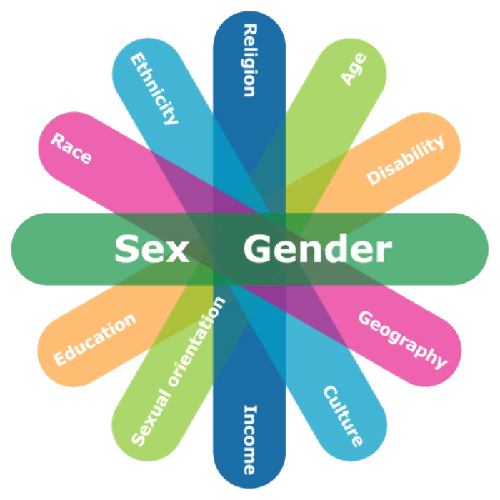
Figure 1 - Text version
This figure illustrates some of the factors which can intersect with sex and gender. Six oblong shapes of differing colors overlap and fan out. Each oblong has two identity factors written on it. The top oblong has "sex and gender" written in a larger font. Starting below sex and gender and going clockwise, the additional identities identified are: geography, culture, income, sexual orientation, education, race, ethnicity, religion, age and disability.
Applying GBA Plus leads to better projects and initiatives, as it reflects and responds to the diverse needs of the Canadian population.
GBA Plus in your TEG Application
Applicants for a TEG should apply a GBA Plus lens when preparing their proposal by providing an explanation of the potential benefits and negative impacts from a GBA Plus perspective of the proposed design and implementation plan of the project, including supporting data and evidence where possible.
The expectation for integrating GBA Plus into a research project or event is that the topic/problem is considered from multiple perspectives (e.g., gender, age, language, CAF rank, etc.) and that there is intersectionality (i.e. identity factors are considered simultaneously – so it isn’t that all men, women, or gender-diverse people do X but rather, men, women, and gender-diverse people within a certain age range and of a certain socio-economic background are doing X).
Below are three categories of questions that might help you think things through. While they are by no means comprehensive and are provided as a starting point, they do align with the evaluation criteria we use to score the Diversity/GBA Plus section of your application. We also recommend consulting the list of resources provided further below to deepen your analysis and strengthen your application. When possible, make sure to reference any external source of information.
Category A – Individuals, Communities, or Participants
- Who are the individuals most closely involved or most likely to be impacted by your project or research topic?
- Are they part of a particular demographic group?
- Are they located in a specific region (rural, urban, remote communities, Arctic, international, etc.)?
- Do they work in a specific industry or sector of the economy?
- What are the gender identity and sexual orientation characteristics of these individuals? How does the project impact them differently?
- How old are they, and what life stage are they at? Do they have a physical and/or mental health issues?
- What are their socio-economic (lower, middle or high income; lower educated or highly educated), cultural (newcomers to Canada, particular religious group) and familial characteristics (single-person household, two-person household, two-parent household, lone-parent household, etc.)?
- How do the factors identified above intersect and influence how individuals are affected (positively or negatively) by your project or topic?
- How have you (or will you) consult with groups in a way that can influence your work?
- What are the short, medium and long-term impacts (positive and negative) of the initiative or project?
- If you have identified possible negative impacts, is there a way your project can mitigate them? If so, explain how.
Category B – Outreach
- If you are proposing a conference, meeting or panel, are the speakers sufficiently diverse? This goes beyond diversity across disciplines, provinces/territories or careers.
- If you are proposing a conference, meeting or panel, how will you ensure that the audience will be sufficiently diverse? How exactly will you do this, and are these methods passive or active (i.e. send out invitations vs. actively engage)?
- How are you planning on disseminating the results of the project, conference, meeting or panel in order to ensure a broad audience benefits from its findings and results?
Category C – Project team
- Who are the researchers or other participants you have chosen to lead your work?
- Do you have sufficient diversity within your proposed group, and how have people been selected to ensure that different views (by gender, ethnicity, age, etc.) are included?
- How do you intend to mitigate unconscious biasFootnote 3?
- If you consider you have achieved diversity in your team and/or audience, how much space have you allowed for different people to influence your outcomes? How do you foster inclusion? For example, do you simply have 50% women speakers, or have you enabled them to influence agenda?
- In the case of work taking place in Northern, Arctic or Indigenous communities, have you partnered appropriately with Northern, Arctic or Indigenous leadership to ensure they have an equitable space to influence the work, consultations and agenda?
- How would you engage and incorporate new/younger professionals and their perspectives?
- Who are the individuals most closely involved or most likely to be impacted by your project or research topic?
Evaluation Criteria
A strong GBA Plus / Diversity section should clearly demonstrate:
- your understanding of how this type of analysis interacts with and improves your project by providing specific considerations of an intersectional nature;
- how you and your team will make efforts to mitigate unconscious bias;
- that your team and/or panel of speakers (if applicable) is comprised of individuals with diverse identity characteristics and provides details on this representativeness; and
- that arrangements were made to ensure that diversity and inclusivity will result in diverse inputs throughout the project timeframe, and will impact on and be reflected in the project activities and deliverables.
Resources to familiarize yourself with and conduct GBA Plus
We strongly suggest that you consult the Women and Gender Equality Canada (WAGE) website and complete the free GBA Plus online training in order to incorporate GBA Plus into your project application. You may also want to watch WAGE's microlearning videos.
The following resources could also provide useful insights and tips:
- Demystifying GBA Plus Job Aid
(Offers practical guidance on the use and implementation of GBA Plus in your work such as a step-by-step overview of GBA Plus, description of each step, and related key questions)
- Intersectionality Job Aid
(Provides questions to help you reflect on your own position and unconscious bias, as well as on peoples' multiple identity factors, and how they may impact their experiences)
- GBA Plus Research Guide
(Offers tips on applying GBA Plus at different stages of research)
- GBA Plus Research Checklist
(Presents a list of questions to ask yourself to avoid common GBA Plus pitfalls)
- Inclusive Event Planning & Guide to Planning Inclusive Meetings
(These tools provide useful tips to consider, especially if the project or initiative you are requesting funding for is a conference, event or workshop. For tips on organizing inclusive digital events, we recommend this post as a starting point)