
Dress instructions | Annex D Operational dress
GENERAL
- This category of dress is described below and worn in common by all CAF members, no matter what their environment.
- Commanders of Commands may establish such guidelines for the wear of operational dress and its accoutrements, accessories and insignia as may be required and as follows:
- naval combat dress – Commander, Royal Canadian Navy.
- field combat clothing – Commander, Canadian Army
- flying clothing – Commander, Royal Canadian Air Force.
- Operational clothing is only issued to those authorized to wear it.
- Base commanders or commanding officers may authorize or restrict the wear of operational dress in messes and institutes and other designated areas.
NAVAL COMBAT DRESS
- Naval combat dress and tropical shipboard operational clothing is described in Figures 5D-1 and 5D-2.
- A Navy black unit’s ball cap (red for sea training) may be worn as an alternate, optional item with naval combat dress. The only marking authorized on the front panel of the cap is the unit’s name (IAW the Canadian Forces Organization Orders) and designator with side numbers for Her Majesty’s Canadian Ships as applicable. Text shall be in a clear font (Cambria), upper case, gold in colour and exactly 1.2 cm in height.
FIELD COMBAT CLOTHING
- There are no separate dress orders since combat clothing is designed to be adjusted for individual comfort and tasks. However, commanders may specify consistency if uniformity of appearance is important on some occasions.
- Combat clothing (CADPAT) is designed for subdued appearance in tactical situations. Common rank slip- ons are worn and match this appearance.
- The following non-operational headdress may be worn if the situation permits, and are the norm for the unit outside of field operations and training: beret, wedge cap, toque, turban, balmoral, glengarry, caubeen and khaki tam-o’-shanter (see Headdress Policy, Chapter 5, Section 1, paragraphs 2. to 6.).
- Shoulder titles are worn on combat slip-ons unless ordered removed for operational reasons. See Chapter 3, Section 5, paragraph 9. for patterns and supply.
FLYING CLOTHING
- The following non-operational headdress may be worn with flying clothing: wedge cap, beret, turban, balmoral, glengarry, caubeen, khaki tam-o’-shanter and toque (see Headdress Policy, Chapter 5, Section 1, paragraphs 2. to 6.).
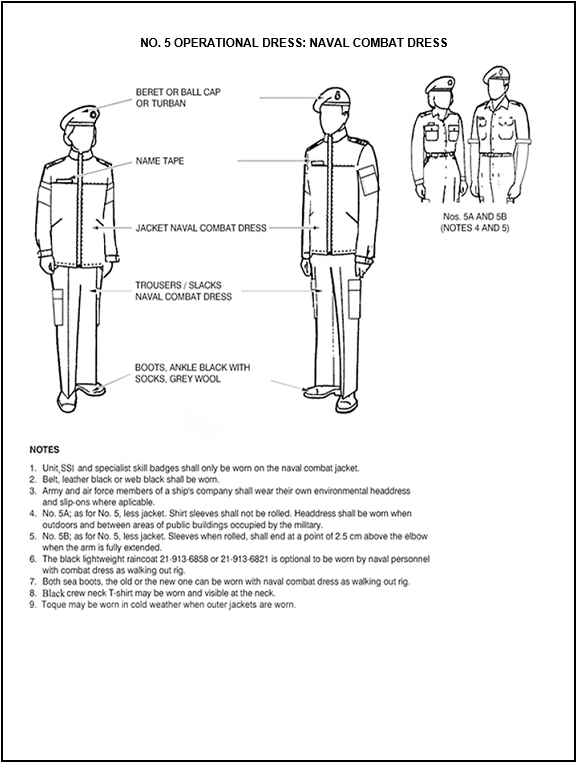
Figure 5D-1 No. 5 Operational Dress – Naval Combat Dress

No. 5D Operational Dress – Tropical Shipboard