
Fact sheet for ages 16-17 about cyberbullying
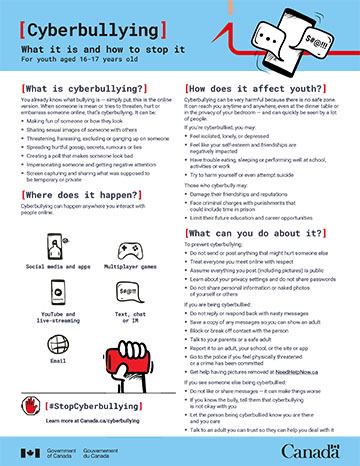
Cyberbullying: What is it and how to stop it
For youth aged 16-17 years old
What is cyberbullying?
You already know what bullying is — simply put, this is the online version. When someone is mean or tries to threaten, hurt or embarrass someone online, that’s cyberbullying. It can be:
- Making fun of someone or how they look
- Sharing sexual images of someone with others
- Threatening, harassing, excluding or ganging up on someone
- Spreading hurtful gossip, secrets, rumours or lies
- Creating a poll that makes someone look bad
- Impersonating someone and getting negative attention
- Screen capturing and sharing what was supposed to be temporary or private
Where does it happen?
Cyberbullying can happen anywhere you talk to other people online.
- Social media and apps
- Multiplayer games
- YouTube and live-streaming
- Text, chat or IM
How does it affect youth?
Cyberbullying can be very harmful because there is no safe zone. It can reach you anytime and anywhere, even at the dinner table or in the privacy of your bedroom — and can quickly be seen by a lot of people.
If you’re being cyberbullied, you may:
- Feel isolated, lonely, or depressed
- Feel like your self-esteem and friendships are negatively impacted
- Have trouble eating, sleeping or performing well at school, activities or work
- Try to harm yourself or even attempt suicide
Those who cyberbully may:
- Damage their friendships and reputations
- Face criminal charges with punishments that could include time in prison
- Limit their future education and career opportunities
What can you do about it?
To prevent cyberbullying:
- Do not send or post anything that might hurt someone else
- Treat everyone you meet online with respect
- Assume everything you post (including pictures) is public
- Learn about your privacy settings and do not share passwords
- Do not share personal information or naked photos of yourself or others
If you are being cyberbullied:
- Do not reply or respond with nasty messages
- Save a copy of any messages so you can show an adult
- Block or break off contact with the person
- Talk to your parents or a safe adult
- Report it to an adult, your school, or the site or app
- Go to the police if you feel physically threatened or a crime has been committed
- Get help having pictures removed at NeedHelpNow.ca
If you see someone else being cyberbullied:
- Do not like or share messages — it can make things worse
- If you know the bully, tell them that cyberbullying is not okay with you
- Let the person being cyberbullied know you are there and you care
- Talk to an adult you can trust so they can help you deal with it
#StopCyberbullying
Learn more at Canada.ca/cyberbullying