
Public Health Risks Associated with Dog Importation

 Download this article as a PDF (358 KB)
Published by: The Public Health Agency of Canada
Issue: Volume 51-2/3, February/March 2025: Health Economics in Public Health
Date published: February 2025
ISSN: 1481-8531
Submit a manuscript
About CCDR
Browse
Volume 51-2/3, February/March 2025: Health Economics in Public Health
Infographic
Text description: Infographic
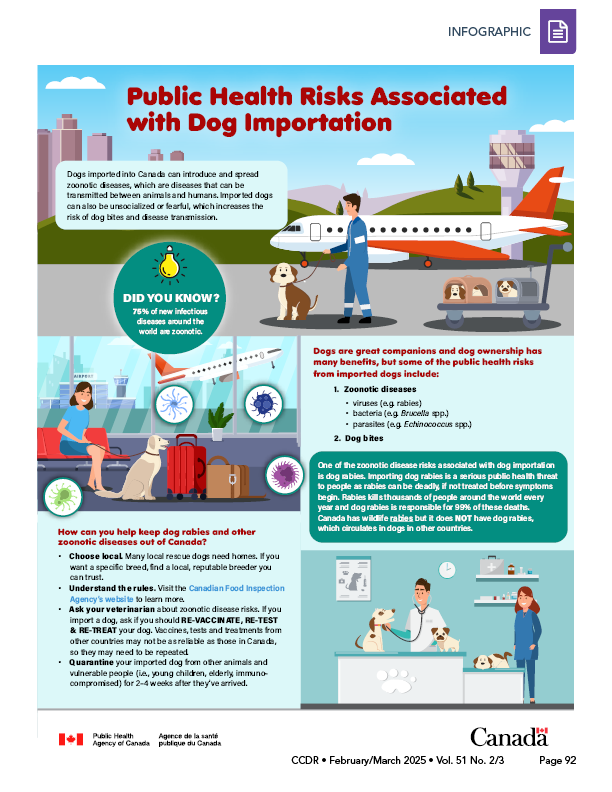
Public Health Risks Associated with Dog Importation
Dogs imported into Canada can introduce and spread zoonotic diseases, which are diseases that can be transmitted between animals and humans. Imported dogs can also be unsocialized or fearful, which increases the risk of dog bites and disease transmission.
Did you know: 75% of new infectious diseases around the world are zoonotic.
Dogs are great companions and dog ownership has many benefits, but some of the public health risks from imported dogs include:
- Zoonotic diseases
- viruses (e.g., rabies)
- bacteria (e.g., Brucella spp.)
- parasites (e.g., Echinococcus spp.)
- Dog bites
One of the zoonotic disease risks associated with dog importation is dog rabies. Importing dog rabies is a serious public health threat to people as rabies can be deadly, if not treated before symptoms begin. Rabies kills thousands of people around the world every year and dog rabies is responsible for 99% of these deaths. Canada has wildlife rabies but it does NOT have dog rabies, which circulates in dogs in other countries.
How can you help keep dog rabies and other zoonotic diseases out of Canada?
- Choose local. Many local rescue dogs need homes. If you want a specific breed, find a local, reputable breeder you can trust.
-
Understand the rules. Visit the Canadian Food Inspection Agency's website to learn more.
-
Ask your veterinarian about zoonotic disease risks. If you import a dog, ask if you should RE-VACCINATE, RE-TEST & RE-TREAT your dog. Vaccines, tests and treatments from other countries may not be as reliable as those in Canada, so they may need to be repeated.
-
Quarantine your imported dog from other animals and vulnerable people (i.e., young children, elderly, immunocompromised) for 2–4 weeks after they've arrived.
