
AMR: Use in Canadian food chain

 Download this article as a PDF
Published by: The Public Health Agency of Canada
Issue: Volume 46–1: Antimicrobial resistance (AMR)
Date published: January 2, 2020
ISSN: 1481-8531
Submit a manuscript
About CCDR
Browse
Volume 46–1, January 2, 2020: Antimicrobial resistance (AMR)
Infographic
Antimicrobial resistance and antimicrobial use in the Canadian food chain

Text description: Infographic
Food Chain
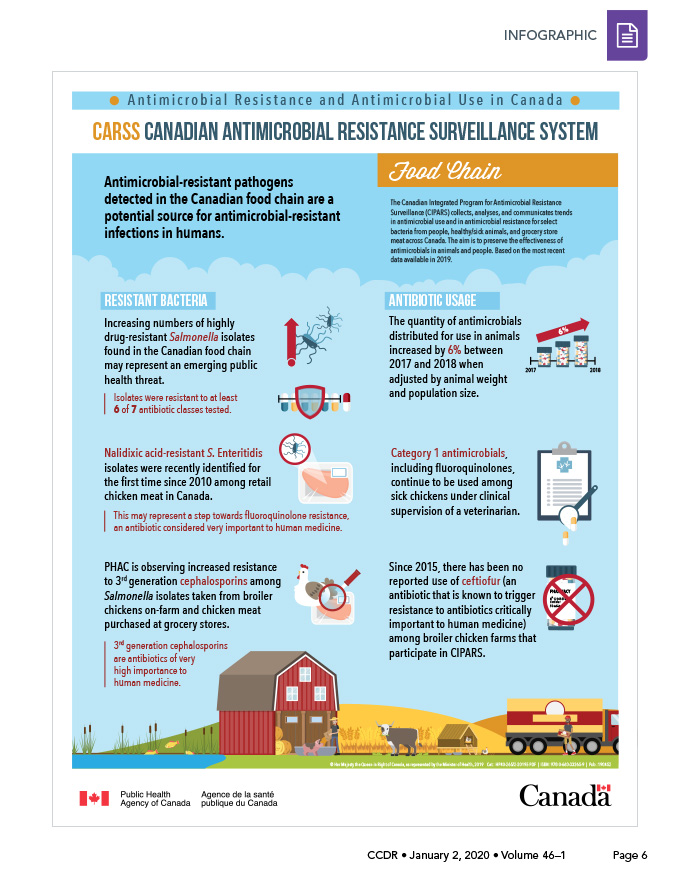
Antimicrobial-resistant pathogens detected in the Canadian food chain are a potential source for antimicrobial-resistant infections in humans.
Increasing numbers of highly drug-resistant Salmonella isolates found in the Canadian food chain may represent an emerging public health threat.
- Isolates were resistant to at least six of seven antibiotic classes tested
The quantity of antimicrobials distributed for use in animals increased by 6% between 2017 and 2018 when adjusted by animal weight and population size.
Nalidixic acid-resistant S. Enteritidis isolates were recently identified for the first time since 2010 among retail chicken meat in Canada.
- This may represent a step towards fluoroquinolone resistance, an antibiotic considered very important to human medicine
Category 1 antimicrobials, including fluoroquinolones, continue to be used among sick chickens under clinical supervision of a veterinarian.
PHAC is observing increased resistance to 3rd generation cephalosporins among Salmonella isolates taken from broiler chickens on-farm and chicken meat purchased at grocery stores.
- 3rd generation cephalosporins are antibiotics of very high importance to human medicine
Since 2015, there has been no reported use of ceftiofur (an antibiotic that is known to trigger resistance to antibiotics critically important to human medicine) among broiler chicken farms that participate in CIPARS.
The Canadian Integrated Program for Antimicrobial Resistance Surveillance (CIPARS) collects, analyses, and communicates trends in antimicrobial use and in antimicrobial resistance for select bacteria from people, healthy/sick animals, and grocery store meat across Canada. The aim is to preserve the effectiveness of antimicrobials in animals and people. Based on the most recent data available in 2019.
