
Mental health inequalities by income in Canada
Download in PDF format
(360 KB, 2 page)
Organization: Public Health Agency of Canada
Date published: 2022-07-07
Mental health refers to our state of psychological and emotional well-being1. Mental illness and mental health are not interchangeable terms2. Poor mental health can lead to mental and physical illness.
There is a clear relationship between income34 and perceived mental health that is influenced by increased stress, access to basic needs, opportunities and mental health care.
Perceived mental health care needs met
- Across all income quintiles, there are unmet needs by both sexes5.
- Out of 100 people, 14 fewer adults living in the lowest income group reported having their mental health needs fully met as compared to adults in the highest income group.
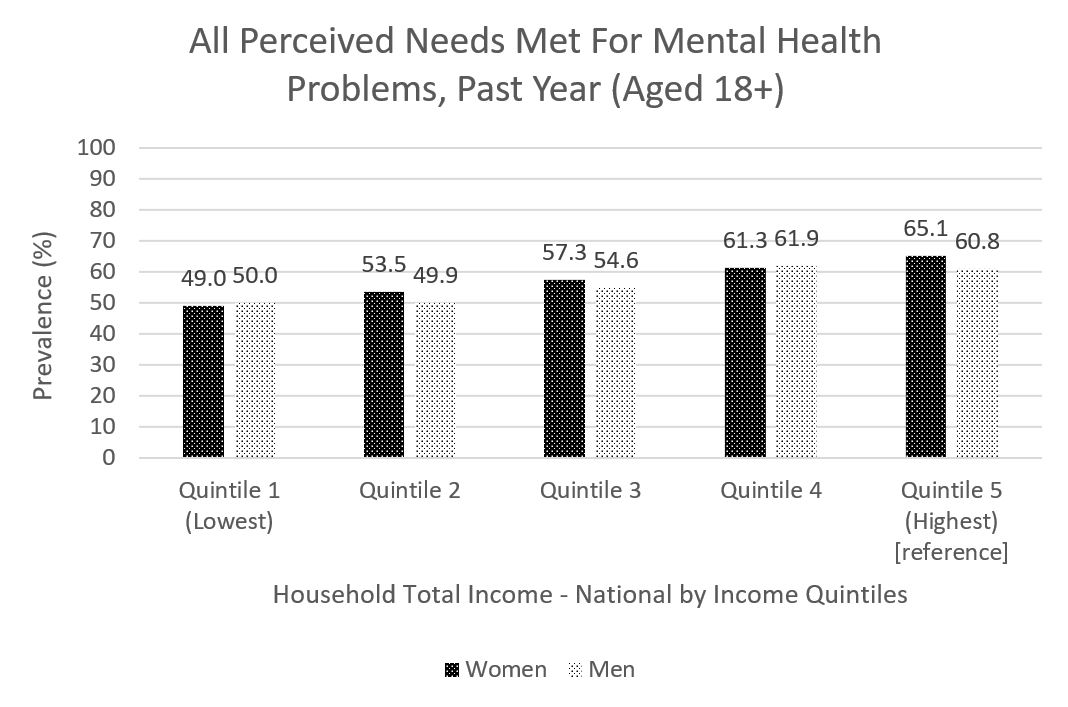
Table 1: All Perceived Needs Met For Mental Health Problems, Past Year (Aged 18+)
| Both sexes | Females | Males | |
|---|---|---|---|
| Quintile 1 (lowest income) | 49.5 | 49.0 | 50.0 |
| Quintile 2 | 52.0 | 53.5 | 49.9 |
| Quintile 3 | 56.1 | 57.3 | 54.6 |
| Quintile 4 | 61.6 | 61.3 | 61.9 |
| Quintile 5 (highest income) [reference] | 63.2 | 65.1 | 60.8 |
Source: Canadian Community Health Survey 2015-16, 2017-18
Life Satisfaction
- Out of 100 people, 14 fewer adults living in the lowest income group reported being satisfied with life as compared to adults in the highest income group6.
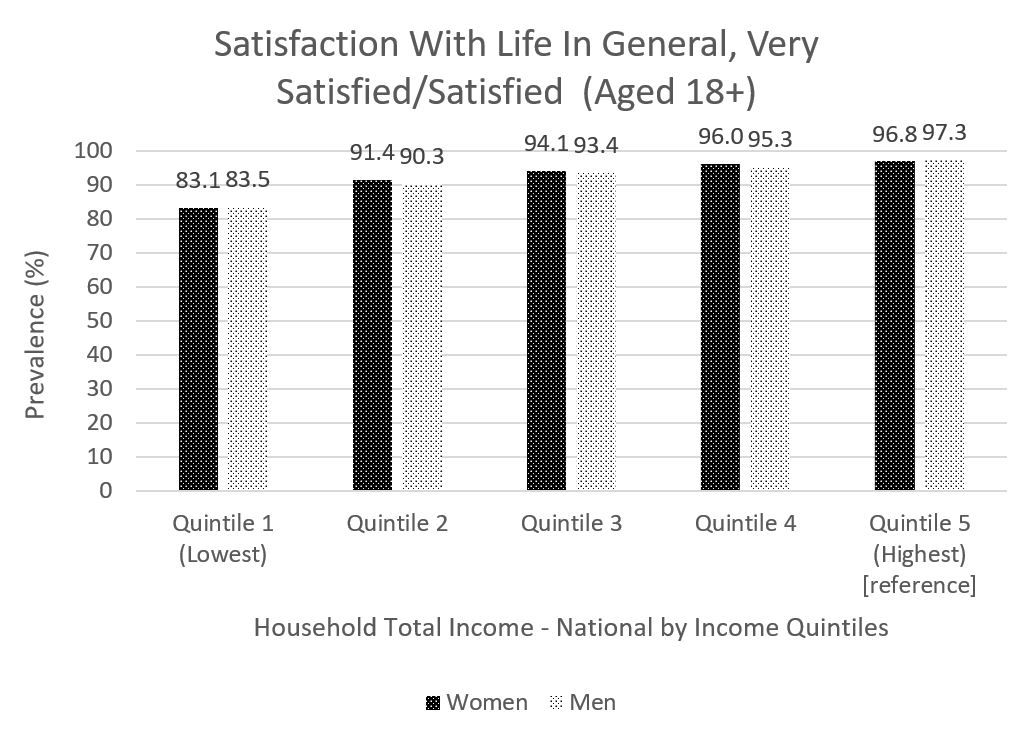
Table 2: Satisfaction with Life In General, Very Satisfied/Satisfied (Aged 18+)
| Both sexes | Females | Males | |
|---|---|---|---|
| Quintile 1 (lowest income) | 83.3 | 83.1 | 83.5 |
| Quintile 2 | 90.9 | 91.4 | 90.3 |
| Quintile 3 | 93.7 | 94.1 | 93.4 |
| Quintile 4 | 95.6 | 96.0 | 95.3 |
| Quintile 5 (highest income) [reference] | 97.1 | 96.8 | 97.3 |
Source: Canadian Community Health Survey 2015-16, 2017-18
Anxiety disorders
- Adults living in the lowest income group report having anxiety disorder at a rate that is 2.4 times that of adults in the highest income group.
- Women experience higher rates of anxiety disorders compared to men in all income quintiles with a rate that it is nearly double that of men.
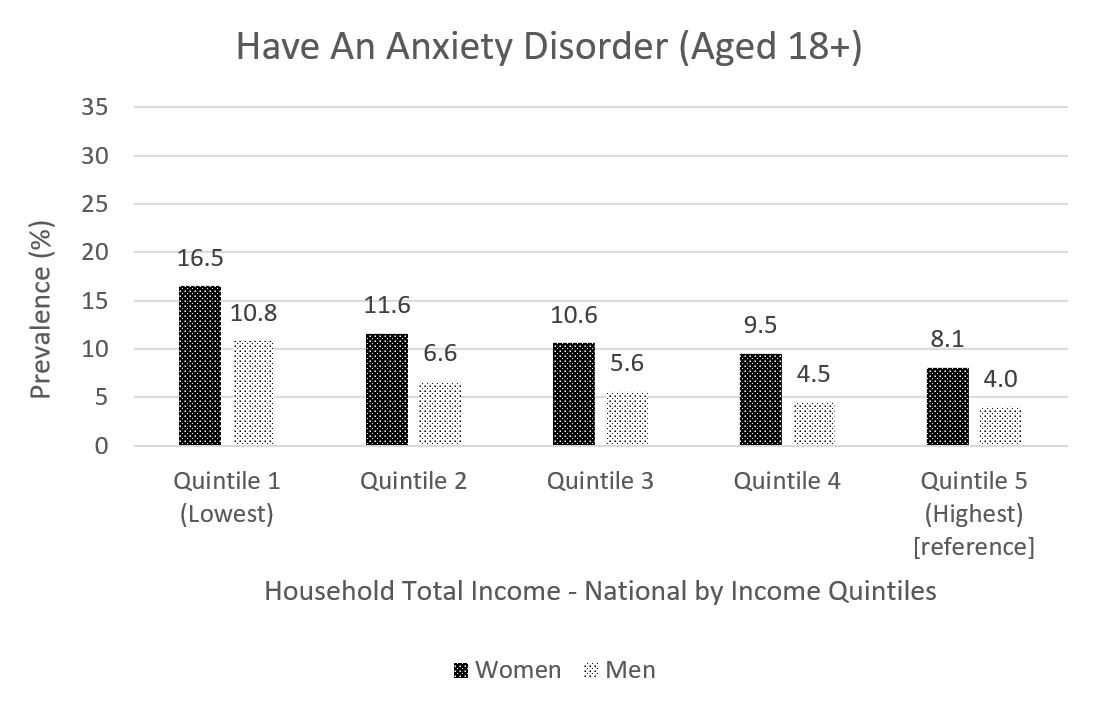
Table 3: Have an Anxiety Disorder (Aged 18+)
| Both sexes | Females | Males | |
|---|---|---|---|
| Quintile 1 (lowest income) | 13.9 | 16.5 | 10.8 |
| Quintile 2 | 9.2 | 11.6 | 6.6 |
| Quintile 3 | 8.1 | 10.6 | 5.6 |
| Quintile 4 | 7.0 | 9.5 | 4.5 |
| Quintile 5 (highest income) [reference] | 5.8 | 8.1 | 4.0 |
Source: Canadian Community Health Survey 2015-16, 2017-18
Stress (Work and life)
- Women experience significantly higher rates of self-reported work stress in all income quintiles compared to men.
- Women experience significantly higher rates of self-reported life stress in all income quintiles compared to men.
- Women in the lowest income quintile experience the highest rates of life stress overall.
- Rates of self-reported work stress generally increase in proportion to income quintile for both women and men except for the lowest.
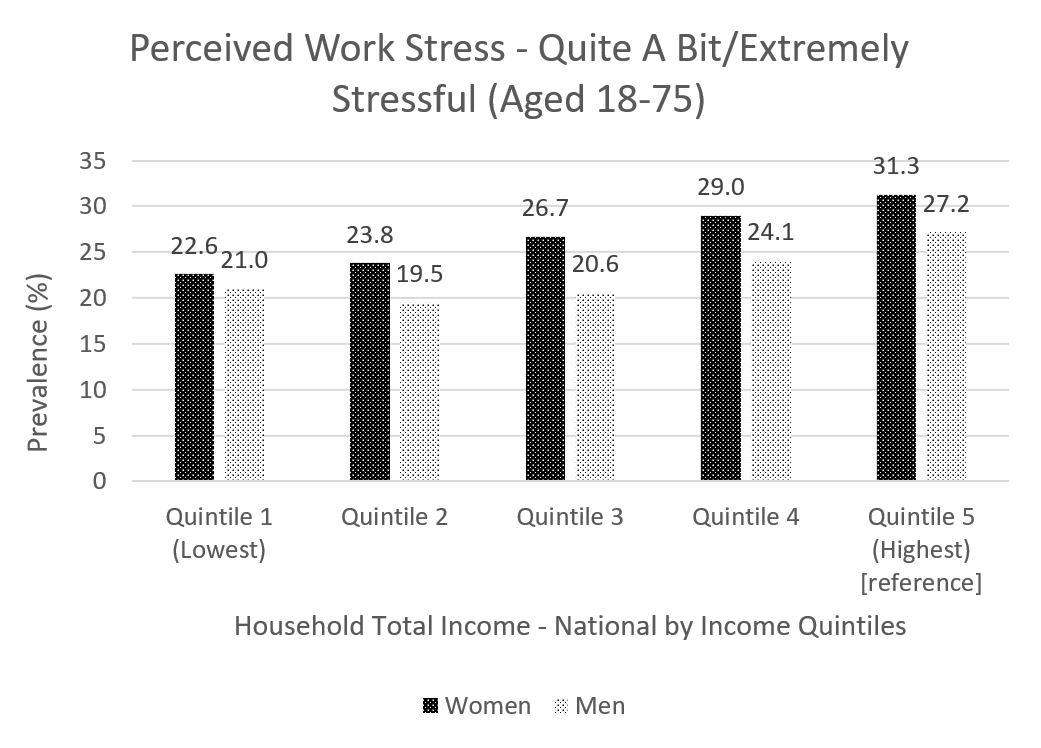
Table 4: Perceived Work Stress - Quite A Bit/Extremely Stressful (Aged 18-75)
| Both sexes | Females | Males | |
|---|---|---|---|
| Quintile 1 (lowest income) | 21.7 | 22.6 | 21.0 |
| Quintile 2 | 21.6 | 23.8 | 19.5 |
| Quintile 3 | 23.4 | 26.7 | 20.6 |
| Quintile 4 | 26.3 | 29.0 | 24.1 |
| Quintile 5 (highest income) [reference] | 28.9 | 31.3 | 27.2 |
Source: Canadian Community Health Survey 2015-16, 2017-18
To view these data and others on health inequalities in Canada, visit: https://health-infobase.canada.ca/health-inequalities/data-tool/Index.
- Footnote 1
-
Public Health Agency of Canada. Mental Health and Wellness. Available from: https://www.canada.ca/en/public-health/services/about-mental-health.html#shr-pg0 [Accessed 14 April 2022]
- Footnote 2
-
Mental health refers to our emotional, psychological, and social well-being. Mental illness or mental health disorder is an illness that affects that way people think, feel, behave, or interact with others.
- Footnote 3
-
National household total income quintiles were used. This stratifier (income quintiles – national) represents a relative measure of each respondent’s household income compared with the household incomes of all other respondents. This stratifier is derived from the total before-tax household income adjusted for household size and community size for CCHS. An income quintile is a measure of neighbourhood socioeconomic status that divides the population into five income groups (from lowest income to highest income) so that approximately 20% of the population is in each group.
- Footnote 4
-
Rates presented in this infographic are age-standardized based on the 2016 Canadian population.
- Footnote 5
-
No data were available among people who identify as Non-binary, as information on gender was not collected in CCHS 2015 to 2018. For more information, visit: https://www150.statcan.gc.ca/n1/en/catalogue/982000012021001
- Footnote 6
-
The indicator "Satisfaction with life in general, Very Satisfied/Satisfied)" is defined as respondents aged 18+ reported "very satisfied" or "satisfied" with life in general.