
Infographic: Inequalities in tuberculosis (TB) in Canada,
2010 – 2014
Download the alternative format
(PDF format, 1.43 MB, 1 page)
Organization: Public Health Agency of Canada
- Cat.: HP35-113/5-2019E-PDF
- ISBN: 978-0-660-29686-9
- Pub.: 180800
Pan-Canadian Health Inequalities Reporting Initiative
Inequalities in Tuberculosis in Canada, 2010 – 2014
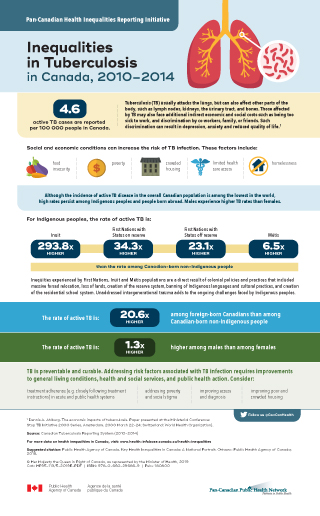
4.6 active TB cases are reported per 100 000 people in Canada.
Tuberculosis (TB) usually attacks the lungs, but can also affect other parts of the body, such as lymph nodes, kidneys, the urinary tract, and bones. Those affected by TB may also face additional indirect economic and social costs such as being too sick to work, and discrimination by co-workers, family, or friends. Such discrimination can result in depression, anxiety and reduced quality of life.Footnote 1
Social and economic conditions can increase the risk of TB infection. These factors include:
- food insecurity
- poverty
- crowded housing
- limited health care access
- homelessness
Although the incidence of active TB disease in the overall Canadian population is among the lowest in the world, high rates persist among Indigenous peoples and people born abroad. Males experience higher TB rates than females.
For Indigenous peoples, the rate of active TB is:
- Inuit
- 293.8 times higher
- First Nations with Status on reserve
- 34.3 times higher
- First Nations with Status off reserve
- 23.1 times higher
- Métis
- 6.5 times higher
than the rate among Canadian-born non-Indigenous people
Inequities experienced by First Nations, Inuit and Métis populations are a direct result of colonial policies and practices that included massive forced relocation, loss of lands, creation of the reserve system, banning of Indigenous languages and cultural practices, and creation of the residential school system. Unaddressed intergenerational trauma adds to the ongoing challenges faced by Indigenous peoples.
- The rate of active TB is:
- 20.6 times higher among foreign-born Canadians than among Canadian-born non-Indigenous people
- The rate of active TB is:
- 1.3 times higher among males than among females
TB is preventable and curable. Addressing risk factors associated with TB infection requires improvements to general living conditions, health and social services, and public health action. Consider:
- treatment adherence (e.g. closely following treatment instructions) in acute and public health systems, supporting those with chronic diseases such as diabetes
- combatting poverty and social stigma
- improving access and diagnosis
- improving poor and crowded housing
Follow us @GovCanHealth
Source: Canadian Tuberculosis Reporting System (2010-2014)
For more data on health inequalities in Canada, visit:
www.health-infobase.canada.ca/health-inequalities
Suggested citation: Public Health Agency of Canada. Key Health Inequalities in Canada: A National Portrait. Ottawa : Public Health Agency of Canada; 2018.
© Her Majesty the Queen in Right of Canada, as represented by the Minister of Health, 2019 | Cat.: HP35-113/5-2019E-PDF | ISBN: 978-0-660-29686-9 | Pub.: 180800