
Reducing substance use stigma in the Canadian health system (infographic)
Download the alternative format
(PDF format, 328 KB, 1 page)
Organization: Public Health Agency of Canada
Date published: January 2020
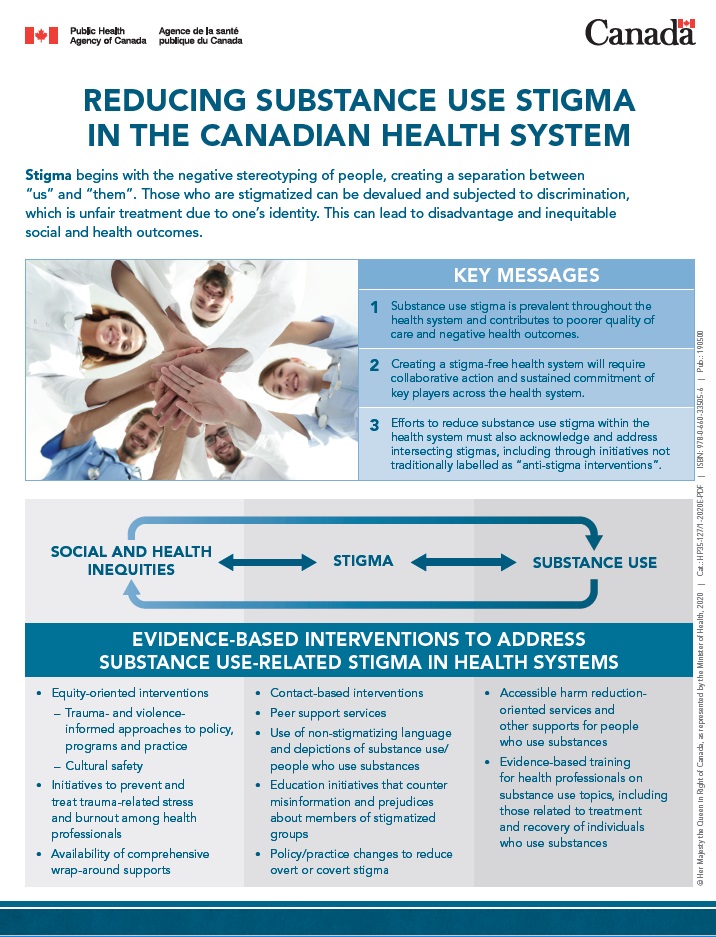
Stigma begins with the negative stereotyping of people, creating a separation between “us” and “them”. Those who are stigmatized can be devalued and subjected to discrimination, which is unfair treatment due to one’s identity. This can lead to disadvantage and inequitable social and health outcomes.
Key messages
- Substance use stigma is prevalent throughout the health system and contributes to poorer quality of care and negative health outcomes.
- Creating a stigma-free health system will require collaborative action and sustained commitment of key players across the health system.
- Efforts to reduce substance use stigma within the health system must also acknowledge and address intersecting stigmas, including through initiatives not traditionally labelled as “anti-stigma interventions”.
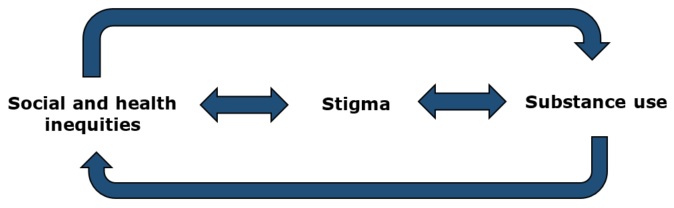
Figure 1 - Text description
The figure is composed of 3 elements: “social and health inequities,” “stigma” and “substance use,” which are aligned from left to right respectively. Each element is interconnected to the other by arrows, illustrating the linkages between them.
Evidence-based interventions to address substance use-related stigma in health systems
Social and health inequities
- Equity-oriented interventions
- Trauma- and violence-informed approaches to policy, programs and practice
- Cultural safety
- Initiatives to prevent and treat trauma-related stress and burnout among health professionals
- Availability of comprehensive wrap-around supports
Stigma
- Contact-based interventions
- Peer support services
- Use of non-stigmatizing language and depictions of substance use/people who use substances
- Education initiatives that counter misinformation and prejudices about members of stigmatized groups
- Policy/practice changes to reduce overt or covert stigma
Substance use
- Accessible harm reduction-oriented services and other supports for people who use substances
- Evidence-based training for health professionals on substance use topics, including those related to treatment and recovery of individuals who use substances