
Rabies vaccines: Canadian Immunization Guide
For health professionals
Last partial content update: September 2026
The chapter was updated with the following guidance from the National Advisory Committee on Immunization (NACI) and the Committee to Advise on Tropical Medicine and Travel (CATMAT):
- April 15, 2026: Updated guidance on the assessment of exposure to a potentially rabid animal (PDF)
- February 10, 2026: Statement on pre-exposure vaccination against rabies and animal bite prevention in the traveller
- January 30, 2026: Updated guidance for use of rabies vaccine for pre-exposure prophylaxis (PrEP) [PDF]
This information is captured in the table of updates.
Last complete chapter revision: January 2015
On this page
- Epidemiology
- Preparations authorized for use in Canada
- Immunogenicity, efficacy, and effectiveness
- Recommendations for use: Pre-exposure prophylaxis (PrEP)
- Recommendations for use: Risk assessment
- Recommendations for use: Post-exposure prophylaxis (PEP)
- Vaccination of specific populations
- Serologic testing
- Administration practices
- Storage requirements
- Safety and adverse events
- Other considerations
- Chapter revision process
- Acknowledgments
- Selected references
Please note: The Public Health Agency of Canada (PHAC) recognizes that not all people giving birth or breastfeeding will identify as women or mothers. The writing in this chapter uses a gender additive approach where the term 'woman' is used alongside gender neutral language. This is intended to demonstrate a commitment to redress the historic exclusion of trans and non-binary people, whilst avoiding the risk of marginalizing or erasing the experience of women within the health care environment. However, in line with best practice, it is recognized that when discussing or caring for individuals in a one-on-one capacity, language and documentation should reflect the gender identity of the individual. Finally, PHAC acknowledges the dynamic nature of language. It is likely that language deemed to be suitable or affirming in one context may not translate across others, and over the coming years will likely change and evolve with respect to appropriate representations.
Epidemiology
Disease description
Infectious agent
Rabies is an almost universally fatal viral infection caused by ribonucleic acid (RNA) viruses in the Lyssavirus genus of the Rhabdoviridae family. There are 18 different types of lyssaviruses. Rabies virus is the most well-known and is the main cause of rabies in humans, but all lyssaviruses have the potential to cause disease. There are different antigenic variants of rabies virus distinguished by laboratory testing. Specific variants tend to occur in specific species of mammals known as reservoir species, although these variants can be found in other mammalian species as well. The virus is susceptible to sunlight, heat and drying. For additional information about the rabies virus, refer to the Pathogen Safety Data Sheet.
Reservoir
Rabies is a disease of mammals, both domestic and wild. Dogs are the main carriers of the disease in Asia and Africa. In Canada and the United States, foxes, skunks, raccoons and bats are reservoir species. There are a number of rabies virus variants that tend to exist within their reservoir hosts (e.g., bat variants in bats, arctic fox variant in foxes), although reservoir species can also be infected by other variants. Reservoir species can transmit infection to other mammals such as dogs, cats and livestock. People can be infected by both reservoir and non-reservoir species.
Transmission
Rabies virus is most often transmitted to humans through saliva from the bite of an infected mammal. It is also rarely transmitted through direct contact of infectious material (either saliva, nerve tissue, or cerebral spinal fluid) to mucous membranes or breaks in the skin, or from transplantation or inhalation of aerosolized virus. Scratches only pose a risk if contaminated with saliva or other infectious material (nerve tissue or cerebral spinal fluid). Rabies virus is not transmissible through intact skin.
Rabies virus is neurotropic (tends to localize to neural tissues). Once deposited into the muscle or other peripheral tissue, most often through the bite of an infected animal, it proliferates in these tissues for a variable period of time. The virus then gains access to the peripheral nervous system and spreads to the central nervous system in a retrograde fashion (i.e., moving backward along the nerves toward the brain). Once in the brainstem and brain, symptoms can develop and continued replication results in anterograde spread (i.e., moving forward along the nerves away from the brain) to the salivary glands as well as to other parts of the body. Exposure to saliva, neural tissue or cerebral spinal fluid can result in spread to another host.
The average incubation period is 1 to 3 months but the incubation period can vary from days to several years due to variations in the time the virus remains in non-nervous tissue at the exposure site, such as in muscle. Exposures such as bites to highly innervated areas such as the face, neck and hands are potentially higher risk for the development of rabies than exposure in other less innervated areas of the body, although exposure to all areas of the body can result in infection. Exposure to highly innervated areas may also result in shorter incubation periods. In addition, the incubation periods may be shorter in head and neck exposures due to shorter distance for the virus to travel to the brain.
Only mammals can transmit rabies, therefore rabies is not a risk from non-mammals such as birds, snakes, fish, turtles, lizards and insects. While any mammal can be infected with rabies, rabies in small rodents and lagomorphs is rare as these animals are likely to be killed during the encounter with a larger animal that could transmit rabies to them. Human rabies has not resulted from consumption of raw meat. Infectious virus has not been isolated from milk of infectious cows and raw milk has not been associated with any human cases of rabies. Being sprayed by a skunk is not considered a rabies exposure. Transmission of rabies from person to person has only been documented to have occurred through organ transplantation.
Risk factors
Risk in humans largely relates to interaction with potentially rabid animals. Those at increased risk include veterinarians and veterinary staff, animal control and wildlife workers, persons who are involved in trapping animals, handling bats or cave exploration (spelunkers), and some travellers. Risk to travellers varies depending on itinerary, purpose and duration of the trip, and activities. Access to post-exposure prophylaxis (PEP) may also vary by location. Laboratory workers who handle live rabies virus are at increased risk of rabies virus exposure. Children are also at higher risk due to an increased likelihood of approaching animals, and the higher possibility of being bitten in the face or head.
Spectrum of clinical illness
Rabies is an almost universally fatal viral infection of the central nervous system. Early symptoms of rabies may include headache, fever and fatigue. There may be pain or unusual sensations (e.g., tingling, prickling or burning sensations) at the exposure site (e.g., the site where the person was bitten). Symptoms progress quickly as the central nervous system is attacked, generally resulting in one of two clinical forms. The more common encephalitic (furious) form presents with the classic symptoms of agitation, hyperactivity, hallucinations, and hydrophobia and aerophobia (severe laryngeal or diaphragmatic spasms and a sensation of choking when attempting to drink or when air is blown in the face). The less common paralytic form of the disease manifests in progressive flaccid paralysis, has a more protracted course, and is more difficult to diagnose.
Refer to Rabies: For Health professionals, Clinical manifestations for additional information regarding rabies in humans.
Refer to Fact Sheet - Rabies for additional information including a more detailed description of the clinical signs of rabies in animals.
Disease distribution
Global incidence of human rabies
Rabies occurs worldwide, although most human deaths occur in Asia and Africa. Bat-related rabies is the most important public health concern for rabies in the Americas and the Caribbean.
Refer to the World Health Organization (WHO): The Global Health Observatory, Rabies for additional information on the reported number of human rabies deaths by country.
National incidence of human rabies
Cases of rabies are rare in Canada. Since rabies reporting started in Canada in 1924, there have been 28 cases of human rabies (all fatal) in 6 provinces as of March 2026: 2 in Alberta, 2 in British Columbia, 1 in Nova Scotia, 9 in Ontario, 12 in Quebec, and 2 in Saskatchewan. The last case of rabies that was transmitted to a human from a non-bat mammal in Canada was in 1967 in Ontario. Since then, cases of rabies in Canada have resulted from either bat exposures within Canada or exposures to rabid animals outside of Canada.
Refer to Rabies: Monitoring for additional information on human cases of rabies in Canada.
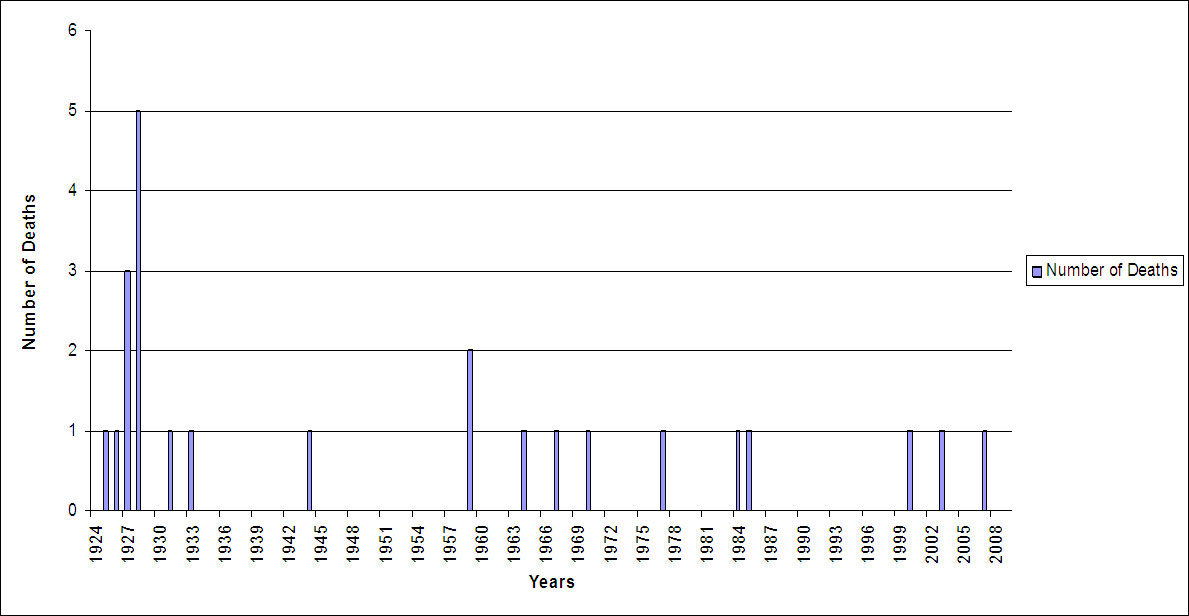
Figure 1: Text description
This is a histogram that identifies that there was 1 death from rabies in 1925, 1926 1931, 1944, 1964, 1967, 1970, 1977, 1984, 1985, 2000, 2003, 2007, 2012, 2019 and 2024.
There were 2 deaths in 1933 and 1959, 3 deaths in 1927 and 5 deaths in 1928. The rest of the years there were no reported deaths from rabies. The last reported death was in 2024.
Global burden of animal rabies
Animal rabies is more common in some countries (such as those in Asia and Africa) mainly due to canine rabies strain in dogs. Bats in Canada, the United States and Latin America can carry the rabies virus. In other regions, bats can be infected with other lyssaviruses that can also cause rabies disease. Non-human primates (e.g., monkeys) can also carry rabies in other countries although they are not generally considered reservoir species. Refer to the following resources describing global rabies epidemiology (particularly canine rabies virus variants):
- Government of Canada, Countries at high-risk for dog rabies
- Government of Canada, Travel advice and advisories by destination
- Centers for Disease Control and Prevention, Rabies Status by Country
National burden of animal rabies
Rabies in bats is a risk across Canada. The percent of tested bats that are positive is approximately 5% or more. Bat strains of rabies virus have occasionally been identified in other mammals, but globally human infection with bat strain rabies resulting from exposure to non-bat mammals is very rare.
For non-bat mammals, the number of rabid animals have decreased considerably over time, in part due to wildlife rabies control measures, such as oral rabies vaccinations delivered through baiting programs and trap-vaccinate-release programs. There are regional differences in the prevalence of rabies in non-bat reservoir species (i.e., foxes, skunks and raccoons) which can vary over time, with some jurisdictions having no reported non-bat rabies while other jurisdictions have ongoing enzootic disease or periodic epizootics. In areas with non-bat rabies, the prevalence is likely to be higher in reservoir species than non-reservoir species, however reservoir species can be a source of infection for other non-reservoir mammals (e.g., dogs, cats and cattle). Small rodents and lagomorphs are unlikely to have rabies as they are often killed by larger animals that could have transmitted rabies to them. Rabies in larger rodents such as groundhogs (woodchucks) and beavers is rare in Canada, but can occur.
Reported animal rabies epidemiology is influenced by the extent of animal surveillance. Rabies testing of animals is carried out mainly when there has been a possible exposure involving a human or other animal, or for special studies. Therefore, the reported animal rabies cases are influenced by the prevalence of animal rabies and the likelihood that an animal will have encounters with humans or domestic animals and that the animal will be captured and submitted for testing. Rabies in wildlife can be underreported in areas where there is no targeted wildlife surveillance. Even with substantial animal rabies surveillance, it is still possible for rabies to go unrecognized in a jurisdiction due to recent introductions of the virus from translocated or imported animals or from transmission from bats to non-bat mammals.
It is important for healthcare professionals to consult local public health departments regarding local epidemiology.
Refer to Rabies in Canada for additional information on animals found to have rabies by Canadian province or territory each year.
Refer to Rabies: For health professionals, Surveillance for additional information on the distribution of rabies virus variants in Canada.
Preparations authorized for use in Canada
Rabies vaccines (Rab)
- IMOVAX® Rabies (inactivated, human diploid cell rabies vaccine), Sanofi Pasteur Limited. (HDCV)
- RABAVERT (inactivated, purified chick embryo cell rabies vaccine), Bavarian Nordic A/S (PCECV)
Both vaccines are authorized for pre-exposure and post-exposure prophylaxis in all age groups.
Rabies immunoglobulins (RabIg)
- HyperRAB® (300 IU/mL, rabies immunoglobulin [human]), Grifols Therapeutics LLC.Footnote *
- KamRAB® (150 IU/mL, rabies immunoglobulin [human]), Kamada Ltd.Footnote *
RabIg is a solution of anti-rabies immunoglobulin prepared from the pooled human plasma of screened donors immunized with rabies vaccine. RabIg is available on an emergency basis through local public health officials.
Preparations authorized for use in Canada may not be currently available for sale. Refer to Health Canada's Drug Product Database (DPD) for its drug status. Definitions of drug status can be found under DPD Terminology.
For complete prescribing information, consult the product leaflet or information contained within the product monograph available through Health Canada's DPD.
Refer to Contents of immunizing agents authorized for use in Canada in Part 1 for a list of vaccines and passive immunizing agents authorized for use in Canada and their contents.
Immunogenicity, efficacy, and effectiveness
Pre-exposure immunogenicity
Rabies pre-exposure prophylaxis (PrEP) primes the immune response so that it can be rapidly boosted with rabies vaccine after an exposure to a potentially rabid animal, avoiding the need for rabies immunoglobulin.
Both 2-dose and 3-dose schedules of rabies vaccine given by either the 1-site intramuscular (IM) or 2-site intradermal (ID) routes of administration result in very high seroconversion (antibody titres of 0.5 IU/mL or higher) in the short term after vaccination. Over time there is a decline in antibody titres and a related drop in seroconversion. However after booster doses (as would be given for post-exposure prophylaxis [PEP]) antibody titres are substantially higher than after the primary series, with almost 100% seroconversion. The ability to elicit a booster response for a 3-dose PrEP schedule has been demonstrated for more than 20 years from the primary series, however, data on the boostability of a 2-dose PrEP schedule is limited beyond 3 or more years from the primary series.
Post-exposure immunogenicity
Clinical studies in patients exposed to rabies virus have demonstrated that PCECV, when used in a 5- or 6-dose post-exposure schedule, provided protective antibody titres in 98% of patients within 14 days and in 100% of patients by day 30. In a study of subjects who received HDCV in a 5-dose post-exposure schedule as well as RabIg on day 0, all vaccinees reached a protective antibody titre by day 14 and remained at that level through day 90. One (1) year later, protective antibody concentrations were maintained in 98.3% of subjects.
Effectiveness
Properly administered PEP is very effective at preventing rabies. Failures of PEP have occurred very infrequently, most often from errors in administration or in cases with short incubation periods, such as wounds to the head or neck. One (1) failure of PEP was reported in the United States in an older individual with an unrecognized immunocompromising condition.
Recommendations for use: Pre-exposure prophylaxis (PrEP)
Individuals who should or may receive rabies pre-exposure prophylaxis (PrEP)
Rabies PrEP should be offered to the following individuals:
- people who work with the rabies virus in a research or vaccine production laboratory
- people with regular/frequent bat exposures (e.g., contact with bats, enters high density bat environments, people who perform necropsies on bats)
- people who routinely perform necropsies on mammals due to suspected rabies
- rabies diagnostic laboratory workers
- veterinarians, veterinary staff and veterinary students
- animal control workers
- animal shelter workers
- wildlife workers
Rabies PrEP may be offered to the following individuals:
- recreational trappers
- recreational spelunkers
- travellers to areas where rabies vaccine is recommended
Refer to Travellers for additional information on whether rabies vaccine may be recommended for a specific international travel destination.
Individuals who should or may receive PrEP are divided into "very high risk", "high risk" and "moderate risk" groups as outlined in Table 1, which also provides the recommended rabies PrEP schedules and serology recommendations based on risk group and whether or not the person is immunocompromised.
All rabies PrEP schedules can be administered using 1-site intramuscular (IM) (1.0 mL) or 2-site intradermal (ID) (0.1 mL at each site) routes of administration, including any subsequent booster doses if needed.
Refer to Administration practices for additional information on 2-site ID administration.
"Very high risk" and "high risk" groups
Those in the "very high risk" and "high risk" groups are at risk due to regular activities that may result in exposures they may not recognize and therefore they may not seek post-exposure prophylaxis (PEP) as recommended (such as an unrecognized breach in personal protective equipment in a laboratory worker or person performing a necropsy, or when working with bats). These groups are recommended to receive a 3-dose primary series of rabies vaccine on days 0, 7 and 21 to 28 for rabies PrEP, with periodic serology (refer to Table 1). Some laboratories may also require serology after a primary series before workers begin working with live rabies virus.
If periodic serology in these groups find a rabies antibody titre below 0.5 IU/mL, a booster dose given as 1-site IM or 2-site ID should be administered. Serologic testing is not needed after an appropriately administered booster, with the exception of individuals considered immunocompromised or taking chloroquine/hydroxychloroquine. Ongoing periodic serologic testing should continue at recommended frequencies following the booster dose.
Refer to Serology following pre-exposure prophylaxis (PrEP) for additional information.
"Moderate risk" group
For those in the "moderate risk" group who are not immunocompromised, the recommended schedules for rabies PrEP vary based on duration of risk:
- Risk expected to extend 3 or more years or duration is uncertain: 2-dose primary series on days 0 and 7 to 28, with a booster dose at 12 to 24 months after the second dose.
- Risk expected to be less than 3 years: 2-dose primary series on days 0 and 7 to 28.
- PrEP schedules that deviate from days 0, 7 and 21 to 28 are off-label, which should be discussed with the person receiving the vaccine.
- If the second dose is given 7 days or more after the first dose, it is considered valid and sufficient for risk that is expected to last less than 3 years. If the second dose is given 3 or more years from the first dose and ongoing protection is needed, a third dose at least 2 weeks after the second dose is recommended.
- Serology is generally not recommended for those in the "moderate risk" group who are not immunocompromised as they are likely to have only recognized exposures. However, those who may have unrecognized exposures can obtain periodic serology in consultation with their healthcare professional, and receive a booster dose if their rabies antibody titre falls below 0.5 IU/mL.
Pre-exposure prophylaxis (PrEP) for people who are immunocompromised
If possible, administer PrEP for a person who is immunocompromised at a time that maximizes the immune response (e.g., begin after the immunocompromised state has resolved, or complete the primary series at least 2 weeks before a planned immunocompromised state). For hematopoietic stem cell transplant recipients, PrEP can be started 6 to 12 months after transplant.
If PrEP is considered necessary because potential rabies exposure cannot be avoided and the immunocompromising condition cannot be corrected, people who are immunocompromised are recommended to receive 3 doses of rabies vaccine on days 0, 7 and 21 to 28 followed by serology 2 to 4 weeks after the third dose (or at least 1 week after the third dose) (refer to Table 1). For people who are immunocompromised in the "very high risk" or "high risk" groups (i.e., risk groups with potentially unrecognized exposures), they should also follow the recommendations for regular periodic serology as outlined in Table 1.
Refer to People who are immunocompromised and Serology following pre-exposure prophylaxis (PrEP) for additional information.
Table 1. Rabies pre-exposure prophylaxis (PrEP) vaccination schedule and serology recommendations by risk group for individuals who are immunocompetent and for those who are considered immunocompromisedTable 1 Footnote aTable 1 Footnote b
All rabies PrEP schedules can be administered using 1-site IM (1.0 mL) or 2-site ID (0.1 mL at each site) routes of administration, including any subsequent booster doses if these are needed. Refer to Administration practices for additional information on 2-site ID administration.
| Risk groups | Examples | Schedule | SerologyTable 1 Footnote c |
|---|---|---|---|
| Immunocompetent | |||
Very high risk Potentially unrecognized exposures |
People who work with the rabies virus in a research or vaccine production laboratory |
3-dose primary series on days 0, 7 and 21 to 28 |
Every 6 months |
High risk Potentially unrecognized exposures |
People with regular/frequent bat exposures (e.g., contact with bats, enters high-density bat environments, people who perform necropsies on bats); People who routinely perform necropsies on mammals due to suspected rabies; Rabies diagnostic laboratory workers |
3-dose primary series on days 0, 7 and 21 to 28 |
Every 2 years For those who are immunocompromised or 65 years of age and older, routine serologic testing can be performed more frequently (i.e., between every 6 months to 2 years) as per clinical discretion. Refer to Immunocompromised section in Table 1 below for serology recommendations after the primary series or booster doses for those who are immunocompromised. |
Moderate risk Mainly recognized exposures |
Veterinarians; Veterinary staff; Veterinary students; Animal control workers; Animal shelter workers; Wildlife workers; Spelunkers; Travellers to areas where rabies vaccine is recommended; Trappers |
Risk expected to extend 3 or more years or duration of risk is uncertain 2-dose primary series on days 0 and 7 to 28 A booster dose is also recommended, ideally 12 to 24 months after the second dose. |
Generally not recommended. Those who may have unrecognized exposures can obtain periodic serology in consultation with their healthcare professional. |
Risk expected to be less than 3 years 2-dose primary series on days 0 and 7 to 28 |
|||
| Immunocompromised | |||
Individuals who are considered immunocompromised |
All risk groups identified above |
3-dose primary series on days 0, 7 and 21 to 28 |
Serology at between 2 and 4 weeks after the primary series, and after any subsequent/booster doses. If results are needed sooner, testing can be performed at 1 week following the completion of the primary series or booster dose. If an immunocompromised person is in the "very high risk" or "high risk" groups (i.e., groups with potentially unrecognized exposures), they should also follow the recommendations for regular periodic serology as outlined above in this table. |
Rabies vaccine pre-exposure prophylaxis (PrEP) schedule timing considerations
Second dose timing
The minimum interval between the first and second dose is 7 days.
Third/booster dose timing
The minimum interval between the second and third dose or a booster dose is 14 days.
Although delayed third or booster doses (beyond 3 or more years from the second dose) are not optimal due to limited evidence regarding boostability of 2-dose schedules, a delayed third or booster dose schedule is still considered acceptable as a 3-dose schedule.
Post-exposure prophylaxis (PEP) schedules for future pre-exposure prophylaxis (PrEP)
Complete PEP schedules (at least 4 doses on day 0, 3, 7 and 14) are considered valid as any future PrEP. If a day 0, 3 and 7 schedule was used (such as in an incomplete PEP schedule), the second dose (day 3) should be ignored for future PrEP considerations (i.e., a day 0, 3, and 7 schedule should be considered as 2 doses with respect to future PrEP).
Recommendations for use: Risk assessment
A risk assessment should be conducted every time a human has been exposed to a potentially rabid animal in order to determine the appropriate management, including determining whether and when rabies post-exposure prophylaxis (PEP) is indicated. In evaluating each case of potential rabies exposure, local public health officials should be consulted as per provincial/territorial policies.
The risk assessment should consider factors related to:
- the animal
- local rabies epidemiology
- the exposure, and
- the exposed person
Tables 2 and 3 provide an overview of the factors to consider when conducting a risk assessment to determine whether and when to offer rabies PEP and are followed by recommendations and considerations regarding exposures to specific types of animals. Table 2 provides factors to consider for mammals other than bats, while Table 3 provides factors specific to bats. The tables and recommendations and considerations regarding exposures to specific types of animals are guides for management and do not replace clinical judgment.
When conducting a risk assessment, consider that the risk of rabies transmission to humans is the probability of several factors multiplied together, including the probability that:
- the animal has rabies (considering factors such as the species, including whether it is a domestic pet, stray animal or wildlife; local animal rabies epidemiology; the behaviour and history of the animal, including vaccination history if applicable);
- the animal is in its communicable period (which may vary by species); and
- the exposure was sufficient to transmit the virus and result in infection.
Although the above probabilities may not be known for certain, the closer one or more of these probabilities is to zero, the lower the risk of developing rabies from the animal exposure. There are two accepted methods to rule out that an animal was able to transmit rabies at the time of a human exposure:
- a negative rabies test result from an appropriate animal specimen using World Organisation for Animal Health (WOAH) and World Health Organization (WHO) recommended tests; or
- observation of dogs, cats, and ferrets for 10 days after the exposure to ensure they remain alive and neurologically appropriate (i.e., normal or unchanged from their usual neurologic status).
A 14-day observation period for livestock is also now recommended based on a conservative extrapolation from the 10-day recommendation for dogs, cats and ferrets, and supported by limited experimental evidence showing that the earliest infected livestock had rabies virus in their saliva was 2 days before onset of signs of rabies.
The risk assessment should be conducted as soon as possible after the exposure. If PEP is determined to be indicated, it should be initiated as soon as possible, avoiding unnecessary delays. If reporting of the exposure is delayed, a risk assessment should still be conducted, as in rare instances the incubation period for rabies has been prolonged (with 2 to 3% of cases having an incubation period of more than 1 year, based on information from the World Health Organization) and it is possible that PEP may still be of benefit despite the delay.
Table 2: Framework for the risk assessment of exposure to mammals other than bats
Refer to Recommendations and considerations regarding exposures to specific types of animals for additional information.
Refer to Exposures that occur outside of Canada for additional information on exposures that occur abroad.
| Factors | Considerations | Further details |
|---|---|---|
| Animal | ||
Type of animal |
Only mammals are capable of transmitting rabies Recommendations vary depending on the type of mammal, including for:
|
Refer to Recommendations and considerations regarding exposures to specific types of animals for additional information |
History of the animal Note that the history of the animal may not be available in some circumstances, such as if it is a wild animal, stray animal or the owner is not known |
Consider the following regarding the history of the animal (if known):
|
Higher risk if the animal:
|
Behaviour of the animal |
Is the animal behaving normally or unusually? |
|
Provocation |
Did the person provoke the animal or was the exposure unprovoked? Provocation can include when a person: approaches the animal; attempts to feed the animal; enters into the animal's space; startles the animal; comes between the animal and its offsprings, food, toys or other valued items, or their owner or the owner's family |
|
Availability of the animal for observation and/or testing Note that the animal may not be available for observation or testing in some circumstances, such as if it is a wild animal, stray animal or the owner is not known |
Is the animal available for observation and/or testing? Observation periods are as follows and are only recommended if the animal appears neurologically appropriate (i.e., normal or unchanged from their usual neurologic status):
For other animals for which a reliable observation period has not been defined (as per above), if the animal is available and a potential rabies exposure has occurred based on the risk assessment, public health officials and a veterinarian (if available) should be consulted. If deemed necessary, the animal should be euthanized and the appropriate specimen should be submitted for testing. |
Refer to Recommendations and considerations regarding exposures to specific types of animals for additional information Refer to Submission for animal rabies testing for additional information on how to submit a specimen for testing |
| Rabies epidemiology in animalsTable 2 Footnote c | ||
Species |
What is the epidemiology of rabies in the species of animal that caused the exposure? Only mammals are capable of transmitting rabies. |
|
Geographic area |
For domestic animals: How likely is rabies to be circulating where the human exposure occurred or where the animal has been during the prior 6 months (if this type of information is available from the owner/caregiver)? For wild animals: How likely is rabies to be circulating in the geographic area where the human exposure to the animal occurred? |
|
Time period since last animal rabies case |
When were the last animal rabies cases identified? |
Assuming sufficient surveillance, the longer the period where no animal rabies has been detected, the lower the risk that an animal involved in an exposure will have rabies. However, it is important to note that introduction of rabies infected animals can occur at any time and may go unrecognized for some time |
Quantity of rabies infected animals |
What is the number and percent of submitted animals that have tested positive for rabies over time? |
Assuming sufficient surveillance, the lower the number of animals that have tested positive and the lower the percent positivity in the area, the lower the risk that an animal involved in an exposure will have rabies. However, it is important to note that introduction of rabies infected animals and/or spread among rabid animals may go unrecognized for some time |
| Exposure | ||
Type of exposure |
Exposure events that may transmit rabies virus from mammals other than bats are classified as either bites or non-bitesTable 2 Footnote d with the following exposures considered to pose a risk:
Contamination of an exposed person's open wounds or mucous membranes with saliva or neural tissue/fluid from the animal. Scratches from claws would only pose a risk of rabies if the wound is contaminated by saliva or neural tissue/fluid from the animal |
|
Location of the exposure on the body |
The location of exposure on the body does not determine if rabies PEP should be offered, but rather can influence whether and how long it is reasonable to wait before initiating rabies PEP while investigating the exposure incident |
|
Severity of the wound(s) |
Severity of the wound(s) is based on the number, size and depth of the wounds The severity of the wound(s) can influence whether and how long it is reasonable to wait before initiating rabies PEP while investigating the exposure incident |
|
| Exposed personTable 2 Footnote e | ||
Reliability of the history |
The age, cognitive status, and other factors related to the exposed person may impact the reliability of the exposure history |
|
Table 3: Framework for the risk assessment of exposure to bats
Refer to Recommendations and considerations regarding exposures to specific types of animals, Bats for additional information on management of bat exposures
Refer to Exposures that occur outside of Canada for additional information on exposures that occur abroad.
| Factors | Considerations | Further details |
|---|---|---|
| Animal | ||
Type of animal |
Bats are a reservoir speciesTable 3 Footnote a for rabies. All bats found in Canada can be infected with and transmit rabies |
The proportion of rabies in tested bats is approximately 5% or more |
Availability for testing |
The most accurate way to rule out rabies in a bat is a negative rabies test result from an appropriate specimen using World Organisation for Animal Health (WOAH) and World Health Organization (WHO) recommended tests |
If a bat has been involved in a human exposure (refer to Type of exposure below) and is available, the bat should be euthanized and the whole bat should be submitted for testingTable 3 Footnote b Refer to Submission for animal rabies testing for additional information on how to submit a specimen for testing |
| Rabies epidemiology in animals relative to where the exposure occurred | ||
Geographic area |
All bats found in Canada can be infected with and transmit rabies |
Refer to Exposures that occur outside of Canada for additional information for information on exposures that occur abroad |
| Exposure | ||
Type of exposure |
Exposure to a bat is defined as:
|
Even very minor or transient direct contact between a person's skin and a live bat is considered an exposure warranting intervention (i.e., testing of the bat and/or PEP) because bites inflicted by bats may not be felt and may leave no visible bite marks When a bat is found in a room with a person, including a sleeping person, this is only considered an exposure if it meets the exposure definition (see left column), such as if there has been direct contact with the bat Refer to Recommendations and considerations regarding exposures to specific types of animals, Bats for additional information on management of bat exposures, including on a bat found in a room Refer to Exposure to dead mammals for additional information |
Location of the exposure on the body |
The location of exposure on the body does not determine if rabies PEP should be offered, but rather can influence whether and how long it is reasonable to wait before initiating rabies PEP |
PEP for bat exposures should generally begin as soon as possible after an exposure. In some circumstances NOT involving the head, neck or hands, if the bat has been sent for rabies testing, the healthcare professional may decide to delay PEP by not more than 48 hours from the time of exposure while waiting for test results |
| Exposed personTable 3 Footnote d | ||
Reliability of the history |
The age, cognitive status, and other factors related to the exposed person may impact the reliability of the exposure history |
|
Submission for animal rabies testing
For animals requiring rabies testing, the animal should be humanely euthanized in a manner that does as little damage to the brain as possible and the appropriate specimen(s) should be submitted to a Canadian Food Inspection Agency (CFIA) rabies testing laboratory. The animal should be euthanized and submitted using appropriate protocols, including appropriate infection prevention and control precautions. If at all possible, the animal should be captured and euthanized by someone with suitable experience and/or training (e.g., animal control worker, wildlife worker).
- For most animals, submit the entire head. If the skull has been damaged (e.g., the animal was shot in the head), include the cervical spinal cord as well.
- For small animals (less than 500 g) submit the entire carcass to aid species identification (e.g., bats).
- For large animals (more than 100 kg) and all livestock, submit the entire brain and portion of cervical spinal cord. If the entire brain cannot be submitted, collect portions of brain tissue bilaterally from the cerebellum, hippocampus and brain stem.
Submission of specimens for animal rabies testing should be done according to provincial/territorial guidance.
Recommendations and considerations regarding exposures to specific types of animals
Dogs, cats and ferrets
Dogs, cats and ferrets (including stray, unowned, and surrendered animals) that appear neurologically appropriate (i.e., normal or unchanged from their usual neurologic status) should generally be observed for 10 days after a bite or other exposure that poses a risk for rabies transmission. If the dog, cat or ferret could have transmitted rabies at the time of exposure, it would typically show clinical signs of rabies or die within the 10-day observation period, as 10 days is the accepted maximum time period of communicability before onset of signs of rabies in these species. During the observation period, exposure should be limited to people who routinely care for or live with the animal. Care should be taken to avoid further salivary exposure to humans or other animals.
In general, rabies PEP is not initiated unless the animal begins to show signs of rabies. However, in some instances (e.g., severe wounds to the head, neck or hands, particularly in an animal assessed as being at increased risk of having rabies based on Table 2), PEP can be initiated at the beginning of the observation period. If the animal remains alive and neurologically appropriate throughout the 10-day observation period, PEP may be discontinued or may be continued if needed for future pre-exposure prophylaxis (PrEP), in consultation with local public health officials.
Local public health officials and a veterinarian (if available) should be consulted about the need for euthanasia and testing if: clinical signs suggestive of rabies exist at the time of the exposure or develop during the observation period; observation is not possible or is not safe for people or the animal; or the animal requires euthanasia based on quality of life. If deemed necessary, the animal should be euthanized and the appropriate specimen should be submitted for testing. Factors in Table 2 can assist with determining whether to administer PEP while waiting for test results. If PEP is started and the animal subsequently tests negative for rabies, PEP may be discontinued or may be continued if needed for future PrEP, in consultation with local public health officials.
Refer to Submission for animal rabies testing for additional information.
The observation of a dog, cat or ferret that appears neurologically normal or unchanged from their usual neurologic status and has been involved in a bite or other exposure can take place at the owner's/caretaker's home, an animal shelter, or a veterinary clinic, depending on circumstances including: the reliability of the owner/caretaker; the ability to prevent the animal's escape; and the suspicion of rabies in the animal. The person responsible for observing the animal should notify public health officials immediately if the animal develops any new neurological signs, changes in behaviour, or escapes during the observation period. Depending on the risk assessment and provincial/territorial policy, the status of the animal at the end of the 10-day observation period can be confirmed by public health officials by any one of a variety of means, including: phone call, text message, electronic observation, or in-person visit. An unvaccinated animal should wait until the end of the observation period to be vaccinated or undergo any other elective care.
In some very low-risk scenarios, based on a risk assessment considering the factors in Table 2, a decision may be made to forego a formal observation period of a dog, cat or ferret that is available for observation (e.g., an appropriately vaccinated domestic dog, cat or ferret in a low-risk area following a provoked bite, particularly if the animal remains within the household of the exposed person).
If the dog, cat or ferret has escaped, attempts should be made to find the animal and owner. A decision should be made regarding the need to initiate PEP or how long to wait to begin PEP while trying to find the animal, considering all applicable factors in the risk assessment (refer to Table 2). Similarly, if the animal and owner cannot be located, the risk assessment as outlined in Table 2 should be applied to determine the need for PEP.
Bats
An exposure to a bat is considered to have occurred when there has been direct contact between a person and a live bat, or, much less commonly, when saliva or neural tissue/fluid from the bat enters into an open wound or mucous membrane. Direct contact is defined as a contact between human skin and a live bat (i.e., a bat touching or landing on a person, or a person touching a bat). Even very minor or transient direct contact between a person and a live bat is considered an exposure warranting intervention (i.e., testing of the bat and/or PEP) because bites inflicted by bats may not be felt and may leave no visible bite marks. A bat caught in a person's hair should be considered an exposure as it would be difficult to ensure that direct contact with skin did not occur. When there is no direct contact between a person's skin and a bat and no exposure to saliva or neural tissue/fluid into an open wound or mucous membrane, rabies PEP is not recommended.
A bat landing on clothing would require an intervention (i.e., testing of the bat and/or PEP) unless the person (or accompanying adult for a child) is certain that the bat did not come into contact with skin (e.g., bat only landed on clothing not likely to be punctured by bat teeth, such as a thick coat) and there has been no saliva or neural tissue/fluid exposure to wounds or mucous membranes.
If there has been an exposure to a bat (as defined above) and the bat is available, it should be appropriately euthanized and submitted for testing. Capturing a bat should be done with extreme care to avoid further contact with the bat (Refer to Submission for animal rabies testing). Given the proportion of tested bats determined to have rabies (approximately 5% or more), in general rabies PEP should begin as soon as possible after an exposure. In some circumstances NOT involving the head, neck or hands, if the bat has been sent for rabies testing, the healthcare professionals may decide to delay PEP by not more than 48 hours from the time of exposure while waiting for test results. If the bat tests negative for rabies, PEP may be discontinued or may be continued if needed for future PrEP prophylaxis, in consultation with local public health officials.
Testing of a bat is not indicated when no human or domestic animal exposure has occurred. If there has been no exposure to the bat, the bat should not be captured for testing and should be safely released. To remove a bat from a building, the area with the bat should be closed off from the rest of the building and people and pets kept out of the area. The doors or windows in the area with the bat should be opened to the exterior to let the bat escape. If a bat was sent for rabies testing with no human exposure having occurred (e.g., tested because of a domestic animal exposure), PEP for humans is not indicated regardless of the test result.
When a bat is found in a room, PEP is indicated only if there has been an exposure, such as direct contact with the bat. Given the challenge of assessing direct contact when a bat is found in a room with a child or adult who is unable to give a reliable history, factors that may indicate that direct contact has occurred include the individual suggests direct contact occurred, or wakes up crying or upset while the bat was in the room, or an obvious bite or scratch mark is observed.
For exposures to a dead bat, refer to Exposure to dead mammals for additional information.
Livestock
The risk of human rabies infection from exposure to livestock (e.g., horses, cattle, sheep, goats, pigs) is very low. Human exposures to rabies from livestock are usually due to salivary contamination of open wounds when a hand is inserted into the animal's mouth, although bites have been reported, particularly from horses and swine.
When a bite or contamination of an open wound from livestock (e.g., horses, cattle, sheep, goats, pigs) is reported, information should be collected to conduct a risk assessment according to the factors outlined in Table 2. If there is concern about the animal's behaviour, health, or exposure history, a veterinarian (if available) should be consulted. Management of the animal and the need for rabies PEP should be determined in consultation with a veterinarian (if available) and public health officials. If the animal (i.e. horse, cattle, sheep, goat or pig) appears healthy and neurologically normal or unchanged from their usual neurologic status, it should be observed for 14 days. If possible, the animal should be kept in its usual environment to avoid causing behaviour changes related to altering the animal's environment and general management. During the observation period, precautions should be taken to ensure the animal does not escape and is not slaughtered. Exposure to people should be limited to those who routinely care for the animal, and care should be taken to avoid further salivary exposure to humans or other animals. The owner should be advised to consult with a veterinarian and inform public health officials as soon as possible if there is any change in the animal's behaviour or health.
The 14-day observation period is a conservative extrapolation from the period of communicability in dogs, cats and ferrets of up to 10 days before onset of signs of rabies and is supported by limited experimental evidence showing that the earliest infected livestock had rabies virus in their saliva was 2 days before onset of signs of rabies.
Rodents and lagomorphs
Squirrels, hamsters, guinea pigs, gerbils, chipmunks, rats, mice and other small rodents, as well as lagomorphs (e.g., rabbits and hares), are rarely found to be infected with rabies. Based on information up to 2018, human infection from rodents has not been reported globally. It is believed that small rodents are likely to be killed by any larger mammal that could have potentially transmitted rabies to them. While these small animals can very rarely become infected by bat strains of rabies, no cases of transmission of bat strains of rabies from these animals to humans have been documented. Rabies in larger rodents such as groundhogs (woodchucks) and beavers can occur but is rare in Canada.
Because small rodents and lagomorphs are very unlikely to be rabid, PEP should be considered only if the animal's behaviour is highly unusual. For example, a bite from a squirrel while feeding it would not be considered unusual behaviour and so does not warrant PEP, based on this information alone. Exposure to larger rodents, such as groundhogs and beavers, requires a risk assessment considering the rabies epidemiology in non-bat mammals in the area that could be a source of infection and the circumstances of the exposure to determine the need for PEP (refer to Table 2). If the rodent or lagomorph is available and rabies testing is deemed necessary, the animal can be euthanized and the appropriate specimen submitted to the laboratory. Refer to Submission for animal rabies testing for additional information.
Other wildlife susceptible to rabies and exotic animals (other than ferrets)
Foxes, skunks and raccoons are reservoir species for the rabies virus in Canada, meaning that species-specific variants of virus can circulate within each species. Rabies variants that circulate in foxes, raccoons and/or skunks are present in some parts of Canada. In these areas, reservoir species pose a higher risk for transmission of rabies than other wild mammals, however spillover of a specific variant can result in infection in other mammals (other reservoir or non-reservoir species). In areas not known to be experiencing epizootics or ongoing transmission in wildlife, rabies in non-reservoir species is unlikely, but still possible from yet unrecognized incursions of the virus into the area or from infection from a bat to another mammal.
Bites or other exposures that can result in rabies transmission from wildlife or exotic animals (other than ferrets) require a risk assessment considering the factors outlined in Table 2. If the animal is not available for testing and the risk assessment indicates that rabies PEP is warranted, it should be initiated as soon as possible.
If the animal is available and a potential rabies exposure has occurred based on the risk assessment, public health officials and a veterinarian (if available) should be consulted. If deemed necessary, the animal should be euthanized and the appropriate specimen should be submitted for testing. Refer to Submission for animal rabies testing for additional information.
A risk assessment based on factors in Table 2 can assist with determining whether rabies PEP should begin immediately while waiting for rabies test results from the animal, or if it is reasonable to delay until test results are available. Exposures to highly innervated areas such as the head, neck or hands and more severe bite exposures would generally be indications for initiating PEP as soon as possible while waiting for test results.
Other potential exposure situations
Exposure to dead mammals
While dead mammals cannot bite, touching a dead mammal can result in a scratch from a tooth, or saliva or neural tissue/fluid can enter an open wound or mucous membrane. Exposure to a dead mammal carries a very low risk of rabies transmission but requires a risk assessment given that infection is possible. The condition of the animal carcass can be considered as part of the risk assessment, given that the rabies virus is susceptible to sunlight, heat and drying. If an exposure is suspected, local public health officials should be consulted to support the risk assessment and coordinate rabies testing of the animal, if warranted. If testing is indicated, the appropriate sample can be submitted as per provincial/territorial guidance and processes, and the CFIA rabies laboratory will determine if the specimen is fit for testing. Refer to Submission for animal rabies testing.
Indirect exposures, such as to fur, surfaces or objects that may be contaminated with rabies virus
Rabies virus in saliva or neural tissue/fluid may contaminate an animal's fur (e.g., following an attack by a rabid animal), or saliva or neural tissue/fluid containing rabies virus could contaminate surfaces or objects. However, to result in an infection, the rabies virus would need to remain viable outside of the body (it is susceptible to sunlight, heat and drying), and would need to be introduced into a person while viable via an open wound or mucous membrane. The very low risk of transmission from these types of indirect exposures is exemplified by the multiplication of probabilities. For example, the likelihood of transmission through contact with fur from an animal involved in a fight involves the multiplication of the following probabilities, with each multiplication lowering the risk of human infection to levels that are usually very low:
- Rabies infection in the attacking animal (considering the local rabies epidemiology and other factors in the risk assessment)
- The attacking animal is in the communicable stage of infection
- Saliva or neural tissue/fluid containing the rabies virus ends up on the fur of the attacked animal
- The virus on the fur remains viable until contact with a person
- The rabies virus is introduced into an open wound or mucous membrane of a person
- Sufficient virus is present to result in infection
For these indirect exposures, a risk assessment is required to determine if any intervention is needed. Fur, surfaces, or objects cannot be sent for rabies testing.
Exposures that occur outside of Canada
Exposures that occur outside of Canada follow the same general risk assessment principles as outlined in Table 2 and Table 3, with some notable exceptions. In some parts of the world that continue to have canine rabies (Asia, Africa and parts of Central and South Americas and Eastern Europe), the risk associated with an exposure may be substantially higher than in Canada. In these locations, medical assessment should be sought promptly after thorough cleansing and flushing of the wound (refer to Local wound care for additional information); PEP should not be delayed to allow for an observation period or animal testing. To avoid delays, if PEP is indicated, it should be started in the region where the exposure occurred. As per the World Health Organization (WHO) recommendations, PEP can be discontinued if a dog, cat or ferret is healthy at the end of the 10-day observation period, or if the animal tests negative for rabies. However, while ensuring that a dog, cat or ferret is healthy at the end of a 10-day observation period may be possible in a foreign country, it can be challenging, and therefore in some instances it may be safest to complete the recommended PEP regimen.
Exposure to non-human primates is fairly common in some countries. Although non-human primates are not reservoir species for rabies, they can be infected and so exposure to these animals requires a risk assessment. Bats in Canada, the United States and Latin America can carry the rabies virus. In other regions, bats can be infected with other lyssaviruses that can also cause rabies disease.
Risk assessments following exposures to potentially rabid animals in other countries should be conducted as soon as possible and PEP, if indicated, should be initiated as soon as possible and should not be delayed until return to Canada. People exposed to potentially rabid animals outside of Canada should seek medical attention as soon as they return to Canada, and bring all documentation of vaccines and immunoglobulin received abroad.
Refer to Travellers for additional information.
Exposure to a person with rabies
Exposures occurring in the course of caring for people with rabies could, theoretically, transmit the infection. No case of rabies acquired in this way has been documented, but PEP should be considered for individuals exposed to saliva or neural tissue from a person with rabies.
Recommendations for use: Post-exposure prophylaxis (PEP)
The objective of post-exposure prophylaxis (PEP) is to neutralize the rabies virus at the site of infection before the virus can enter the peripheral and central nervous systems. It is very important that all PEP steps are carefully followed, including local wound care, rabies vaccination, rabies immunoglobulin (RabIg) (if indicated), and serology (if indicated).
Local wound care
Immediate and thorough cleaning and flushing of the wound with soap and water is imperative and is probably the most effective procedure in the prevention of rabies, although it is very important that all post-exposure steps be carefully followed. Care should be taken to clean the wound to its full depth. Flushing with copious amounts of water for approximately 15 minutes is suggested. Some guidelines also suggest the application of a viricidal agent, such as iodine-containing or alcohol solutions. Suturing the wound should be avoided if possible, and tetanus prophylaxis and antibiotics should be given as appropriate. When indicated, tetanus immunoglobulin (TIg) and tetanus toxoid-containing vaccine can be administered concurrently with RabIg and rabies vaccine. Separate anatomic injection sites and separate needles and syringes should be used for all products.
Rabies Immunoglobulin (RabIg)
RabIg provides immediate passive protection until the exposed person mounts an immune response to the rabies vaccine, which is present in almost all vaccine recipients by 14 days from the first dose of rabies vaccine. RabIg is indicated for those not previously appropriately vaccinated and for those who are moderately to severely immunocompromised regardless of past vaccination. RabIg should be given at the same time as the first dose of rabies vaccine but at a different anatomic injection site (e.g., a different limb), using separate needles and syringes for each product.
The recommended dose of RabIg is 20 IU/kg body weight for all age groups, including children, given on the first day of initiation of PEP (day 0). The volume for the weight-based dose of RabIg should be carefully calculated recognizing that one RabIg product has a concentration of 300 IU/mL (HyperRAB®) and the other has a concentration of 150 IU/mL (KamRAB®).
Because of possible interference of RabIg with the immune response to the rabies vaccine, the dose of RabIg should not be exceeded. If possible, the full dose of RabIg should be thoroughly infiltrated into the wound and surrounding area. Infiltration of wounds with RabIg in some anatomical sites (e.g., fingertips) must be carried out with care to avoid increased pressure in the tissue compartment. Any remaining volume of RabIg should be injected intramuscularly (IM), using a separate needle, at (a) different anatomical injection site(s) distant (i.e., (a) different limb (s)) from the site of vaccine administration. When more than 1 wound exists, each wound should be locally infiltrated with a portion of the RabIg using a separate needle. With large or multiple wounds, the RabIg can be diluted as stated in the product monograph (or with sterile normal saline if not stated in the product monograph) to provide RabIg in sufficient volume for thorough infiltration of all wounds.
If the site of the wound is unknown, the entire 20 IU/kg dose should be administered IM at (a) different anatomical injection site(s) (i.e., (a) different limb(s)) from the administration of rabies vaccine. If RabIg is not administered as recommended at the initiation of the rabies vaccine series, it should be administered up to and including day 7 after starting the rabies vaccine but should not be administered after that time.
RabIg is not recommended for individuals who have been appropriately vaccinated against rabies, unless they are moderately to severely immunocompromised.
Rabies vaccine
Vaccine should be administered IM into the deltoid muscle in older children and adults or into the vastus lateralis muscle (anterolateral thigh) in infants, but never in the gluteal region as this may result in decreased response to the vaccine. The rabies vaccine and RabIg should be given at different anatomic injection sites (e.g. different limbs) on day 0, using a separate needle and syringe. For subsequent vaccine doses, the limb where RabIg was previously administered can be used.
Rabies vaccine for post-exposure prophylaxis of people who are NOT immunocompromised
For PEP of previously unimmunized people who are not immunocompromised, rabies vaccination consists of 4 doses of 1.0 mL of rabies vaccine administered IM; this is in addition to the RabIg as discussed above. The 4 doses are given on days 0, 3, 7 and 14, with the day 0 dose given as soon as possible after the risk assessment determines the need for PEP. See Table 4 for a summary of recommendations for those who have not previously received rabies vaccine.
For people who have been appropriately vaccinated against rabies and are not moderately to severely immunocompromised, only 2 doses of rabies vaccine are recommended for PEP (on days 0 and 3); RabIg is not recommended for these individuals. See Table 5 for additional guidance for those who have previously received one or more doses of rabies vaccine.
Note that provincial and territorial guidance for PEP may differ. Please check provincial/territorial guidance regarding PEP regimens.
Refer to Other considerations, Drug interactions for information on the management of people taking chloroquine/hydroxychloroquine.
Rabies vaccine for post-exposure prophylaxis of people who are immunocompromised
Those who are immunocompromised and who have not been previously vaccinated should receive 5 doses of rabies vaccine given IM on days 0, 3, 7, 14 and 28, along with RabIg on day 0. For those who are moderately to severely immunocompromised, this schedule is recommended regardless of past rabies vaccination. Serology should be checked 7 to 14 days after the final dose in the series for those who are immunocompromised. See Table 4 for a summary of recommendations for people who are immunocompromised and have not received any previous rabies vaccination and Table 5 for additional guidance for those who are immunocompromised and have previously received one or more doses of rabies vaccine. Immunosuppressive agents should not be administered during PEP unless essential for the treatment of other conditions.
If no acceptable antibody response is detected on serologic testing, the patient should be managed in consultation with their physician and appropriate public health officials to receive a second rabies vaccine series followed by repeat serology. RabIg should not be repeated at the initiation of this second course. Refer to Serology following post-exposure prophylaxis (PEP) for additional information.
Rabies vaccine post-exposure prophylaxis schedule timing considerations
The vaccination schedule for PEP should be adhered to as closely as possible and it is essential that all recommended doses of vaccine be administered. Although there is little or no evidence, in keeping with routine immunization practice, it is recommended that, if a dose of vaccine is given at less than the recommended interval, that dose should be ignored and given again at the appropriate interval from the ignored dose. If a dose of vaccine is delayed, it should be given as soon as possible and the schedule resumed, respecting the appropriate intervals from the previous dose. If there has been a substantial deviation in the schedule, post-vaccination serology should be obtained 7 to 14 days after completing the vaccination series.
Table 4: Post-exposure prophylaxis (PEP) recommendations for those who have not previously received rabies vaccination
| Intervention | People who are NOT immunocompromised | People who ARE immunocompromisedTable 4 Footnote a |
|---|---|---|
Rabies immunoglobulin (RabIg) |
20 IU/kg on day 0 (the first day of starting PEP) As much as possible should be administered at the wound site, with the remainder of the weight-based dose given using a different needle at a IM site different than used for rabies vaccination |
20 IU/kg on day 0 (the first day of starting PEP) As much as possible should be administered at the wound site, with the remainder of the weight-based dose given using a different needle at a IM site different than used for rabies vaccination |
Rabies vaccineTable 4 Footnote b |
IM on days, 0, 3, 7 and 14 The day 0 dose should not be administered at the same site as the RabIg |
IM on days, 0, 3, 7, 14 and 28 The day 0 dose should not be administered at the same site as the RabIg |
Serology |
Not neededTable 4 Footnote c |
Recommended 7 to 14 days after the day 28 doseTable 4 Footnote d |
Table 5: Post-exposure prophylaxis (PEP) guidance for those who previously received pre-exposure prophylaxis (PrEP) or at least one dose of rabies vaccine
Note that clinical discretion is required in managing specific circumstances.
| Pre-exposure prophylaxis (PrEP) or rabies vaccination previously received | Post-exposure prophylaxis (PEP) guidanceTable 5 Footnote a Note that day 0 refers to the first day of starting PEP and not the day of exposure |
|---|---|
| Immunocompetent | |
At least 3 doses (including 2 doses plus a booster)Table 5 Footnote b |
2 doses of rabies vaccine IM on days 0 and 3 No rabies immunoglobulin (RabIg) |
2 doses with the second dose administered less than 3 years in the pastTable 5 Footnote b |
2 doses of rabies vaccine IM on days 0 and 3 No RabIg |
2 doses with the second dose administered 3 or more years in the pastTable 5 Footnote b |
RabIg and 4 doses of rabies vaccine IM on days 0, 3, 7 and 14Table 5 Footnote c. |
1 dose of rabies vaccineTable 5 Footnote d |
RabIg and 4 doses of rabies vaccine IM on days 0, 3, 7 and 14Table 5 Footnote c. |
| ImmunocompromisedTable 5 Footnote e | |
At least 3 doses and demonstration of adequate serology after completion of the primary series (equal to or greater than 0.5 IU/mL)Table 5 Footnote b |
Those who are moderately to severely immunocompromised at the time of the exposure:
Those who are mildly immunocompromised or no longer immunocompromised at the time of the exposure:
|
At least 3 doses without demonstration of adequate serology after completion of the primary series (no serology test or result less than 0.5 IU/mL) |
|
2 or fewer doses (with or without serology) |
|
Vaccination of specific populations
Pregnancy and breastfeeding
Pregnancy and breastfeeding are not contraindications to post-exposure prophylaxis (PEP) with rabies vaccine and rabies immunoglobulin (RabIg), but it is prudent to delay rabies pre-exposure prophylaxis (PrEP) during pregnancy unless there is a substantial risk of exposure. Rabies vaccine should be given as indicated during breastfeeding for both rabies PrEP and PEP.
Refer to Immunization in pregnancy and breastfeeding in Part 3 for additional general information.
People who are immunocompromised
Corticosteroids, other immunosuppressive agents, and immunosuppressive illnesses (e.g., congenital immunodeficiency, human immunodeficiency virus [HIV] infection, leukemia, lymphoma, generalized malignancy) may interfere with the antibody response to rabies vaccine. Because of suboptimal response to the rabies vaccine, in general, immunocompromised persons should be counselled to avoid situations of rabies exposure. If possible, administer rabies PrEP at a time that maximizes the immune response (e.g., begin the primary series after the immunocompromised state has resolved or complete the primary series at least 2 weeks before a planned immunocompromised state). For hematopoietic stem cell transplant recipients, PrEP can be started 6 to 12 months after transplant.
PEP should be administered as soon as possible when indicated based on the risk assessment. Immunosuppressive agents should not be administered during PEP unless essential for the treatment of other conditions.
Specific schedules followed by serology are recommended for both rabies PrEP and PEP for people who are immunocompromised.
For PrEP, refer to Recommendations for use: Pre-exposure prophylaxis (PrEP) and Table 1.
For PEP, refer to Recommendations for use: Post-exposure prophylaxis (PEP) and Table 4 for those not previously vaccinated and Table 5 for those who have previously received one or more doses of rabies vaccine.
Refer to Serology following post-exposure prophylaxis (PEP) for additional information, including on the management of titres less than 0.5 IU/mL.
Refer to Immunization of immunocompromised persons in Part 3 for additional information on people who are considered immunocompromised.
Travellers
Pre-exposure management for travellers
Rabies PrEP may be offered to travellers to areas where rabies vaccine is recommended. The Committee to Advise on Tropical and Travel Medicine (CATMAT) provides comprehensive recommendations for international travellers, including specific information on animal bites and rabies. CATMAT's discretionary recommendations for rabies PrEP is based on the destination having both a relatively higher risk of rabies (indicated by presence of circulating canine variant rabies) and that RabIg may not be readily available.
For destination specific advice, consult the Government of Canada's Travel Advice and Advisories pages to determine whether the rabies vaccine may be recommended for a specific international travel destination. After selecting the destination country, the rabies information can be found in the 'Health' section, under 'Pre-travel vaccines and medications'.
Refer to the "moderate risk group" of Table 1 for the recommended PrEP schedule for travellers.
Travellers for whom rabies vaccine is recommended who are departing in less than 7 days from initiating the primary series should still receive 1 dose before departure and should be counselled that they have not received a full PrEP vaccination series. They should be counselled that they require full PEP (including rabies immunoglobulin [RabIg]) on an urgent basis after an exposure. Additional dose(s) in the PrEP schedule can be received at the travel destination based on a risk-benefit assessment (including consideration of duration of travel, activities during travel and availability of RabIg for PEP should it be needed) or on returning from travel if future travel or other exposures to potentially rabid animals are anticipated.
General pre-departure counselling for travellers includes:
- Avoiding direct contact with animals that could potentially carry rabies, including closely monitoring children and individuals with cognitive impairments, who may not recognize risky interactions.
- Being aware of activities that increase the risk of animal encounters, staying alert of their surroundings and following local guidance.
- Planning ahead to identify the nearest urban medical centres
- Providing advice on managing animal injuries (bite or scratch, or contamination of open wounds) which includes immediate wound care (thoroughly clean the wound with soap and water and flush the wound with copious amounts of water for approximately 15 minutes). Medical assessment should be prompt and not be delayed. If PEP is indicated, it should be started in the region/country where the exposure occurred.
- Advising that travellers receiving PEP overseas should keep detailed records of RabIg and vaccines administered, including date, product name, and batch number, and where possible, should take photos of the immunoglobulin and/or vaccine packaging and labels.
- Advising that travellers with possible rabies exposure abroad should follow-up with a healthcare professional as soon as they return to Canada.
Post-exposure management for travellers
Information on management of exposures that occur overseas can be found in the Exposures that occur outside of Canada. The traveller who had a possible rabies exposure abroad should consult a healthcare professional as soon as they return to Canada. Public health officials should be consulted regarding travellers who have had an exposure to a potentially rabid animal overseas, even if the traveller received a complete course of PEP in that country. The prevalence of rabies in developing countries is generally higher than in Canada, and there may be concerns about the potency of available vaccines in these countries. Options for consideration in the management of travellers exposed in developing countries include initiating or repeating all or part of the PEP, obtaining post-vaccination serology or both.
Refer to Immunization of Travellers in Part 3 for additional general information.
Workers
Rabies PrEP should be offered to workers at risk of occupational exposure to potentially rabid animals or to the rabies virus. Refer to Recommendations for use: Pre-exposure prophylaxis (PrEP) for occupational groups for whom rabies pre-exposure prophylaxis is recommended. Schedules and serology recommendations for these groups can be found in Table 1. Some laboratories that work with the rabies virus may require serology after PrEP before beginning work with live rabies virus. Follow laboratory-specific recommendations.
Serologic testing
The Public Health Agency of Canada's National Microbiology Laboratory (NML) is the Canadian rabies reference laboratory. NML conducts testing on serum from all provinces and territories in Canada with the exception of Ontario, where serological testing is performed by Public Health Ontario's Laboratory (PHOL).
NML uses a modified Fluorescent Antibody Virus Neutralization (FAVN) assay, while PHOL uses a modification of the Rapid Fluorescent-Focus Inhibition Test (RFFIT). Both institutions consider the antibody titre of at least 0.5 IU/mL as an indication of an adequate immune response following vaccination. Low levels of antibodies are present immediately after passive vaccination with RabIg and have a half-life of approximately 21 days. Response to vaccination is present in almost all vaccine recipients by day 14 after the start of pre-exposure prophylaxis (PrEP) or post-exposure prophylaxis (PEP) in those have not been previously unvaccinated and by day 7 in those who have been previously vaccinated.
Serology following pre-exposure prophylaxis (PrEP)
Serologic testing is recommended for PrEP as follows:
- People with potentially unrecognized exposures (such as those in the "very high risk" and "high risk" groups) are recommended to receive regular serology as outlined in Table 1
- People who are immunocompromised should have serology checked 2 to 4 weeks (or at least 1 week if results are needed earlier) after completing the primary series or any booster dose
- People who are taking chloroquine/hydroxychloroquine while receiving rabies vaccines for PrEP should have serology checked 2 to 4 weeks (or at least 1 week if results are needed earlier) after completing the primary series or any booster dose
- People who have had PrEP with vaccines other than human diploid cell (HDCV), purified chick embryo cell vaccine (PCECV) or purified Vero cell vaccine (PVRV) should have serology checked 2 to 4 weeks (or at least 1 week if results are needed earlier) after completing the primary series or any booster dose
- People who have received PrEP using the 1-site intradermal (ID) route of administration (which is no longer recommended) for 1 or more doses of their primary series or for any booster dose should have serology checked 2 to 4 weeks (or at least 1 week if results are needed earlier) after completing the primary series or any booster dose
Response to serology results less than 0.5 IU/mL after PrEP:
If regular serologic testing (such as for people in the "very high risk" or "high risk" groups) indicates a titre of less than 0.5 IU/mL, a booster dose given as 1-site IM or 2-site ID should be administered. Serologic testing is not needed after an appropriately administered booster, with the exception of individuals who are immunocompromised or taking chloroquine/hydroxychloroquine. Routine serology should continue at the recommended interval following the booster dose.
If the rabies antibody titre is less than 0.5 IU/mL in a person who:
- is immunocompromised
- taking chloroquine or hydroxychloroquine or
- had used products or routes of administration that are not recommended
an additional dose of rabies vaccine should be administered (either IM or 2-site ID) followed by another serologic test (at 2 to 4 weeks or at least 1 week from the additional dose). If the titre is again less than 0.5 IU/mL, provide another dose and repeat serology. If the titre remains below 0.5 IU/mL, consultation with a specialist or public health official is recommended.
Serology following post-exposure prophylaxis (PEP)
Serologic testing is recommended for PEP as follows:
- People who are immunocompromised while receiving PEP
- People who require PEP and were immunocompromised while receiving PrEP should have serology checked 7 to 14 days after completing a course of PEP
- People who are taking chloroquine/hydroxychloroquine while receiving PEP should have serology checked 7 to 14 days after completing a course of PEP.
- People who have had a substantial deviation from the recommended PEP vaccination schedule
- If there is concern about the PEP received abroad, based on clinical discretion.
Response to serology results less than 0.5 IU/mL after PEP:
If the rabies antibody titre is less than 0.5 IU/mL after PEP, a second rabies post-exposure vaccine series is recommended (with the same schedule as the first series based on Table 4 and Table 5) without additional rabies immunoglobulin, followed by further serologic testing 7 to 14 days after completing the second series. For immunocompromised individuals, this should be in consultation with their physician and appropriate public health officials. If a titre of equal to or greater than 0.5 IU/mL is not achieved after the second series, consultation with a specialist or public health official is recommended.
Administration practices
Each 1.0 mL dose of human diploid cell vaccine (HDCV) or purified chick embryo cell vaccine (PCECV) contains at least 2.5 international units (IU) of rabies antigen, which is the WHO recommended standard.
Dose and route of administration for pre-exposure prophylaxis (PrEP)
For PrEP either the 1-site 1.0 mL intramuscular (IM) or 2-sites intradermal (ID, 0.1 mL at each site) routes of administration can be used. Whenever possible the PrEP series should use the same route of administration for all doses, but if this is not feasible a change in the route of administration during the primary series is acceptable.
Use of ID administration for rabies PrEP is off-label and this off-label use should be discussed with the person receiving the vaccine. Two-site (2-site) ID administration requires 0.1 mL ID at each of 2 distinct body locations (e.g., left and right side if possible) on the same visit. The safest practice is to use a separate needle and syringe for each site of the 2-site ID dose. The WHO recommends the following body sites for ID injection: the deltoid region, or the anterolateral thigh or suprascapular regions.
Sharing of a vial of rabies vaccine can be done using the ID route if more than one person requires PrEP within the 6 hours of first puncture of the vial. The date and time the product should be discarded (i.e., 6 hours after first puncture for reconstitution) should be written on the vial, for example: "Discard by (time) on (date)". Strict infection prevention and control precautions are required when using the same vial on multiple individuals, including steps to ensure that the vial is not inadvertently re-punctured with a used needle.
Refer to Vaccine administration practices in Part 1 for additional information.
Dose and route of administration for post-exposure prophylaxis (PEP)
For PEP, the IM route of administration (1.0 mL per dose) is currently recommended for rabies vaccination, although provincial/territorial recommendations may differ (see specific provincial/territorial recommendations).
Refer to Recommendations for use: Post-exposure prophylaxis (PEP) for additional information on administering rabies vaccine and rabies immunoglobulin.
Interchangeability of vaccines
Wherever possible, an immunization series should be completed with the same product. However, if it is not feasible to do so, purified chick embryo cell vaccine (PCECV), human diploid cell vaccine (HDCV) and purified Vero cell rabies vaccine (PVRV) are considered interchangeable within the primary series for PrEP, and PCECV and HDCV are considered interchangeable for PEP. Booster doses of rabies vaccine do not need to be given using the same product as the initial immunization series.
Refer to Principles of Vaccine Interchangeability in Part 1 for additional general information.
Concurrent administration with other vaccines
Data are not available regarding the concurrent administration of rabies vaccines with other vaccines. Based on expert opinion, live vaccines given by the nasal or oral route and essential inactivated vaccines may be administered at the same time as rabies vaccines. Parenteral vaccines should be administered using separate needles and syringes and if possible, at different anatomic injection sites (different limbs). If multiple injections in the same limb are required, the injection sites should be separated by at least 2.5 cm (1 inch).
When indicated, tetanus immunoglobulin (TIg) and tetanus-toxoid containing vaccine can be administered concurrently with RabIg and rabies vaccine. Rabies vaccine and RabIg should never be given at the same anatomic injection site (same limb) on the same day. Also, tetanus immunoglobulin (TIg) and tetanus-toxoid containing vaccine should never be given at the same anatomic injection site. All products must be administered using separate needles and syringes.
RabIg may interfere with the response to live vaccines. To optimize the effectiveness of live vaccines, it is recommended to wait 4 months after the administration of RabIg to receive MMR, MMRV and monovalent varicella vaccines.
Refer to Blood products, human immunoglobulin and timing of immunization, and Timing of vaccine administration chapters in Part 1.
Storage requirements
HDCV (IMOVAX® Rabies) should be stored at +2°C to +8°C, and should not be used if it has been frozen.
PCECV (RABAVERT) should be stored at +2°C to +8°C and protected from light.
Once reconstituted, these vaccines should be administered promptly, and no later than 6 hours following reconstitution.
Rabies Immunoglobulin (RabIg) should be stored at +2°C to +8°C, and should not be used if it has been frozen.
Refer to the product leaflet or information contained within the product monograph available through Health Canada's DPD and Storage and Handling of Immunizing Agents in Part 1 for additional information.
Safety and adverse events
Refer to Part 2: Vaccine safety for additional general information.
Common and very common adverse events
Common adverse events occur in 1% to less than 10% of vaccinees. Very common adverse events occur in 10% or more of vaccinees.
Human diploid cell vaccine (HDCV)
Local injection site reactions were common to very common with injection site pain reported very commonly and erythema, swelling and induration at the injection site reported commonly. Mild systemic reactions such as headache, and myalgia were also very common adverse events reported in about 38 to 44% of recipients.
Purified chick embryo cell vaccine (PCECV)
Local injection site reactions were very common adverse events reported in greater than 10% of recipients, consisting of injection-site pain and induration. Mild systemic reactions such as abdominal pain, myalgia and decreased appetite were commonly reported. Lymphadenopathy and rash are also common to very commonly reported.
Rabies immunoglobulin (RabIg)
Local injection site pain is common to very commonly reported and injection site nodule is commonly reported. For systemic reactions, headache was commonly to very commonly reported while abdominal pain, diarrhea and flatulence were commonly reported.
Uncommon, rare and very rare adverse events
Uncommon adverse events occur in 0.1% to less than 1% of vaccinees. Rare and very rare adverse events occur, respectively, in 0.01% to less than 0.1% and less than 0.01% of vaccinees.
Human diploid cell vaccine (HDCV)
Allergic reactions are rare (0.3%) in trial participants. Anaphylaxis has been very rarely reported although exact incidence rate is unknown. Two (2) cases of neurologic illness resembling Guillain-Barré syndrome, which resolved without sequelae within 12 weeks, were reported but a causal relationship has not been established.
Purified chick embryo cell vaccine (PCECV)
Anaphylaxis following immunization with PCECV has been very rarely reported (< 0.001%). Temporally associated neurologic events have also been reported but causal association with vaccination has not been established.
Guidance on reporting Adverse Events Following Immunization (AEFI)
To ensure the ongoing safety of vaccines in Canada, reporting of AEFIs by vaccine providers and other clinicians is critical, and in some jurisdictions, reporting is mandatory under the law.
Vaccine providers are asked to report AEFIs through local public health officials and to check for specific AEFI reporting requirements in their province or territory.
In general, any serious or unexpected adverse event felt to be temporally related to vaccination should be reported.
Refer to Vaccine safety and pharmacovigilance and Adverse events following immunization (AEFI) in Part 2 for additional information on vaccine safety and for definitions of AEFIs, and reporting of AEFI to public health.
Contraindications and precautions for rabies pre-exposure prophylaxis (PrEP)
Vaccine is contraindicated in persons with proven immediate or anaphylactic hypersensitivity to any component of the vaccine or its container (e.g., latex), with the exception of egg allergy, and these persons should not be given the vaccine for pre-exposure prophylaxis (PrEP) if possible. For specific advice, consult an allergy specialist.
Egg Allergy
RABAVERT®(PCECV) rabies vaccine is grown in chick embryo cell culture. IMOVAX® Rabies (HDCV) vaccine is manufactured using human diploid cell cultures and therefore contains no egg products. Individuals should be asked about allergies to egg or chicken prior to vaccination with PCECV. For rabies PrEP, HDCV should be given to persons with a history of hypersensitivity reactions to egg or egg products as a precautionary measure.
Refer to Table 1 and Table 2 in Contents of Immunizing Agents Authorized for use in Canada in Part 1 for lists of all vaccines and passive immunizing agents authorized for use in Canada and their contents.
Additional precautions rabies PrEP
It is prudent to delay rabies PrEP during pregnancy, unless there is a substantial risk of exposure. During breastfeeding, rabies vaccine should be given as indicated for PrEP.
PrEP with rabies vaccine should be postponed in persons with moderate or severe acute illness. Persons with minor acute illness (with or without fever) may be vaccinated.
Contraindications and precautions for rabies post-exposure prophylaxis (PEP)
Once infected with the rabies virus and symptomatic, fatality is almost 100%. As a result, while vaccines are in general contraindicated in persons with a proven immediate or anaphylactic hypersensitivity to any component of the vaccine or its container (e.g., latex), with the exception of egg allergy, there are no absolute contraindications to the use of rabies vaccine or RabIg for PEP if indicated based on a risk assessment. Consultation with an allergist or expert in immunization reactions is advised.
Precaution is warranted in situations of suspected hypersensitivity or non-anaphylactic allergy to a vaccine or its components. Care should be taken to ensure that strict medical monitoring and facilities for emergency treatment of anaphylactic reactions are readily available.
Refer to Contraindications and precautions in Part 2 for additional information.
Egg Allergy
Individuals should be asked about allergies to egg or chicken prior to vaccination with PCECV. For rabies PEP, the use of HDCV is preferred for persons with a history of hypersensitivity to egg. If HDCV is not available, PCECV should be administered with strict medical monitoring and facilities for emergency treatment of anaphylactic reactions readily available.
Additional precautions rabies PEP
Pregnancy and breastfeeding are not contraindications to PEP with rabies vaccine and RabIg.
Rabies PEP should never be postponed in persons with moderate or severe acute illness or persons with minor acute illness (with or without fever).
If indicated, RabIg should be given with caution to persons with a history of prior systemic allergic reactions following the administration of human Ig preparations, including strict medical monitoring and facilities for emergency treatment of anaphylactic reactions readily available.
Persons with specific IgA deficiency have increased potential for developing antibodies to IgA after receipt of blood products, including RabIg, and may be at risk for anaphylactic reactions to subsequent administration of blood products containing IgA, such as RabIg.
Infiltration of wounds with RabIg in some anatomical sites (e.g., fingertips) must be carried out with care to avoid increased pressure in the tissue compartment.
Refer to Contraindications and precautions in Part 2 for additional information.
Other considerations
Drug interactions
Immunosuppressive agents may diminish the efficacy of rabies vaccine and specific recommendations are provided for immunocompromised individuals in the Recommendations for use: Pre-exposure prophylaxis (PrEP), Recommendations for use: Post-exposure prophylaxis (PEP) and People who are immunocompromised sections.
Chloroquine is known to reduce the immune response to rabies vaccine, but there is no evidence that this interference occurs with other antimalarials. For PrEP, if possible, it is recommended to complete the PrEP primary series at least 2 weeks before beginning chloroquine or hydroxychloroquine. If this is not possible,1-site intramuscular (IM) or 2-site intradermal (ID) administration can be used for PrEP and serology should be performed between 2 and 4 weeks after completing the primary series or booster dose, regardless of the route of administration; if results are needed sooner, testing can be performed at 1 week following the completion of the primary series or booster dose.
For PEP, those who have not been previously appropriately vaccinated and are taking chloroquine/hydroxychloroquine should receive a 5-dose vaccination regimen on days 0, 3, 7, 14 and 28 along with RabIg on day 0, followed by serology 7 to 14 days after the final dose. Refer to Serologic testing for guidance regarding titres less than 0.5 IU/mL.
Chapter revision process
This chapter was updated to align with guidance in the following National Advisory Committee on Immunization (NACI) and Committee to Advise on Tropical Medicine and Travel (CATMAT) publications:
- Updated guidance for use of rabies vaccine for pre-exposure prophylaxis (PrEP) [PDF] prepared by A Killikelly, E Abrams, B Warshawsky, J Montroy, L Coward, P Davis, and M O'Driscoll on behalf of the NACI Rabies Working Group and approved by NACI.
- Statement on pre-exposure vaccination against rabies and animal bite prevention in the traveller prepared by Y Bui, I Bogoch, A Khatib, C Rossi, S Schofield, J Smith, and approved by CATMAT.
- Updated guidance on the assessment of exposure to a potentially rabid animal (PDF) prepared by J Zafack, B Warshawsky, E Abrams, L Coward, A Howarth and M O'Driscoll on behalf of the NACI Rabies Working Group and Risk Assessment Subgroup and approved by NACI.
Acknowledgments
This chapter update was prepared by B Warshawsky, L Coward and E Abrams on behalf of the NACI Rabies Working Group. The chapter was reviewed by A Nunn and C Jensen.
The CIG gratefully acknowledges the contributions of N Haddad and C Tremblay.
Selected references
- Bavarian Nordic A/S. Product monograph: RABAVERT [Internet]. Hellerup (Denmark): Bavarian Nordic A/S; 2025 Feb 10 [cited 2026 May 5]. 35 p. Available from: https://pdf.hres.ca/dpd_pm/00078582.PDF
- Centers for Disease Control and Prevention (US). Human rabies prevention - United States, 2008: recommendations of the Advisory Committee on Immunization Practices. MMWR Recomm Rep [Internet]. 2008 May 23 [cited 2026 Feb 20];57(RR03):1-26,28 Available from: https://www.cdc.gov/mmwr/preview/mmwrhtml/rr5703a1.htm
- Centers for Disease Control and Prevention (US). Use of a modified preexposure prophylaxis vaccination schedule to prevent human rabies: recommendations of the Advisory Committee on Immunization Practices - United States, 2022. MMWR Recomm Rep [Internet]. 2022 May 6 [cited 2026 Feb 20];71(18):619-627. Available from: https://www.cdc.gov/mmwr/volumes/71/wr/mm7118a2.htm
- Centers for Disease Control and Prevention (US). Use of a reduced (4-Dose) vaccine schedule for postexposure prophylaxis to prevent human rabies: recommendations of the Advisory Committee on Immunization Practices. MMWR Recomm Rep [Internet]. 2010 Mar 19 [cited 2026 Feb 20];59(RR02):1-9. Available from: https://www.cdc.gov/mmwr/preview/mmwrhtml/rr5902a1.htm
- Committee to Advise on Tropical Medicine and Travel (CA). Statement on pre-exposure vaccination against rabies and animal bite prevention in the traveller. [Internet]. Ottawa (ON): Government of Canada; 2026 Feb 10 [cited 2026 Feb 20]. [about 50 p]. Available from: https://www.canada.ca/en/public-health/services/catmat/statement-pre-exposure-vaccination-rabies-animal-bite-prevention-traveller.html
- Davis P, Montroy J, Warshawsky B, et al. Immunogenicity of pre-exposure rabies vaccination comparing number of doses and routes of administration: A systematic review and meta-analyses. Vaccine [Internet]. 2025 Apr 19 [cited 2026 Feb 26];53:126878. Available from: http://doi.org/https://doi.org/10.1016/j.vaccine.2025.126878
- Grifols Therapeutics LLC. Product Monograph: HyperRAB® [Internet]. Clayton (NC): Grifols Therapeutics LLC; 2021 Mar 19 [cited 2026 May 05]. 17p. Available from: https://pdf.hres.ca/dpd_pm/00060632.pdf
- Holzbauer SM, Schrodt CA, Prabhu RM, et al. Fatal human rabies infection with suspected host-mediated failure of post-exposure prophylaxis following a recognized zoonotic exposure-Minnesota, 2021. Clin Infect Dis [Internet]. 2023 Oct 15 [cited 2026 Feb 26];77(8):1201-1208. Available from: https://academic.oup.com/cid/article/77/8/1201/7093064
- Kamada Ltd. Product monograph: KamRAB® [Internet]. Rehovot (Isreal): Kamada Ltd.; 2025 Jan 9 [cited 2026 May 5]. 21 p. Available from: https://pdf.hres.ca/dpd_pm/00078241.pdf
- National Advisory Committee on Immunization (CA). Recommendations regarding the management of bat exposures to prevent human rabies. An Advisory Committee Statement (ACS). Can Commun Dis Rep [Internet] 2009 Nov [cited 2026 Feb 20];35(ACS-7):1-28. Available from: https://publications.gc.ca/collections/collection_2009/aspc-phac/HP3-2-35-7.pdf
- National Advisory Committee on Immunization (CA). Update on rabies vaccines. An Advisory Committee Statement (ACS). Can Commun Dis Rep [Internet] 2005 Jun 1 [cited 2026 Feb 20];31(ACS-5):1-7. Available from: https://publications.gc.ca/collections/Collection/HP3-2-31-5.pdf
- National Advisory Committee on Immunization (CA). Updated guidance for use of rabies vaccine for pre-exposure prophylaxis (PrEP). An Advisory Committee Statement (ACS). [Internet]. Ottawa (ON): Government of Canada Publications; 2026 Jan 30 [cited 2026 Feb 20]. 50 p. Available from: https://publications.gc.ca/collections/Collection/HP3-2-31-5.pdf
- National Advisory Committee on Immunization (CA). Updated guidance on the assessment of exposure to a potentially rabid animal. An Advisory Committee Statement (ACS). [Internet]. Ottawa (ON): Government of Canada Publications; 2026 Apr 15 [cited 2026 May 5]. 40 p. Available from: https://publications.gc.ca/collections/collection_2026/aspc-phac/HP40-399-2026-eng.pdf
- Public Health Agency of Canada. Infographic: Bats and rabies in Canada. Can Commun Dis Rep [Internet] 2024 Dec [cited 2026 May 5];50(12):447. Available from: https://publications.gc.ca/collections/collection_2025/aspc-phac/H14-644-2024-eng.pdf
- Public Health Agency of Canada. Rabies: Symptoms and treatment [Internet]. Ottawa (ON): 2024 Apr 8 [cited 2026 Feb 26]. [about 2 p.]. Available from: https://www.canada.ca/en/public-health/services/diseases/rabies.html
- Sanofi Pasteur Limited. Product monograph: IMOVAX® Rabies [Internet]. Toronto (ON): Sanofi Pasteur Limited; 2024 Jul 2 [cited 2025 May 5]. 31p. Available from: https://pdf.hres.ca/dpd_pm/00076151.pdf
- World Health Organization (CH). Rabies vaccines: WHO position paper – April 2018. Wkly Epidemiol Rec. [Internet] 2018 Apr 20 [cited 2026 Feb 20];93(16):201-220. Available from: https://iris.who.int/server/api/core/bitstreams/679e1a54-9d1b-4b43-8eab-55a6f11ab267/content
- World Health Organization. Protocol for a well-performed rabies post-exposure prophylaxis delivery: to read along with the decision trees 1- Wound risk assessment and 2 - PEP risk assessment [Internet]. Geneva (CH): World Health Organization; 2024 May 1 [cited 2026 Feb 26]. 11p. Available from: https://doi.org/10.2471/B09018