
Surveillance of ticks in Canada: Infographic 2019
Download in PDF format
(166 KB, 1 page)
Organization: Public Health Agency of Canada
Date published: Dec 2022
Related links
Highlights from the 2019 report on blacklegged and western blacklegged ticks.
The risk from tick bites
- Most blacklegged ticks are found in central and eastern Canada
- Western blacklegged ticks are found in British Columbia
- Ticks get infected by feeding on an infected animal or bird
- Infected ticks can bite humans or animals and can spread diseases like Lyme disease, or less commonly:
- anaplasmosis
- babesiosis
- Powassan virus disease
Type of tick surveillance used
Passive and active surveillance methods were used to collect data on ticks in Canada.
Passive surveillance:
- Ticks collected from people or pets that healthcare professionals, veterinarians or the public submit voluntarily
Active surveillance:
- Ticks collected from their natural habitat using field study methods such as dragging a piece of fabric along the ground (drag sampling)
Findings from passive surveillance
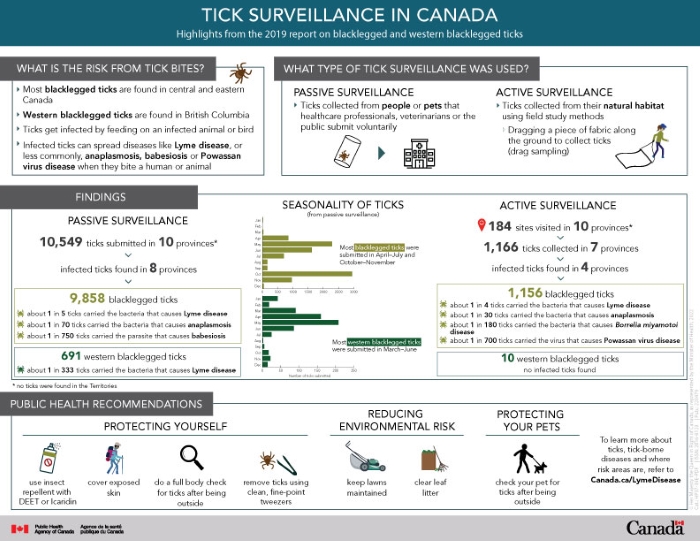
- 10,549 ticks were submitted in 10 provinces. No ticks were collected from the territories
- Infected ticks were found in 8 provinces
- 9,858 blacklegged ticks were found
- About 1 in 5 ticks carried the bacteria that causes Lyme disease
- About 1 in 70 ticks carried the bacteria that causes anaplasmosis
- About 1 in 750 ticks carried the parasite that causes babesiosis
- 691 western blacklegged ticks were found
- About 1 in 333 ticks carried the bacteria that causes Lyme disease
Seasonality of ticks
- Most blacklegged ticks were submitted from April to July and October to November
- Most western blacklegged ticks were submitted from March to June
Findings from active surveillance
- 184 sites visited in 10 provinces. No ticks were collected from the territories
- 1,166 ticks collected in 7 provinces
- Infected ticks found in 4 provinces
- 1,156 blacklegged ticks were found
- About 1 in 4 ticks carried the bacteria that causes Lyme disease
- About 1 in 30 ticks carried the bacteria that causes anaplasmosis
- About 1 in 180 ticks carried the bacteria that causes Borrelia miyamotoi disease
- About 1 in 700 ticks carried the virus that causes Powassan virus disease
- None of the 10 western blacklegged ticks collected were infected
How to prevent and protect from tick bites
To protect yourself from tick exposure, you can:
- cover exposed skin
- use insect repellent with DEET or Icaridin
- remove ticks using clean, fine-point tweezers
- do a full body check for ticks after being outside
To reduce your environmental risk:
- clear leaf litter
- keep lawns maintained
To protect your pets:
- check your pet for ticks after being outside