
Protect Yourself. Know Your Risk. (infographic)
Download the alternative format
(PDF format, 409 KB, 1 page)
Published: 2020-11-24
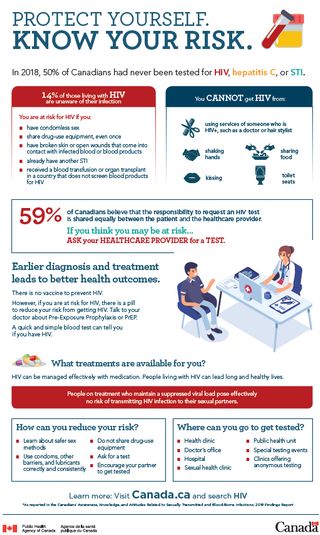
In 2018, 50% of Canadians had never been tested for HIV, hepatitis C, or STI. *
HIV
14 % of those living with HIV are unaware of their infection.
You are at risk for HIV if you:
- have condomless sex
- share drug-use equipment, even once
- have broken skin or open wounds that come into contact with infected blood or blood products
- already have another STI
- received a blood transfusion or organ transplant in a country that does not screen blood products for HIV
You cannot get HIV from:
- using services of someone who is HIV+, such as a doctor or hair stylist
- shaking hands
- kissing
- sharing food
- toilet seats
59% of Canadians believe that the responsibility to request an HIV test is shared equally between the patient and the healthcare provider.
If you think you may be at risk…
Ask your healthcare provider for a test.
Earlier diagnosis and treatment leads to better health outcomes.
There is no vaccine to prevent HIV.
However, if you are at risk for HIV, there is a pill to reduce your risk from getting HIV.
Talk to your doctor about Pre-Exposure Prophylaxis or PrEP.
A quick and simple blood test can tell you if you have HIV.
What treatments are available for you?
HIV can be managed effectively with medication. People living with HIV can lead long and healthy lives.
People on treatment who maintain a suppressed viral load pose effectively no risk of transmitting HIV infection to their sexual partners.
How can you reduce your risk?
- Learn about safer sex methods
- Use condoms, other barriers, and lubricants correctly and consistently
- Do not share drug-use equipment
- Take a test
- Encourage your partner to get tested
Where can you go to get tested?
- Health clinic
- Doctor’s office
- Hospital
- Sexual health clinic
- Public health unit
- Special testing events
- Clinics offering anonymous testing
- Self-test at home
Learn more: Visit Canada.ca and search HIV
- Footnote *
-
As reported in the Canadians’ Awareness, Knowledge, and Attitudes Related to Sexually Transmitted and Blood-Borne Infections - 2018 Findings Report