
Impact of COVID-19 on the delivery of STBBI-related services in Canada, including harm reduction services, for African, Caribbean and Black people
Download in PDF format
(320 KB, 1 pages)
Organization: Public Health Agency of Canada
Date published: 2023-03-03
Cat.: HP40-309/1-2023E-PDF
ISBN: 978-0-660-46845-7
Pub.: 220671
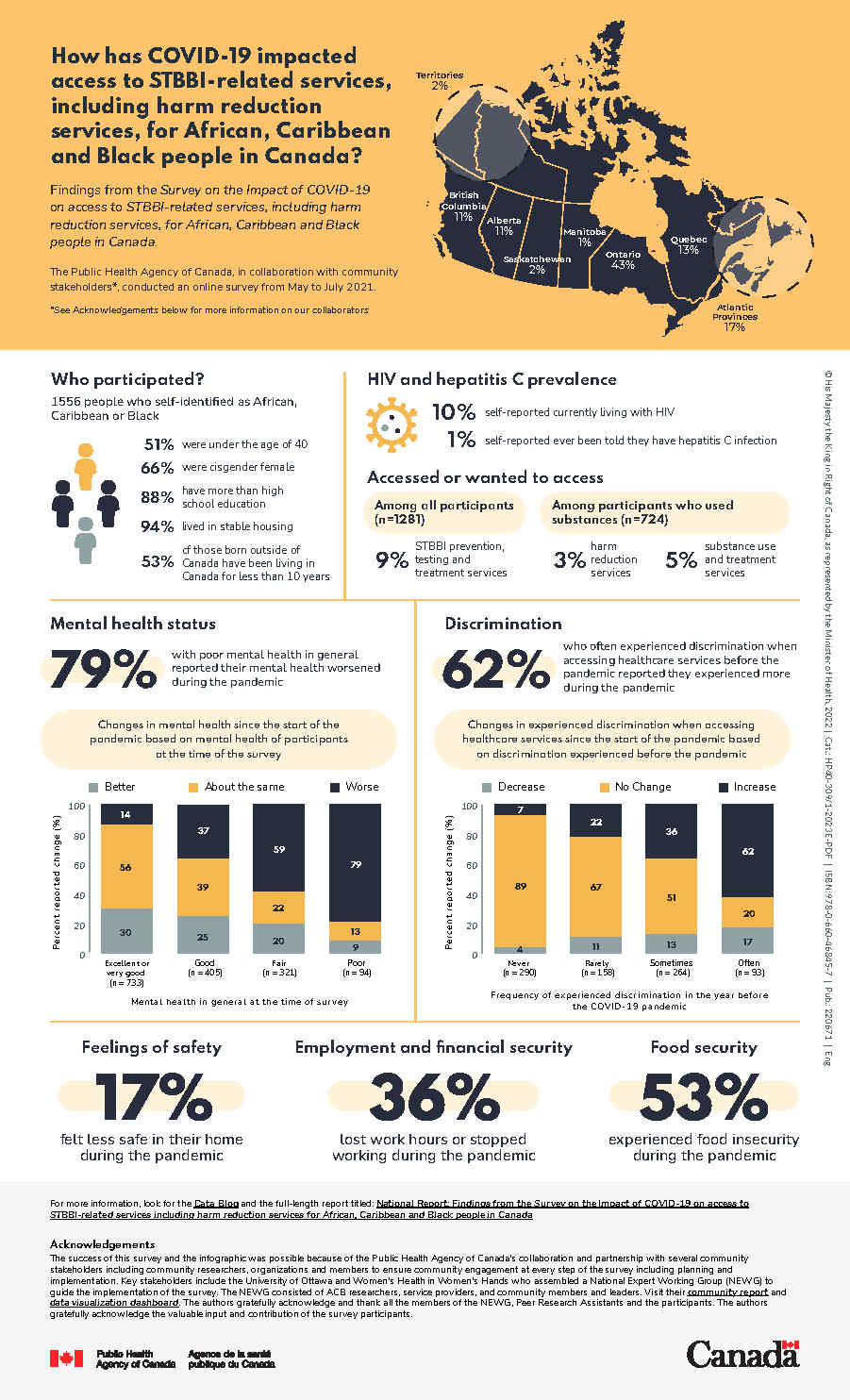
Findings from the Survey on the impact of COVID-19 on access to sexually transmitted and blood borne infection (STBBI)-related services, including harm reduction services, for African, Caribbean and Black people (ACB) in Canada.
The Public Health Agency of Canada, in collaboration with community stakeholders, conducted an online survey from May to July 2021.
- Territories: 2%
- British Columbia: 11%
- Alberta: 11%
- Saskatchewan:2%
- Manitoba: 1%
- Ontario: 43%
- Quebec: 13%
- Atlantic: 17%
Who participated
1,556 people who self-identified as African, Caribbean or Black:
- 51% were under the age of 40
- 66% were cisgender female
- 88% have more than high school education
- 94% lived in stable housing
- 53% of those born outside of Canada have been living in Canada for less than 10 years
HIV and hepatitis C prevalence
- 10% self-reported currently living with HIV
- 1% self-reported ever been told they have hepatitis C infection
Accessed or wanted to access
Among all participants (n=1,281):
- 9% STBBI prevention, testing and treatment services
Among participants who used substances (n=724):
- 3% harm reduction services
- 5% substance use and treatment services
Mental health status
- 79% with poor mental health in general reported their mental health worsened during the pandemic
- Changes in mental health since the start of the pandemic based on mental health of participants at the time of the survey:
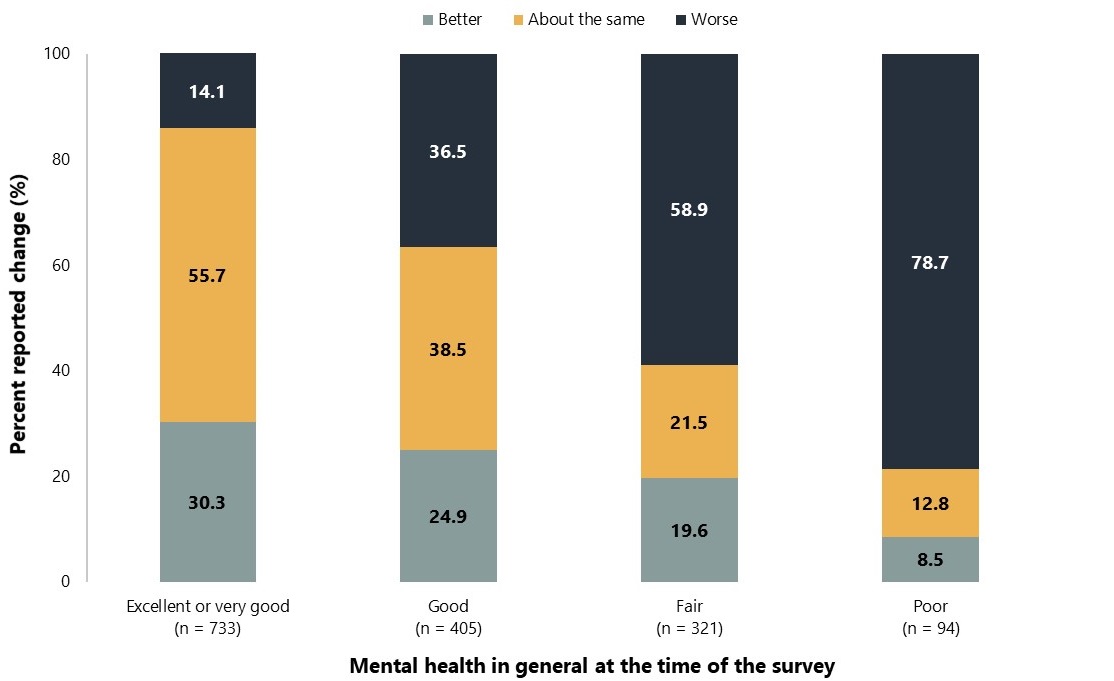
Figure 1: Text description
| Change category for mental health | Excellent or very good | Good | Fair | Poor |
|---|---|---|---|---|
| Better | 30.3% | 24.9% | 19.6% | 8.5% |
| About the same | 55.7% | 38.5% | 21.5% | 12.8% |
| Worse | 14.1% | 36.5% | 58.9% | 78.7% |
Discrimination
- 62% who often experienced discrimination when accessing healthcare services before the pandemic reported they experienced more during the pandemic
- Changes in experienced discrimination when accessing healthcare services since the start of the pandemic based on discrimination experienced before the pandemic
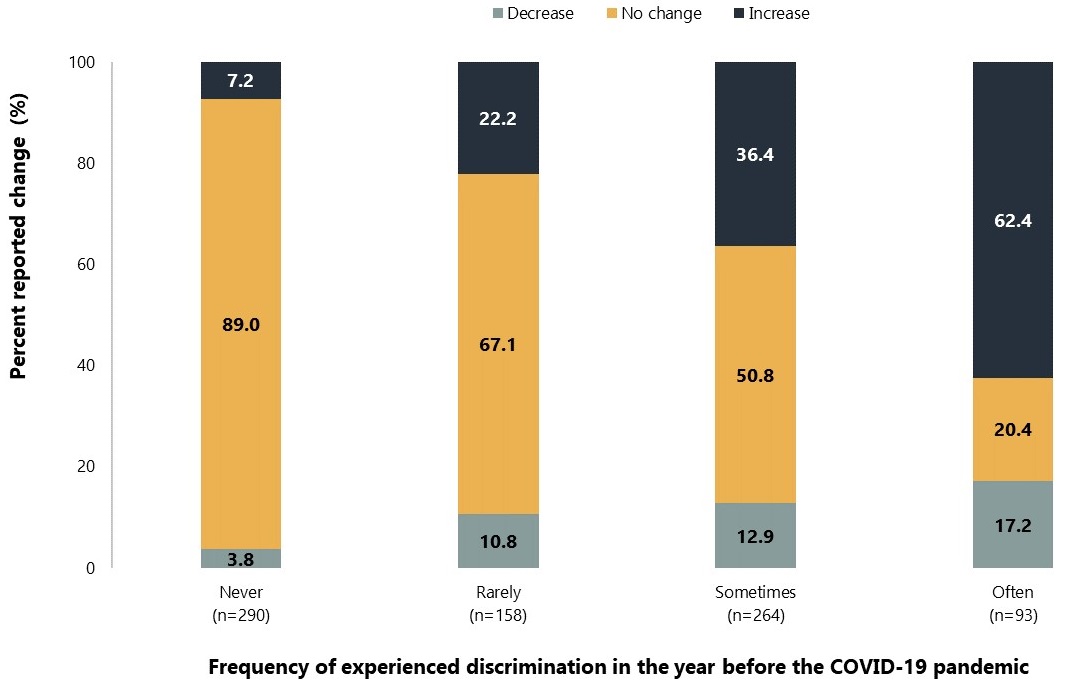
Figure 2: Text description
| Changes in frequency of experienced discrimination | Often | Sometimes | Rarely | Never |
|---|---|---|---|---|
| Decrease | 17.2% | 12.9% | 10.8% | 3.8% |
| No change | 20.4% | 50.8% | 67.1% | 89.0% |
| Increase | 62.4% | 36.4% | 22.2% | 7.2% |
Feelings of safety
- 17% felt less safe in their home during the pandemic
Employment and financial security
- 36% lost work hours or stopped working during the pandemic
Food security
- 53% experienced food insecurity during the pandemic
For more information, look for the Data Blog and the full-length report titled:
Acknowledgements
The success of this survey and the infographic was possible because of the Public Health Agency of Canada's collaboration and partnership with several community stakeholders including community researchers, organizations and members to ensure community engagement at every step of the survey including planning and implementation. Key stakeholders include the University of Ottawa and Women's Health in Women's Hands who assembled a National Expert Working Group (NEWG) to guide the implementation of the survey. The NEWG consisted of ACB researchers, service providers, and community members and leaders. Visit their community report (PDF) and data visualization dashboard. The authors gratefully acknowledge and thank all the members of the NEWG, Peer Research Assistants and the participants. The authors gratefully acknowledge the valuable input and contribution of the survey participants.