
Common chronic diseases in men compared to women
Download in PDF format
(886 KB, 2 pages)
Organization: Public Health Agency of Canada
Type: Infographic
Date published: 2021-12-21
ISBN: 978-0-660-40706-7
Cat: HP35-151/1-2021E-PDF
Pub.: 210408
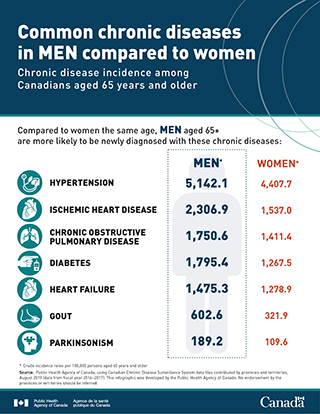
Chronic disease incidence among Canadians aged 65 years and older
Compared to women the same age, men aged 65+ are more likely to be newly diagnosed with these chronic diseases:
| Chronic disease | Men | Women |
|---|---|---|
| Hypertension | 5,142.1 | 4,407.7 |
| Ischemic heart disease | 2,306.9 | 1,537.0 |
| Chronic obstructive pulmonary disease | 1,750.6 | 1,411.4 |
| Diabetes | 1,795.4 | 1,267.5 |
| Heart failure | 1,475.3 | 1,278.9 |
| Gout | 602.6 | 321.9 |
| Parkinsonism | 189.2 | 109.6 |
Source: Public Health Agency of Canada, using Canadian Chronic Disease Surveillance System data files contributed by provinces and territories, August 2019 (data from fiscal year 2016–2017). This infographic was developed by the Public Health Agency of Canada. No endorsement by the provinces or territories should be inferred. |
||
A number of factors may influence the differences in chronic diseases newly diagnosed in men and women. Age also plays an important role since these differences evolve with older age.Footnote 1,Footnote 2 In general, these factors include:
- Biological and physical differences between men and women
- Lifestyle behaviours such as physical activity (e.g. being physically inactive), diet (e.g. unhealthy food choices), smoking and alcohol use
- Socio-economic factors (e.g. differences in education or income)
- Presence of more than one chronic disease or condition
The impact of chronic diseases and conditions can be reduced through policies and programs that:
- Support healthy behaviours and choices such as exercise or healthy eating
- Create age-friendly, safe and supportive social environments
- Reduce health differences due to race, gender, education, income and other socio-economic factors
Learn more about chronic diseases and aging in Canada:
To learn more about chronic disease and aging, visit: Aging and Chronic Diseases: A Profile of Canadian seniors.
Chronic diseases share common risk factors. Learn more: Chronic Disease Risk Factors.
Explore the latest data: Canadian Chronic Disease Surveillance System-Public Health Infobase
COVID-19 has had unprecedented consequences for Canada's senior population. The Public Health Agency of Canada is using multiple data sources to examine the impact of COVID-19 and chronic diseases on seniors.
References
- Footnote 1
-
Crimmins EM, Kim JK, Solé-Auró A. Gender differences in health: results from SHARE, ELSA and HRS. Eur J Public Health. 2011 Feb;21(1):81-91. doi: 10.1093/eurpub/ckq022.
- Footnote 2
-
Gordon EH, Hubbard RE. Do sex differences in chronic disease underpin the sex-frailty paradox? Mech Ageing Dev. 2019 Apr;179:44-50. doi: 10.1016/j.mad.2019.02.004.