
Respiratory infectious diseases: Break the chain of infection
Download in PDF format
(256 KB, 1 page)
Organization: Public Health Agency of Canada
Date published: 2024-04-09
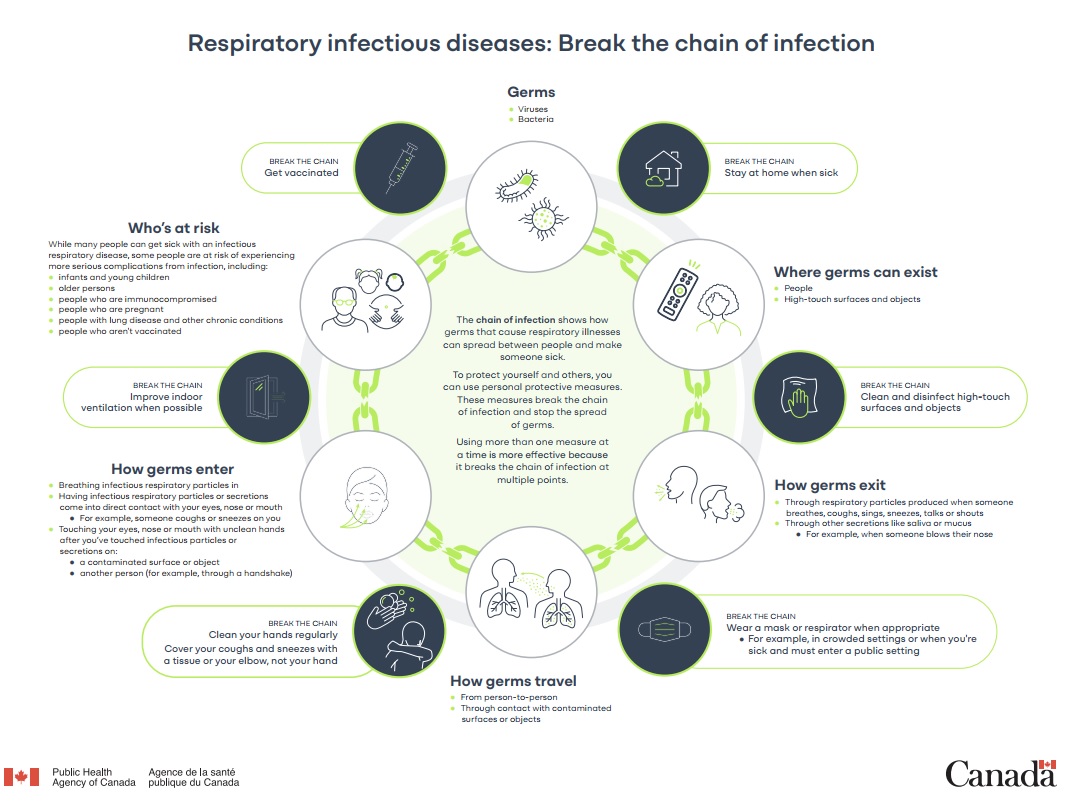
The chain of infection shows how germs that cause respiratory illnesses can spread between people and make someone sick. To protect yourself and others, you can use personal protective measures. These measures break the chain of infection and stop the spread of germs. Using more than one measure at a time is more effective because it breaks the chain of infection at multiple points.
Germs
- Viruses
- Bacteria
Where germs can exist
- People
- High-touch surfaces and objects
How germs exit
- Through respiratory particles produced when someone breathes, coughs, sings, sneezes, talks or shouts
- Through other secretions like saliva or mucus
- For example, when someone blows their nose
How germs travel
- From person-to-person
- Through contact with contaminated surfaces or objects
How germs enter
- Breathing infectious respiratory particles in
- Having infectious respiratory particles or secretions come into direct contact with your eyes, nose or mouth
- For example, someone coughs or sneezes on you
- Touching your eyes, nose or mouth with unclean hands after you've touched infectious particles or secretions on:
- a contaminated surface or object
- another person (for example, through a handshake)
Who's at risk
While many people can get sick with an infectious respiratory disease, some people are at risk of experiencing more serious complications from infection, including:
- infants and young children
- older persons
- people who are immunocompromised
- people who are pregnant
- people with lung disease and other chronic conditions
- people who aren't vaccinated
Break the chain
- Get vaccinated
- Stay at home when sick
- Wear a mask or respirator when appropriate, for example, in crowded settings or when you're sick and must enter a public setting
- Improve indoor ventilation when possible
- Clean your hands regularly
- Cover your coughs and sneezes with a tissue or your elbow, not your hand
- Clean and disinfect high-touch surfaces and objects