
Vaccination coverage for COVID-19 additional doses in Canada: Results from the 2022 Canadian Community Health Survey (CCHS)
On this page
- Overview
- Highlights
- Survey collection methodology
- COVID-19 additional dose coverage
- Additional dose coverage estimates comparison
- Contact us
Overview
The purpose of this analysis is to:
- estimate vaccination coverage for COVID-19 additional dosesFootnote 1 among adults 18 years and older in Canada using data from the Canadian Community Health Survey (CCHS)
- compare vaccination coverage for COVID-19 additional dosesFootnote 1 by different sociodemographic characteristics, such as:
- age
- gender
- province of residence
- level of education
- dwelling ownership status
- racial or Indigenous identity
- number of young children in the household
- immigration status
- first language spoken
- supplement information already collected by the Canadian COVID-19 Vaccination Coverage Surveillance System
- inform decisions regarding COVID-19 booster dose campaigns
Highlights
Between February to June 2022:
- A majority of people 18 years and older living in the provinces had received at least 1 dose of a COVID-19 vaccine (95%)
- More than half of the adult population (62%) had received at least 1 additional dose of a COVID-19 vaccine beyond their primary series
- Additional dose coverage was lower among:
- residents in Alberta
- males
- younger age groups
- those with lower education
- renters
- those with young children in the household
- immigrants
- those whose first language were neither English nor French
- Black and Arab individuals
Survey collection methodology
The CCHS is an ongoing annual cross-sectional survey conducted by Statistics Canada that collects health-related information for the Canadian population at the sub-provincial level of geography. The primary use of the CCHS data is for health surveillance and population health research. Questions on COVID-19 vaccination were added to the CCHS in 2020. Starting in 2022, Electronic Questionnaires were used for data collection and computer assisted telephone interviewing (CATI) were used for follow-up of non-responses. Please refer to Statistics Canada for more information on the CCHS and the methodology of the survey, including the questionnaire.
The CCHS February to June 2022 component included people 12 years of age and over living in the 10 provinces except:
- full-time members of the Canadian Forces
- people living in institutions
- children aged 12 to 17 that are living in foster care
- people living on-reserve and other Indigenous settlements in the provinces
- persons living in the Quebec regions of Région du Nunavik and Région des Terres-Cries-de-la-Baie-James
Data selected for this analysis
The present analysis used data from the first 2 collection periods of the 2022 CCHS and focused on individuals aged 18 and older. The first collection period (February to early May 2022) gathered data from 16,066 adults, and the second collection period (April to June 2022) had 16,432 respondents. The response rate was higher in the second collection period (49%). Overall, a total of 32,498 participants were included in the analysis. (Table 1)
| Collection period | Dates | Number of adult respondents | Adult response rate (%) | |
|---|---|---|---|---|
| Start | End | |||
| 1 | February 9, 2022 | May 7, 2022 | 16,066 | 41.6 |
| 2 | April 2, 2022 | June 30, 2022 | 16,432 | 48.9 |
| Combined | February 9, 2022 | June 30, 2022 | 32,498 | 45.0 |
COVID-19 additional dose coverage
Results by collection period
Between February and June 2022, 62% of adults had received at least 1 additional doseFootnote 1, 32% were vaccinated with a completed primary series, 1% were vaccinated with an incomplete series, and 5% were not vaccinated. (Table 2)
| CCHS 2022 | By collection period | Total | |
|---|---|---|---|
| 1 (February to May) |
2 (April to June) |
||
| Received at least 1 additional doseFootnote 1 | 63% | 61% | 62% |
| Completed primary series | 30% | 33% | 32% |
| Incomplete primary series | 1% | 1% | 1% |
| Never vaccinated | 5% | 5% | 5% |
Results by sociodemographic characteristics
When comparing coverage between groups, results presented take into account the effect of other factors such as age, level of education, and time of data collection.
By province
Coverage with at least 1 additional dose was lower among residents in Alberta (52%) compared to most of the other provinces.
Figure 1. Percentage of people 18 years and older who had received at least 1 additional dose of a COVID-19 vaccine by province, February to June 2022, Canada, excluding territories.
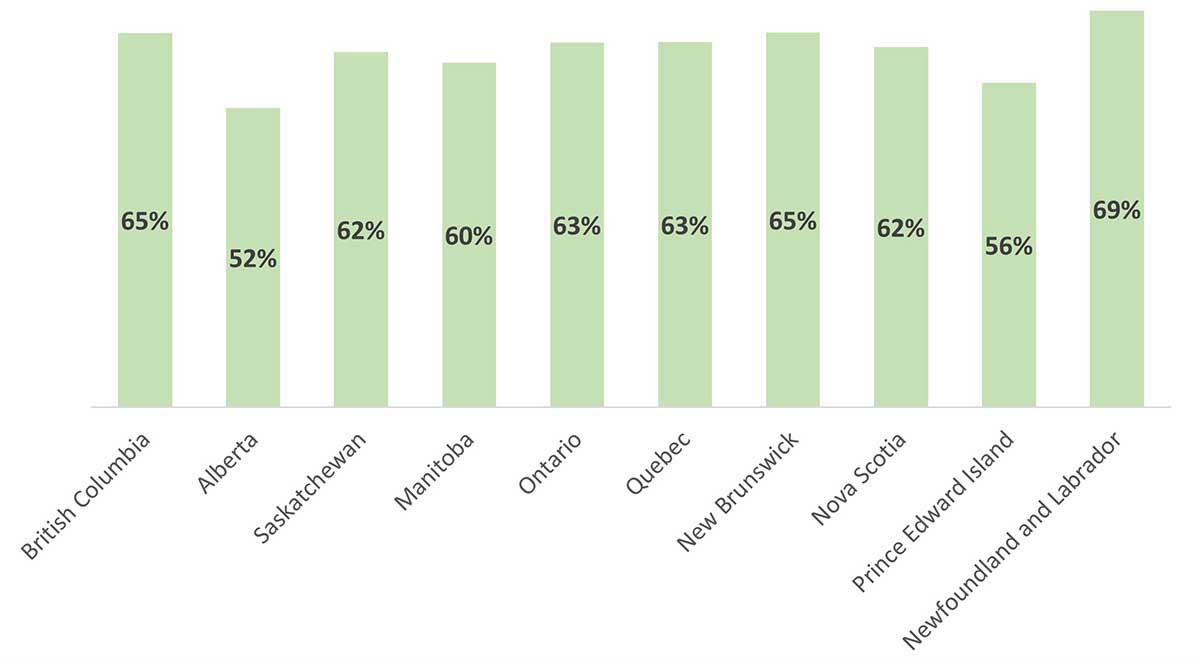
Figure 1 - Text description
| Province | % Having received at least 1 additional dose |
|---|---|
| British Columbia | 65 |
| Alberta | 52 |
| Saskatchewan | 62 |
| Manitoba | 60 |
| Ontario | 63 |
| Quebec | 63 |
| New Brunswick | 65 |
| Nova Scotia | 62 |
| Prince Edward Island | 56 |
| Newfoundland and Labrador | 69 |
By gender
Fewer males (60%) than females (64%) had received at least 1 additional dose.
Figure 2. Percentage of people 18 years and older who had received at least 1 additional dose of a COVID-19 vaccine by gender, February to June 2022, Canada, excluding territories.
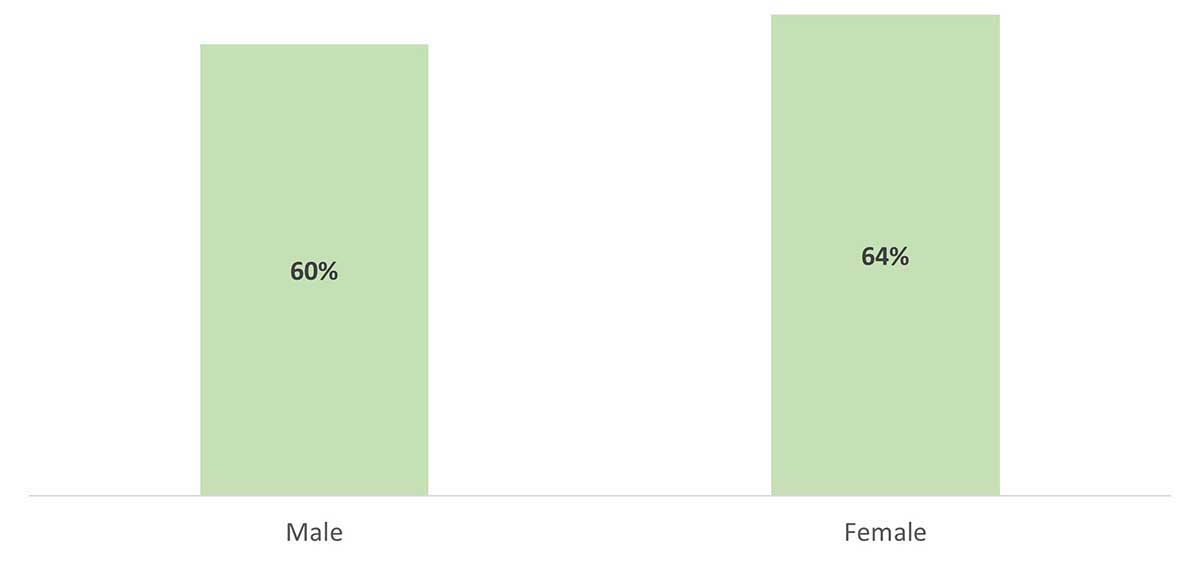
Figure 2 - Text description
| Gender | % Having received at least 1 additional dose |
|---|---|
| Male | 60 |
| Female | 64 |
By age
Coverage with at least 1 additional dose increased with age, from 44% in 18 to 29 years old to 85% in 70 years and older.
Figure 3. Percentage of people 18 years and older who had received at least 1 additional dose of a COVID-19 vaccine by age group, February to June 2022, Canada, excluding territories.

Figure 3 - Text description
| Age group (years) | % Having received at least 1 additional dose |
|---|---|
| 18 to 29 | 44 |
| 30 to 39 | 49 |
| 40 to 49 | 55 |
| 50 to 59 | 68 |
| 60 to 69 | 77 |
| 70 and older | 85 |
By level of education
Coverage with at least 1 additional dose was lower in those with lower education attainment, from 60 to 63% among those without a university degree to 71% in those with a university degree.
Figure 4. Percentage of people 18 years and older who had received at least 1 additional dose of a COVID-19 vaccine by level of education, February to June 2022, Canada, excluding territories.
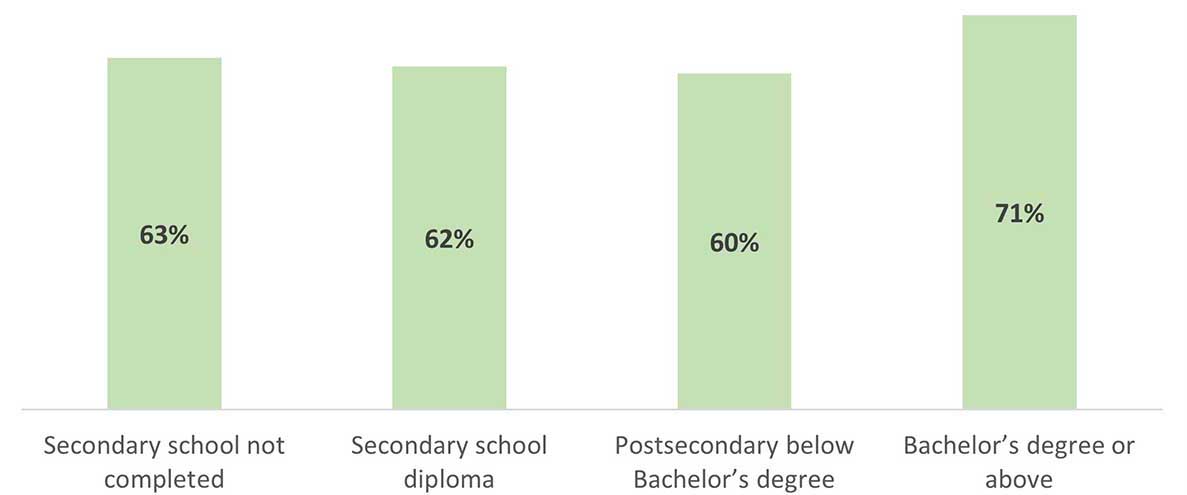
Figure 4 - Text description
| Level of education | % Having received at least 1 additional dose |
|---|---|
| Secondary school not completed | 63 |
| Secondary school diploma | 62 |
| Postsecondary below Bachelor’s degree | 60 |
| Bachelor’s degree or above | 71 |
By dwelling ownership status
The proportion of adults who had received at least 1 additional dose was lower in renters (53%) compared to homeowners (65%).
Figure 5. Percentage of people 18 years and older who had received at least 1 additional dose of a COVID-19 vaccine by dwelling ownership status, February to June 2022, Canada, excluding territories.

Figure 5 - Text description
| Dwelling ownership status | % Having received at least 1 additional dose |
|---|---|
| Rent | 53 |
| Own | 65 |
By number of children under 12 years old in the household
Adults living with young children in the household (51%) had lower additional dose coverage compared to those without young children (65%).
Figure 6. Percentage of people 18 years and older who had received at least 1 additional dose of a COVID-19 vaccine by number of children under 12 years old in the household, February to June 2022, Canada, excluding territories.
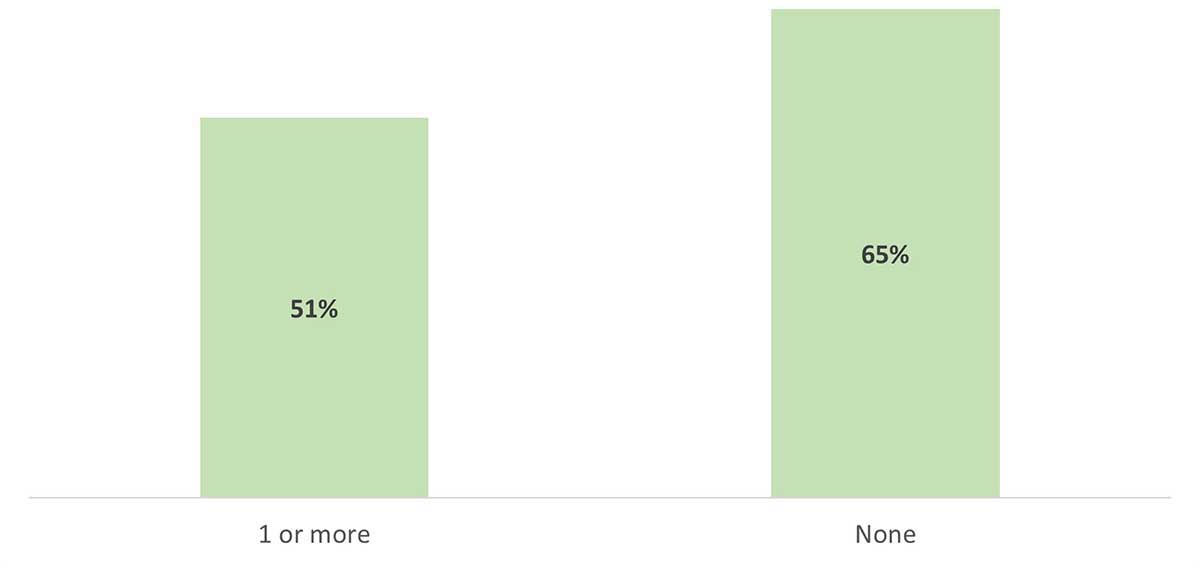
Figure 6 - Text description
| Number of children under 12 years old in the household | % Having received at least 1 additional dose |
|---|---|
| 1 or more | 51 |
| None | 65 |
By immigration status
The proportion of adults who had received at least 1 additional dose was lower in immigrants (57%) compared to Canadian citizens by birth (64%).
Figure 7. Percentage of people 18 years and older who had received at least 1 additional dose of a COVID-19 vaccine by immigration status, February to June 2022, Canada, excluding territories.
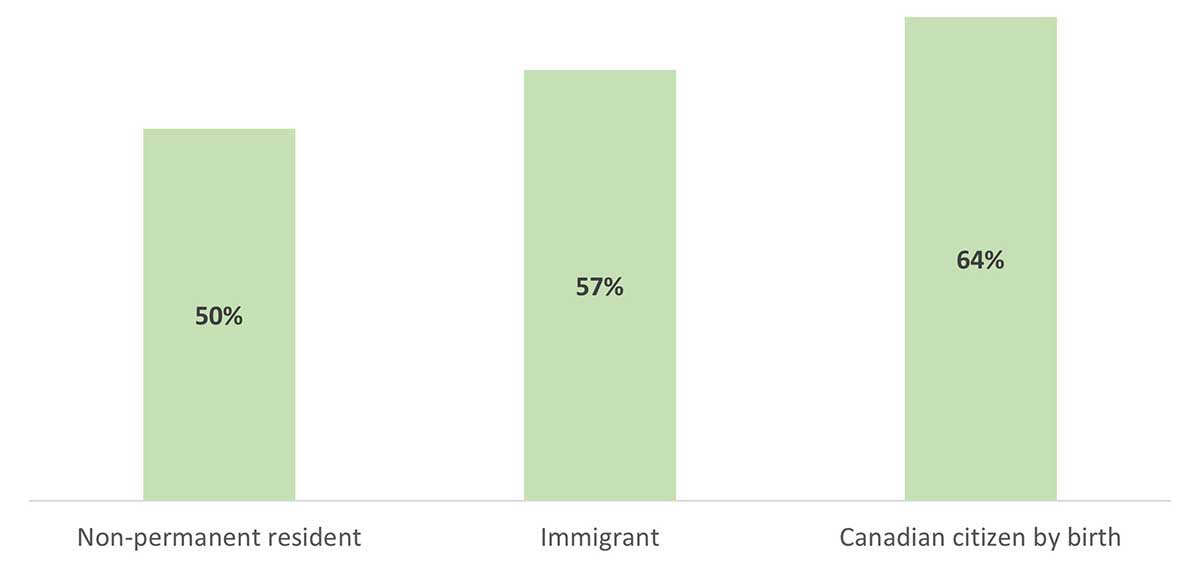
Figure 7 - Text description
| Immigration status | % Having received at least 1 additional dose |
|---|---|
| Non-permanent resident | 50 |
| Immigrant | 57 |
| Canadian citizen by birth | 64 |
By first language spoken
Those whose first language were neither English nor French (56%) had lower additional dose coverage compared with English or French first language speakers (64%).
Figure 8. Percentage of people 18 years and older who had received at least 1 additional dose of a COVID-19 vaccine by first language spoken, February to June 2022, Canada, excluding territories.
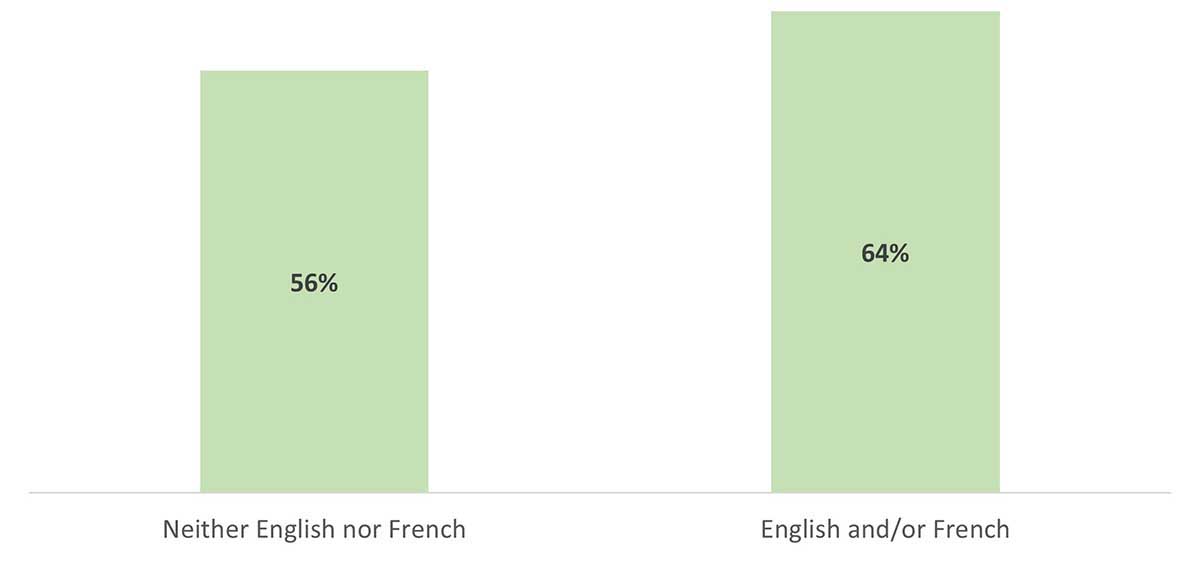
Figure 8 - Text description
| First language spoken | % Having received at least 1 additional dose |
|---|---|
| Neither English nor French | 56 |
| English and/or French | 64 |
By racial or Indigenous identity
Coverage with at least 1 additional dose was lower in Black (33%) and Arab (34%) people compared to White (66%) individuals.
Figure 9. Percentage of people 18 years and older who had received at least 1 additional dose of a COVID-19 vaccine by racial or Indigenous identity, February to June 2022, Canada, excluding territories.

E Interpret estimate with caution because of the small number of individuals in this group.
Figure 9 - Text description
| Racial or Indigenous identity | % Having received at least 1 additional dose |
|---|---|
| First Nations (off-reserve) | 51 |
| Métis | 55 |
| Black | 33 |
| Arab | 34 |
| Latin American | 48 |
| Multiple identities | 52E |
| West Asian | 56 |
| South Asian | 60 |
| Filipino | 62 |
| Southeast Asian | 65 |
| Chinese | 65 |
| Japanese | 71 |
| Korean | 74 |
| White | 66 |
Note: The CCHS collects data on ethnicity by asking respondents to self-identify if they belong to one or more racial or cultural groups. This is the terminology employed by Statistics Canada in the CCHS. Please refer to Statistics Canada: Visible minority of person for more information.
Additional dose coverage estimates comparison
Although the CCHS provides insights into COVID-19 additional dose coverage in Canada by sociodemographic factors, the Canadian COVID-19 Vaccination Coverage Surveillance System (CCVCSS) provides the most reliable vaccination coverage estimates because they are based on the entire population rather than a sample.
Comparing COVID-19 vaccination coverage from the CCVCSS to those estimated over the two CCHS 2022 collection periods (Table 3):
- Overall, the CCHS overestimates COVID-19 additional dose coverage by approximately 5%, which may be explained by differences between the CCHS respondents and the general population.
- According to the data from the CCVCSS, as of March 27, 2022 (at the midpoint of the first collection period), 56% of the population 18 years and older had received at least 1 additional dose of a COVID-19 vaccine; 57% as of May 22, 2022 at the midpoint of the second collection period; and 57% as of April 24, 2022 at the midpoint of the 2 collection periods combined.
| CCHS collection period | Data from the CCHS | CCVCSS data as of | Data from the CCVCSS |
|---|---|---|---|
| 1 (February 9, 2022, to May 7, 2022) |
63% | March 27, 2022 | 56% |
| 2 (April 2, 2022, to June 30, 2022) |
61% | May 22, 2022 | 57% |
| Combined (February 9, 2022, to June 30, 2022) |
62% | April 24, 2022 | 57% |
Contact us
For more information about these findings, please contact us at: coverage-couvertures@phac-aspc.gc.ca.
For more information about COVID-19 vaccines
- Vaccines for COVID-19
- COVID-19 in Canada
- Vaccines for COVID-19: Canada’s vaccine supply and donation strategy
- Vaccines for COVID-19: How to get vaccinated
- Canadian COVID-19 Vaccination Coverage Surveillance System (CCVCSS)
- COVID-19 Vaccination Coverage Survey (CVCS)
- COVID-19 vaccine uptake and intent: Canadian Community Health Survey (CCHS) insight
- COVID-19 vaccination coverage by ethnicity: Insight from the Canadian Community Health Survey (CCHS)
- Reported side effects following COVID-19 vaccination in Canada
- The facts about COVID-19 vaccines
- Publications: Vaccines and immunization
For health professionals
- COVID-19 information for health professionals: Vaccines
- Addressing vaccine hesitancy in the context of COVID-19
- Footnote 1
-
Additional dose is defined as any dose(s) received after the completion of a 1-dose or 2-dose vaccine primary series. (https://www.canada.ca/en/public-health/services/publications/healthy-living/canadian-immunization-guide-part-4-active-vaccines/page-26-covid-19-vaccine.html#t1) They are mostly booster doses but may include additional doses given for other reasons.