
Infographic: What is fine particulate matter (PM2.5)?
Download the alternative format
(PDF format, 1,692 Kb, 1 page)
- Organization: Health Canada
- Date published: 2019
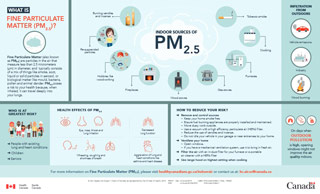
Fine Particulate Matter (also known as PM2.5) are particles in the air that measure less than 2.5 micrometers (μm) in diameter, and typically consists of a mix of things like smoke, soot, liquid or solid particles in aerosol, or biological matter like mould, bacteria, pollen and animal dander. PM2.5 poses a risk to your health because, when inhaled, it can travel deeply into your lungs.
Indoor sources of PM2.5
- Burning candles and incense
- Re-suspended particles
- Hobbies like woodworking
- Fireplaces
- Wood stoves
- Gas stoves
- Furnaces
- Cooking
- Tobacco smoke
Infiltration from outdoors
- Vehicle emissions
- Industry
- Wood burning
Who is at greatest risk?
- People with existing lung and heart conditions
- Children
- Seniors
Health effects of PM2.5
- Eye, nose, throat and lung irritation
- Wheezing, coughing and shortness of breath
- Decreased lung function
- Aggravation of lung and heart conditions like asthma and heart disease
How to reduce your risk?
- Remove and control sources
- Keep your home smoke free
- Ensure fuel burning appliances are properly installed and maintained
- Move dusty work outside
- Use a vacuum with a high efficiency particulate air (HEPA) filter
- Reduce the use of candles and incense
- Do not idle your vehicle in your garage or near entrances to your home
- Ventilate your home
- Open windows
- If you have a mechanical ventilation system, use it to bring in fresh air
- Filter the air with an in-duct filter for your furnace or a portable air cleaner with a HEPA filter
- Use range hood on highest setting when cooking
On days when outdoor pollution is high, opening windows might not improve the air quality indoors.
For more information on Fine Particulate Matter (PM2.5), please visit healthycanadians.gc.ca/indoorair or contact us at: hc.air.sc@canada.ca