
Share information about nutrition labelling
On this page
- Sharing information about nutrition labelling
- Key messages on nutrition labelling
- Content for social media
- Articles to share
- Audio recordings and scripts to share
- Video to share about nutrition labelling
- Additional nutrition labelling resources
- Contact us
Sharing information about nutrition labelling
We want to increase consumers' awareness and understanding of nutrition labelling. This will support their ability to make informed food choices when shopping for food for themselves and their families.
Health professionals, industry, and consumers can help raise awareness about the information on packaged foods. Please share this information with your networks and colleagues to increase the reach. We encourage you to stay up to date by following Health Canada on:
Key messages on nutrition labelling
Fact sheet: Front-of-package labelling awareness messages
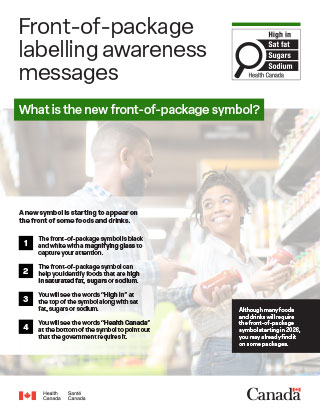
(HTML and downloadable PDF format)
Fact sheet: Nutrition labelling awareness and education messages

(HTML and downloadable PDF format)
Content for social media
You can share these posts through your social media channels.
| Image | Text to share | Image title |
|---|---|---|
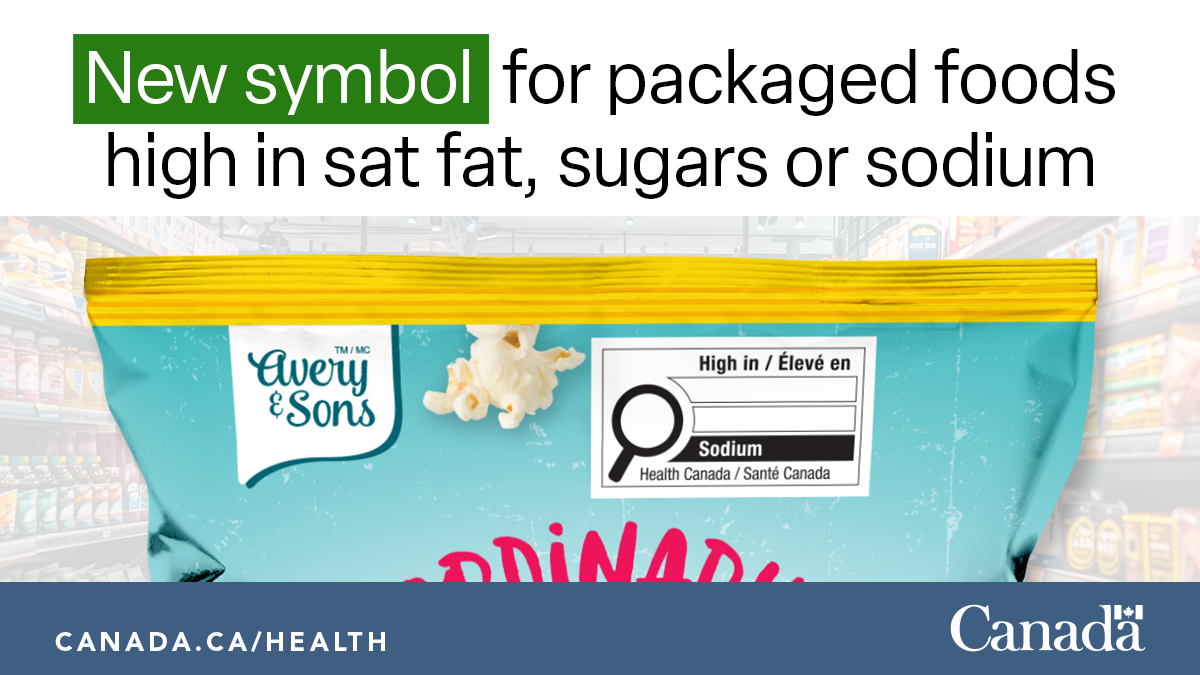 |
You may start seeing packaged foods with a symbol showing a magnifying glass. This new symbol helps you identify foods and drinks that are high in saturated fat, sugars and sodium. |
New symbol for packaged foods high in sat fat, sugars or sodium |
 |
The #FrontOfPackage symbol helps consumers easily identify foods and drinks high in saturated fat, sugars or sodium to make informed choices. |
New symbol to compare similar food products |
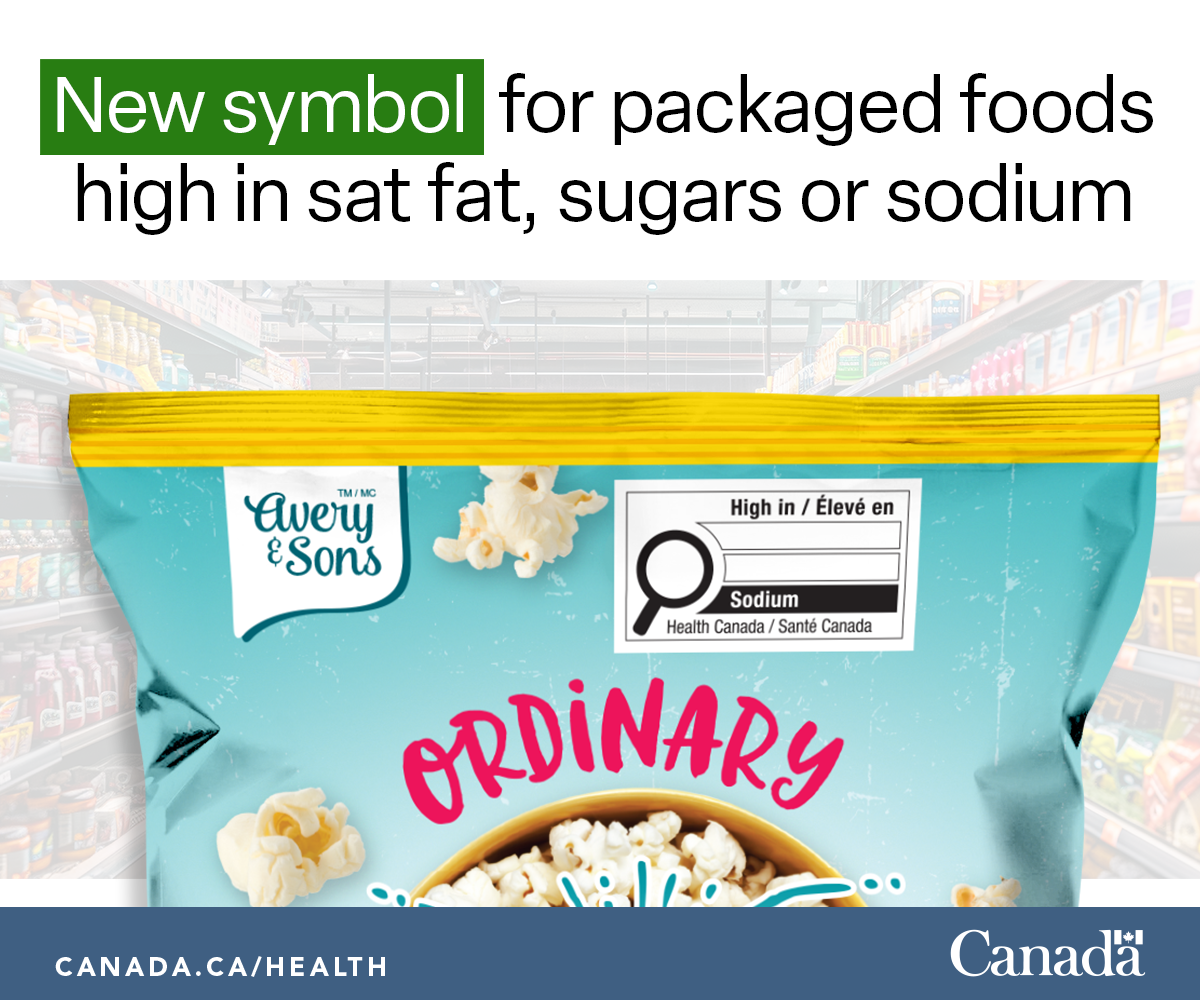 |
Keep an eye out for a new symbol featuring a magnifying glass and the words "High in," which can already be found on some packaged foods. This new symbol can help you identify foods that are high in saturated fat, sugars or sodium. |
New symbol for packaged foods high in saturated fat, sugars or sodium |
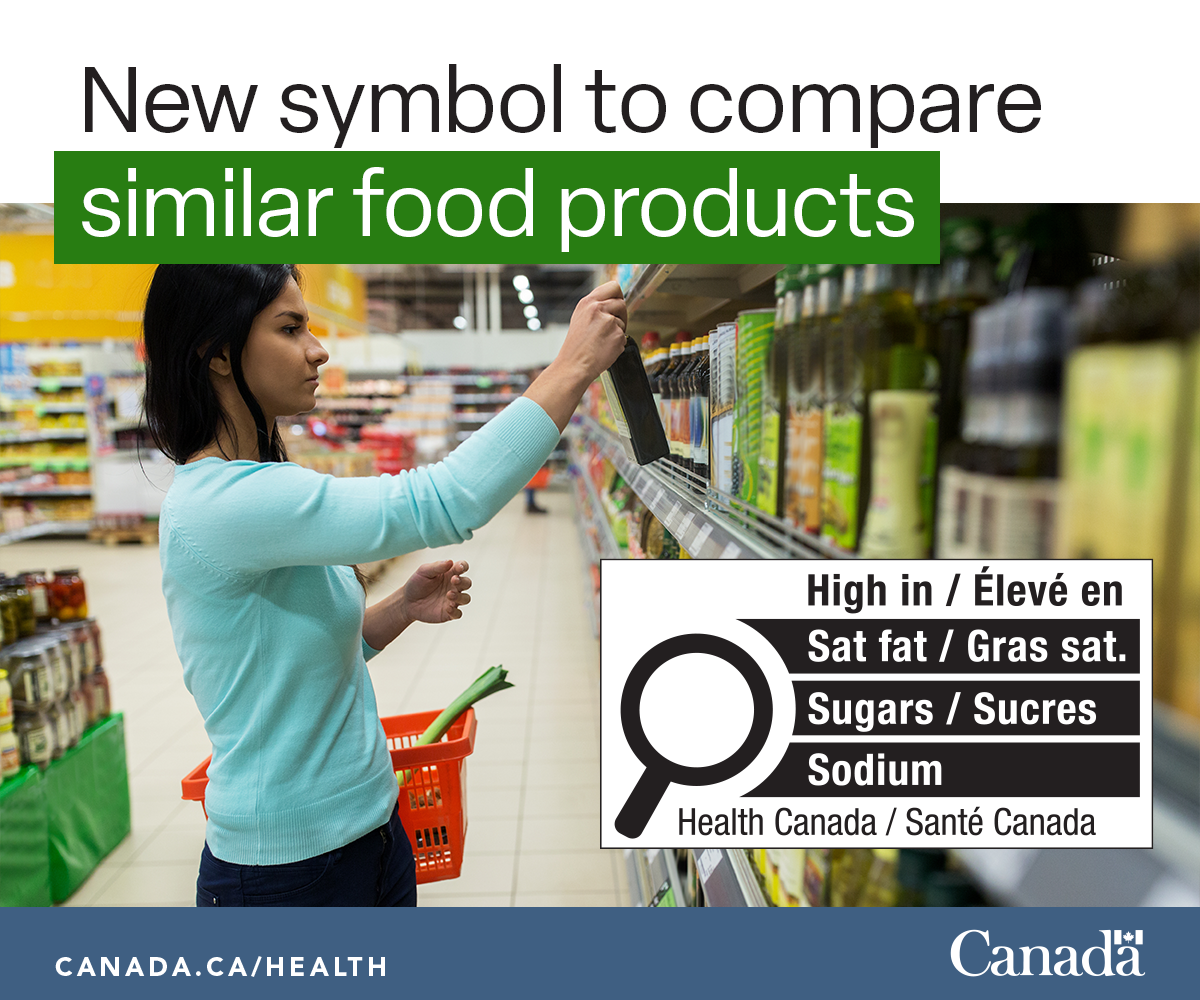 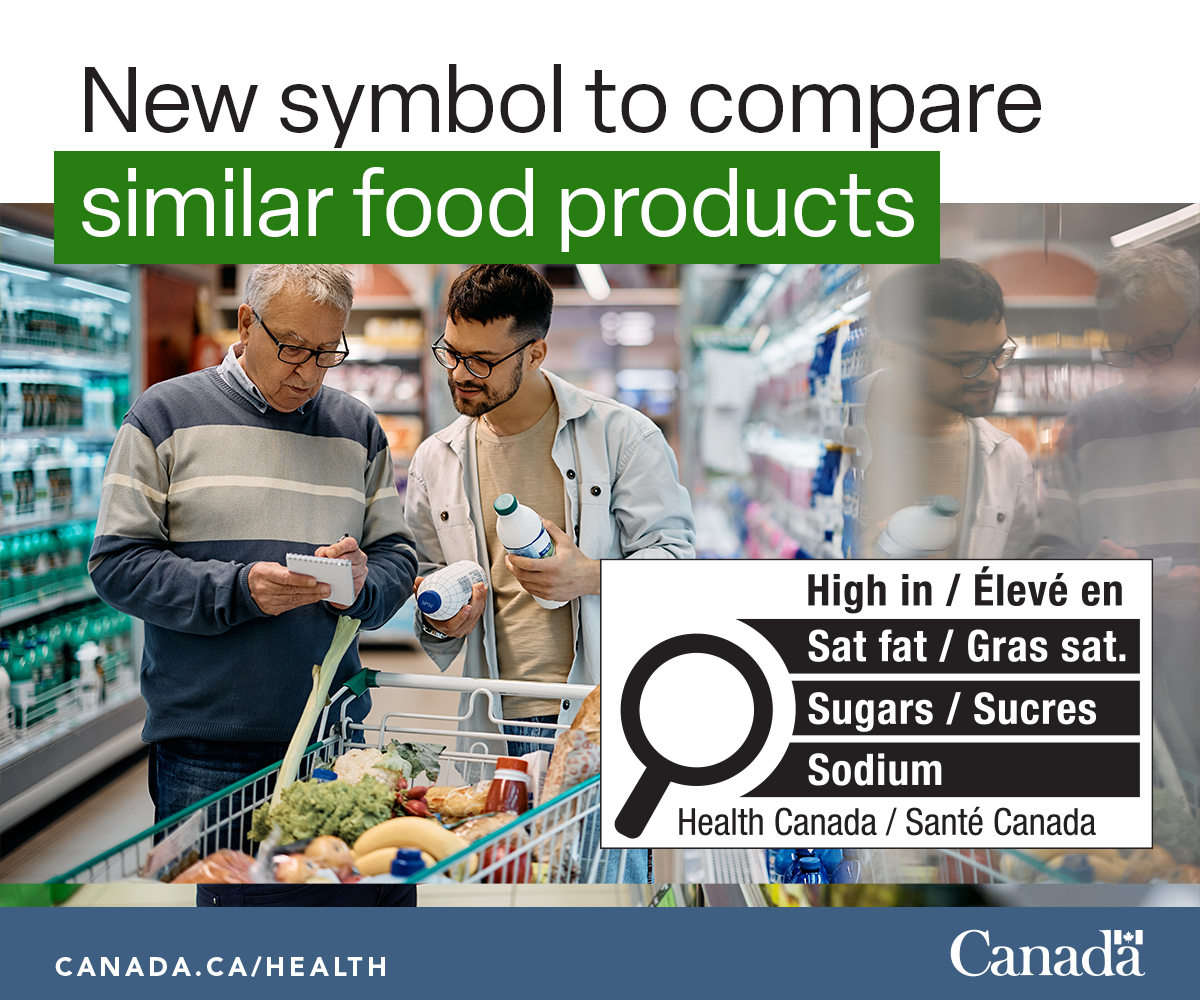 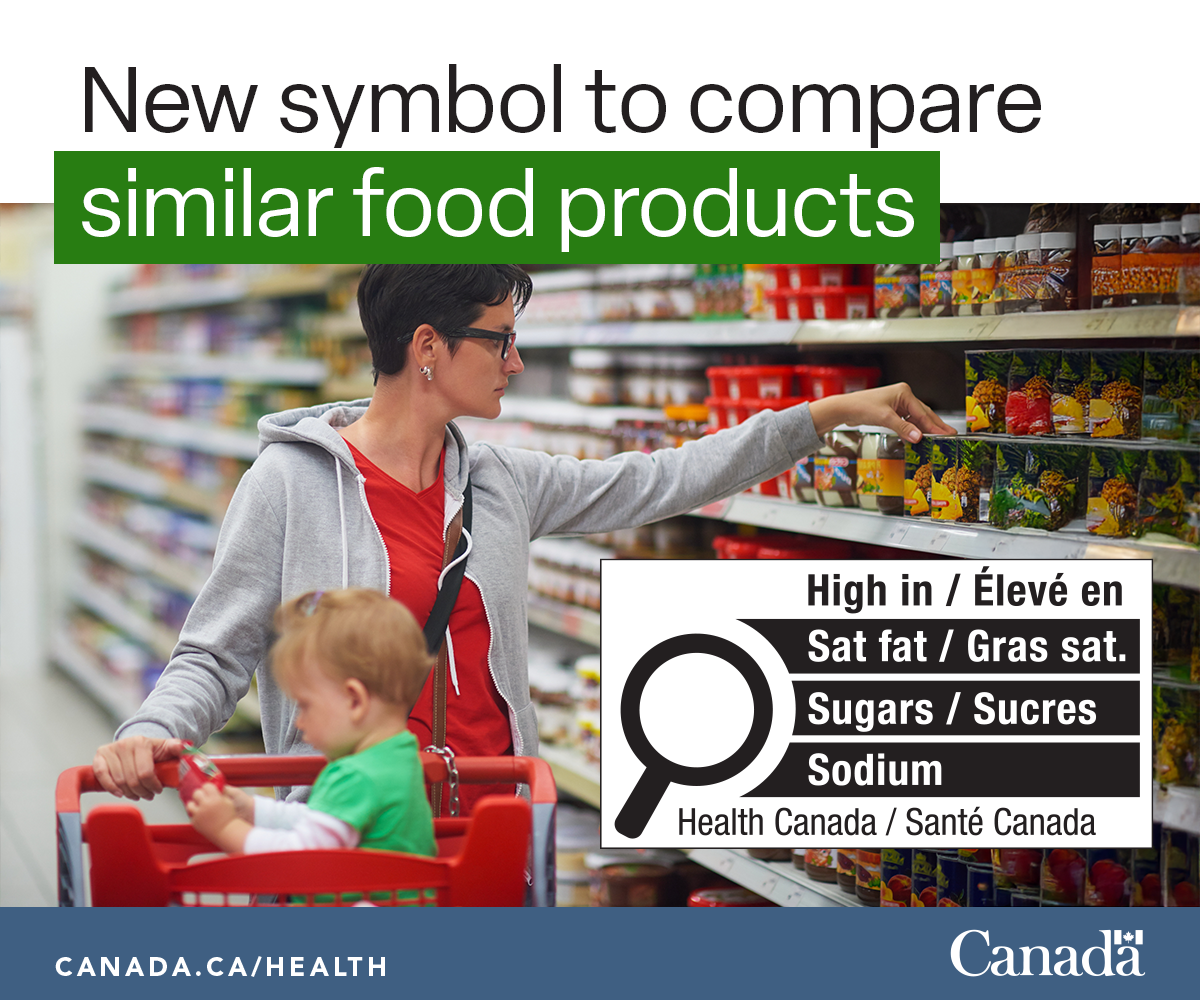 |
Regularly eating foods high in saturated fat, sugars or sodium can increase your risk for heart disease, type 2 diabetes and high blood pressure. There's a new symbol that can help you identify packaged foods high in saturated fat, sugars or sodium. Use it to quickly compare similar food products, like canned soups, to help you make an informed choice. |
New symbol to compare similar food products |
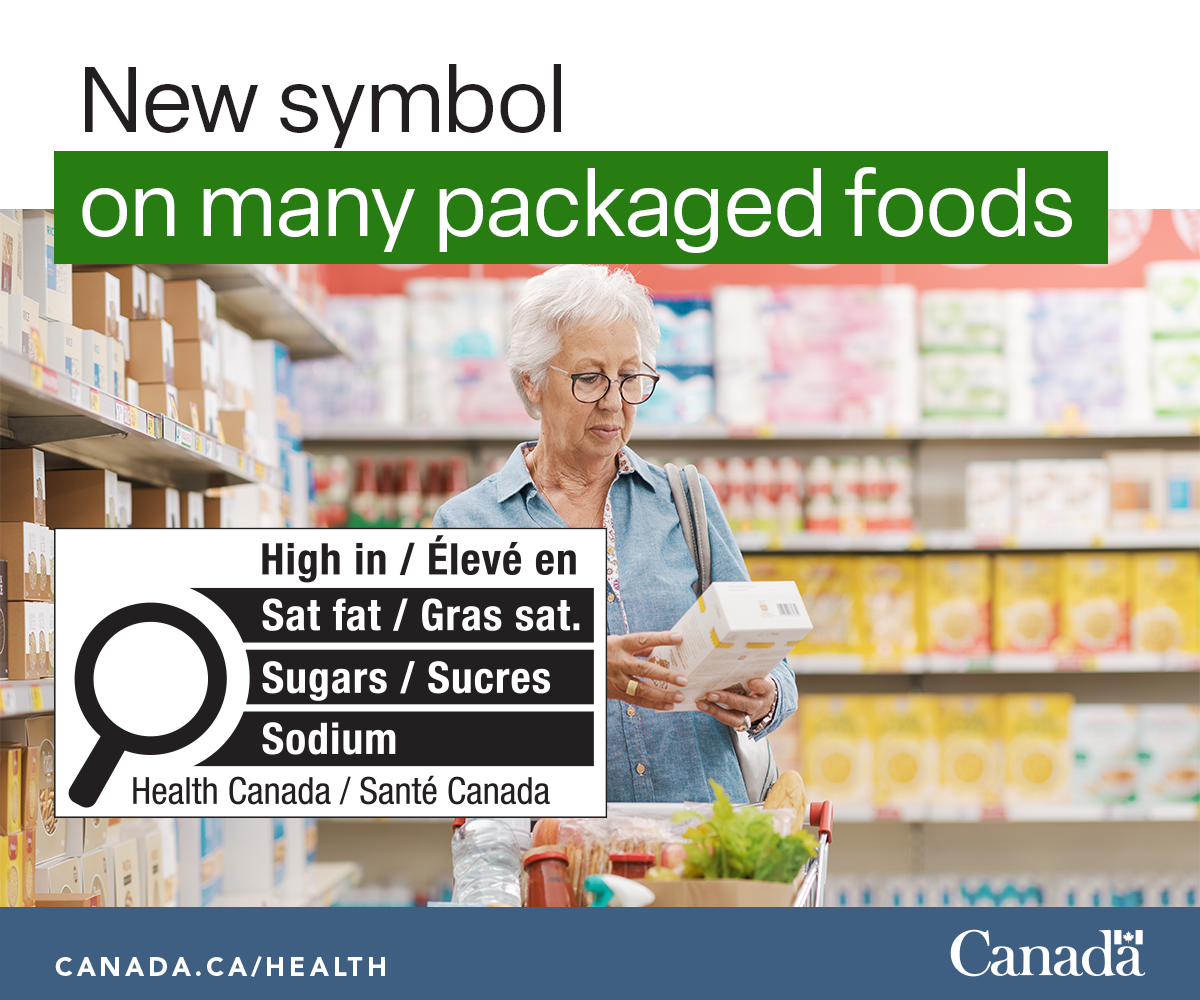 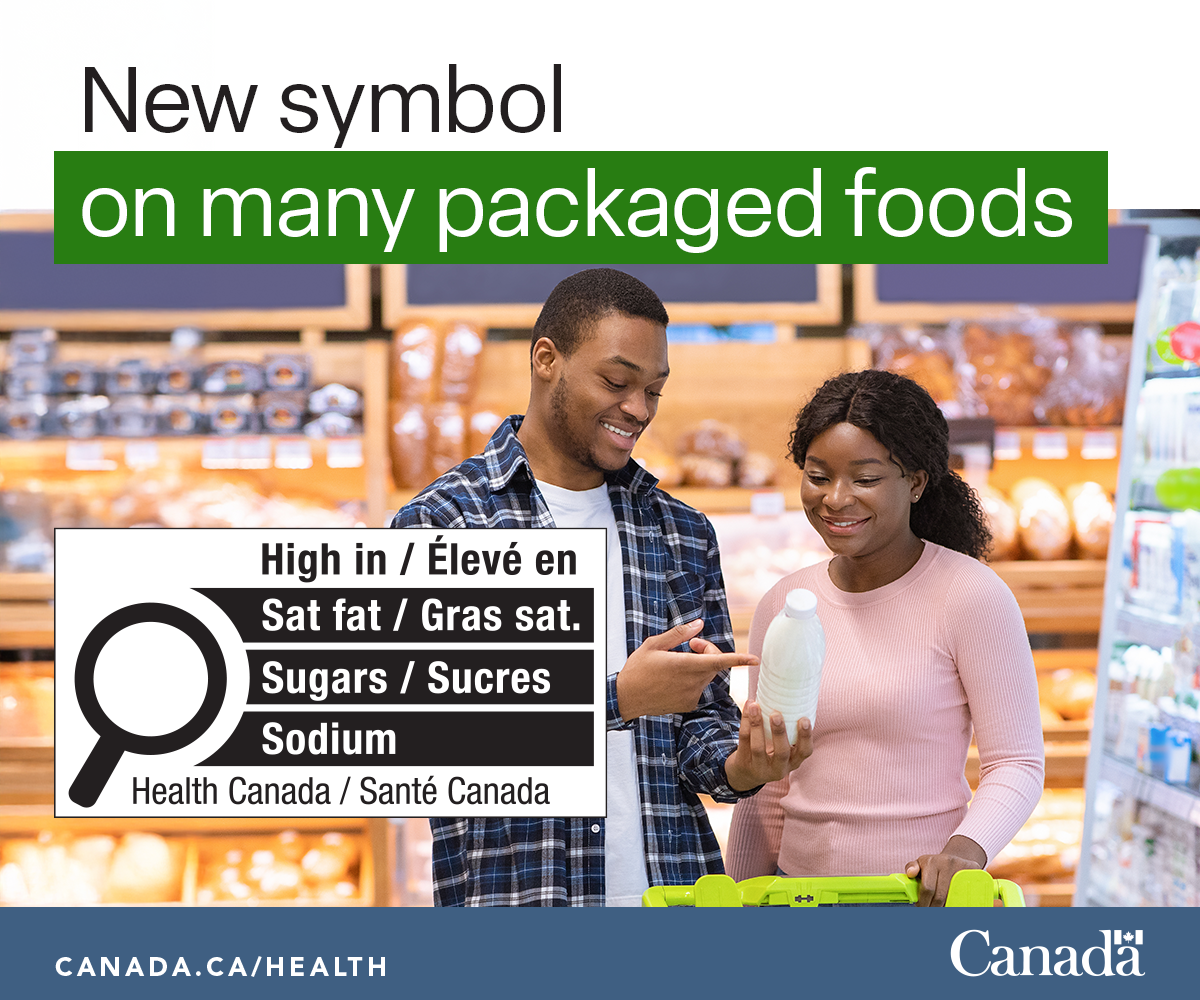 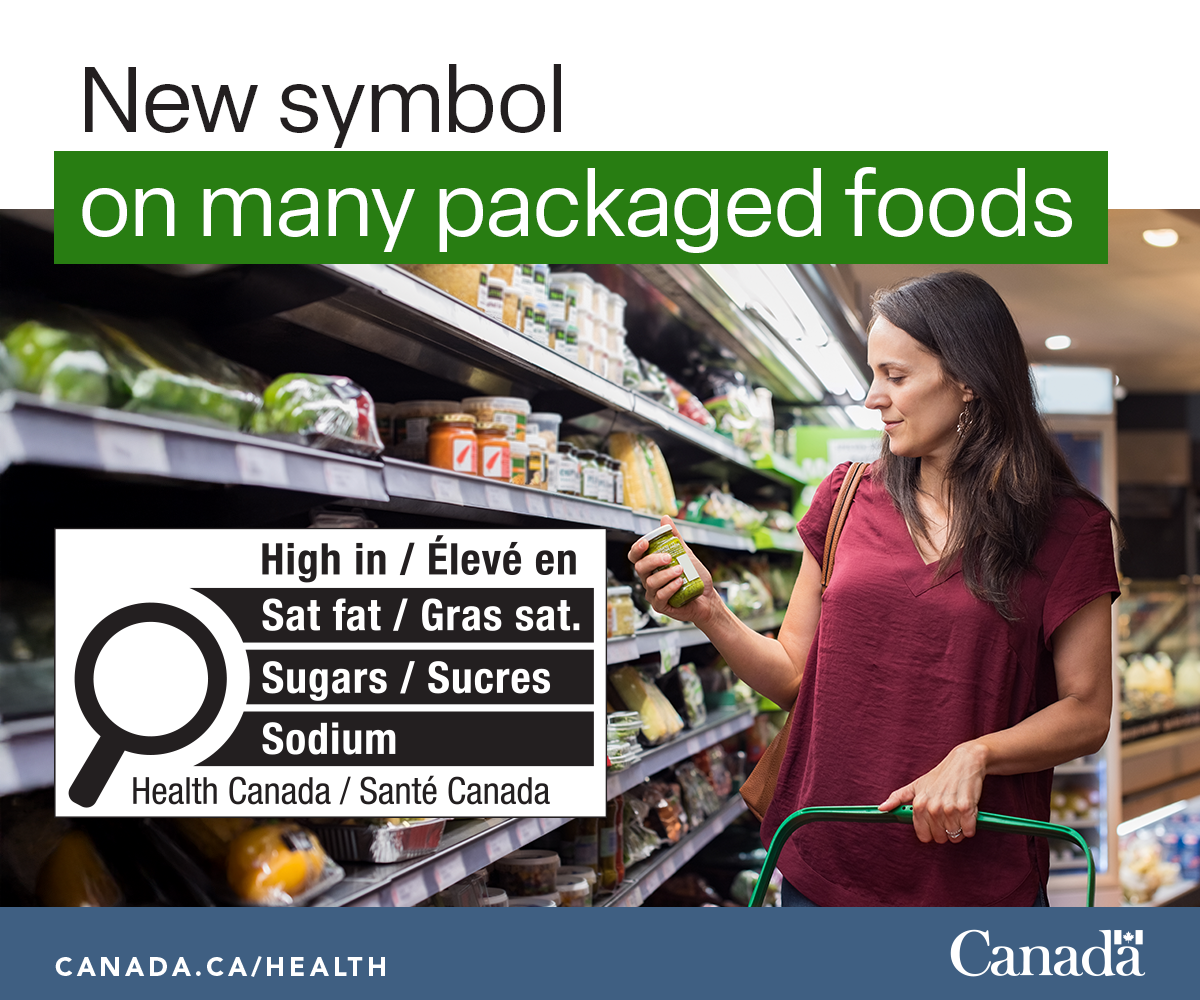 |
Have you seen a new symbol of a magnifying glass on packaged foods while shopping? This new front-of-package symbol can help you quickly and easily identify foods and drinks high in saturated fat, sugars or sodium. Find out more: canada.ca/front-package-labelling |
New symbol on many packaged foods |
 |
A new front-of-package symbol is starting to appear on some packaged foods and drinks. Inform your patients about this new symbol, which features a magnifying glass with "High in saturated fat, sugars or sodium," to help them quickly make informed choices. |
New symbol for packaged foods high in saturated fat, sugars or sodium |
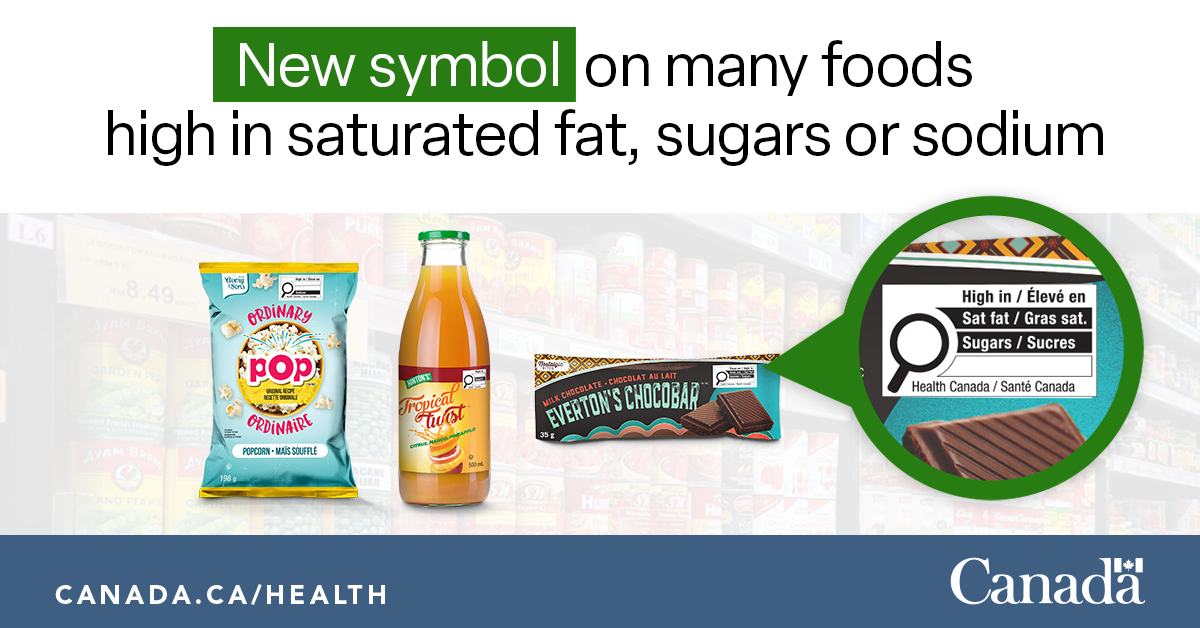 |
Starting in 2026, a new front-of-package symbol will be required on many foods and drinks that are high in saturated fat, sugars or sodium. You may have already seen this symbol on some food packages. Regularly eating foods high in saturated fat, sugars or sodium can increase the risk for heart disease, type 2 diabetes, and high blood pressure. Learn more about the symbol and share the information to help your clients make informed food choices. |
New symbol on many foods high in saturated fat, sugars or sodium |
 |
We've developed a new front-of-package symbol to help consumers easily identify foods and drinks high in saturated fat, sugars or sodium. Learn how the symbol can be used to quickly compare similar food products to help your clients make informed choices. |
New symbol to compare similar food products |
 |
Exciting news for health professionals and educators: our popular Nutrition Labelling Online Course just got updated with new content and enhanced accessibility! This free and interactive course will help you better understand food labelling in Canada and includes a new module on front-of-package labelling. Other modules touch on:
|
Register for our nutrition labelling online course! |
   |
The front-of-package magnifying glass symbol helps you see at a glance whether a food is high in saturated fat, sugars, sodium, or any combination of these nutrients. When there is no symbol, or when you want more details, turn the package and look at the nutrition facts table and list of ingredients. The nutrition facts table:
The list of ingredients:
Learn more at: Canada.ca/NutritionLabelling |
The front-of-package magnifying glass symbol shows if a food is high in saturated fat, sugars or sodium. The nutrition facts table gives you information about specific nutrients in packaged foods. The list of ingredients tells you what the food is made of. |
   |
[Slide 1] A closer look at nutrition labelling The front-of-package magnifying glass symbol shows if a food is high in saturated fat, sugars, sodium, or any combination of these. [Slide 2] The nutrition facts table gives detailed information about the nutrient content of a packaged food, based on the serving size. The serving size makes it easy to compare the nutrient content of similar foods. The % daily value is a quick reference to tell you if a food contains a little (5% or less) or a lot (15% or more) of a nutrient. [Slide 3] The list of ingredients tells you what the food is made of. Ingredients are listed in order by weight. This means that the ingredient present in the greatest amount is listed first. Sugars-based ingredients are grouped together so you can quickly see all sources of sugars added to a food. |
|
 |
Here's how nutrition labels can help you make informed choices! Label emoji Magnifying glass tilted left emoji The front-of-package magnifying glass symbol helps you see at a glance if a food is high in sat fat, sugars, sodium or any combination of these. When there is no symbol, or when you want more detail, turn the package and look at the nutrition facts table and list of ingredients. The nutrition facts table gives you information about the nutrient content of a food, based on the serving size. The serving size makes it easy to compare the nutrient content of similar foods. The list of ingredients tells you what the food is made of. Learn more about nutrition labelling: Canada.ca/NutritionLabelling |
Use nutrition labelling on food packages to make informed choices. |
   |
[Slide 1] Understand nutrition labelling on packaged foods On the front:
[Slide 2] On the side or back:
[Slide 3] Together, these three mandatory labelling components help you compare similar foods and make informed choices. |
|
 |
Getting questions about nutrition labels? Brush up on your nutrition labelling knowledge: The front-of-package magnifying glass symbol may appear if a food is high in sat fat, sugars and/or sodium. The nutrition facts table:
The list of ingredients lists ingredients in order by weight. Learn more at: Canada.ca/NutritionLabelling |
Nutrition labelling cheat sheet. |
 |
Interested in food and nutrition? Here's some info on nutrition labelling in Canada. The front-of-package magnifying glass symbol helps you see at a glance if a food is high in sat fat, sugars, sodium or any combination of these. The nutrition facts table gives details about the nutrient content of a food, based on the serving size. The list of ingredients tells you what the food is made of. Learn more about how nutrition labelling can help you make informed choices: Canada.ca/NutritionLabelling |
Help your clients make informed choices by using nutrition information on food packages. |
    |
Food labels can help you make informed choices. How can you use them? Starting on the front, the magnifying glass symbol helps you see if the food is high in three nutrients: saturated fat, sugars or sodium. When there is no symbol or for more details, check the nutrition facts table and list of ingredients. Together, these three tools help you compare similar foods and better understand what you're choosing. #FrontOfPackage #FoodLabelling |
How to read a food label Start on the front You may find this magnifying glass symbol that shows if a food is high in saturated fat, sugars, sodium or any combination of these. Flip it over for the nutrition facts table The nutrition facts table:
5% DV or less = a little Be sure to check the list of ingredients List of ingredients:
Use all three label components to:
|
Articles to share
You can share these articles with your clients, patients, and networks, and use the content on your website, in your newsletters, or anywhere else you see fit.
- Learn more about the new symbol
- 3 tools you have for making informed food decisions
- How to tell what’s in the food you buy
- Zoom in on saturated fat, sugars and sodium in packaged foods
- How to use food labels to understand what’s in your food
- How to navigate nutrition information on food labels
Audio recordings and scripts
You can share these audio recordings with your networks and through your social media channels, use them on your website, or anywhere else you see fit.
Learn about the new symbol on food labels
Transcript: Learn about the new symbol on food labels
Life gets busy and making choices at the grocery store isn't always easy. Between rushing through the aisles and juggling dinner plans, it's hard to find time to read every label. That's where a little extra help comes in.
A new symbol is starting to appear on the front of some food and drink packages to help people in Canada make informed choices. It is designed to catch your eye with its magnifying glass icon and black-and-white design.
It identifies foods that are high in saturated fat, sugars, or sodium, which can increase your risk of heart disease, type two diabetes, and high blood pressure when consumed in excess.
By 2026, many products will require this symbol, but some packages already have it today.
Use it as a quick comparison tool—whether you're shopping for cereals, soups, or snacks for example.
It's a simple way to be informed while choosing foods.
Learn more at canada.ca/frontpackagelabelling.
3 tools you have for making informed food decisions
Transcript: 3 tools you have for making informed food decisions
When you’re choosing what food to buy, how can you know what you’re getting? In fact, you have three useful tools right on your food package:
First, on the front, you may see a magnifying glass symbol. It means that the food is high in saturated fat, sugars, sodium or a combination of these nutrients.
Next, the nutrition facts table on the back or side of the package has more details. For example, the per cent daily value shows whether the stated portion contains a little or a lot of a nutrient.
Lastly, the list of ingredients tells you what the food is made of. Sugar-based ingredients are grouped together after the word “sugars”. This grouping helps you see if sugars were added and what their source is.
These three tools help you understand the nutrient content of your food so you can make informed choices. Learn more at canada.ca/nutrition labelling.
Video to share about nutrition labelling
You can share the video on how to use nutrition labels with your networks and through your social media channels, use it on your website, or anywhere else you see fit.
Additional nutrition labelling resources
Learn more about nutrition labelling, including the new front-of-package nutrition symbol:
- A nutrition labelling online course
- Infographic: Get the facts on the front-of-package nutrition symbol
Contact us
If you have any questions or comments, please send an e-mail to nut.labelling-etiquetage@hc-sc.gc.ca.