
Cannabis accessories for inhalation: Minimizing your risk when smoking, vaping and dabbing
Cannabis accessories for inhalation - [Version PDF format, 501 KB]
On this page
Cannabis is most commonly consumed through smoking, although vaping and dabbing are also common ways of consuming cannabis. This page focuses on cannabis accessories used for inhalation and how to lower risks associated with the use of these accessories. For more information on the general risks of cannabis use on your health, refer to Health effects of cannabis.
A cannabis accessory is a thing or device that’s used in the consumption of cannabis. This includes rolling papers or wraps, pipes, water pipes (bongs), vapes and dab rigs.
Health risks and minimizing your risk
Smoking
Smoking refers to the inhalation of smoke produced by burning cannabis. It’s the most common method of consuming cannabis and the most harmful one. Cannabis smoke contains many of the same harmful chemicals as tobacco smoke, including carcinogens (substance capable of causing cancer). Cannabis smoking has been associated with increased risks of:
- bronchitis
- lung infections
- chronic (long-term) cough
- increased mucus buildup in the chest
Smoking accessories
Rolling papers
Joints or blunts are usually made with dried cannabis that has been rolled in a burnable “rolling” paper. These rolling papers are thin and made from natural materials like bamboo or hemp.
To minimize your risk when smoking a joint or a blunt, avoid sharing them to prevent spreading diseases or infections. Also, make sure to buy the papers or pre-rolled joints from authorized retailers. Non-regulated rolling papers can contain contaminants such as:
- heavy metals, like lead
- pesticides
Pipes
Pipes are a reusable accessory used to smoke cannabis. Cannabis is burned in the bowl of the pipe and the smoke stays in the pipe to be inhaled. There are different types of pipes:
- hand pipes
- one hitters
- water pipes (such as bubblers or bongs)
With water pipes, the water can lower the temperature of the smoke and help filter some of the harmful substances in the smoke. However, this doesn’t make pipe smoking safe. Research has shown that water pipes can produce greater levels of second-hand smoke than tobacco cigarettes. The risk of being affected by second-hand smoke is also higher for those smoking indoors.Footnote 1
Minimize your risk when using a pipe.
- Choose a pipe made of glass or ceramic. Plastic and other materials can have harmful chemicals that can be inhaled when heated.
- If you share your pipe, use a different mouthpiece to avoid spreading diseases or infections.
- For water pipes, keep them clean by wiping them down and regularly switching out the water used.
Vaping
Vaping is the inhalation of an aerosol produced by heating a liquid or solid cannabis extract inside a vaping accessory.
The aerosol generated from cannabis vaping has been shown to contain harmful substances.Footnote 2 Also, contaminants such as heavy metals may leach into the cannabis extract and be inhaled in the aerosol.Footnote 3Footnote 4 Although vaping cannabis has its own risks, it's less harmful for your lungs than smoking cannabis.
Vaping accessories
Vaping accessories consist of a:
- battery
- mouthpiece
- heating element
- chamber or cartridge
Different examples of vaping accessories include:
- vape pen
- e-liquid pod
- e-liquid vaporizer
- vaporizer with mods (battery adaptor)
Vaping accessories have been known to malfunction, and in rare cases, these malfunctions have resulted in injury.
Minimize your risk when using a vaping accessory.
- Buy your accessory from an authorized retailer.
- Follow manufacturer’s instructions on proper use and disposal of your accessory.
- Properly clean your accessory after use.
- Don't over-charge the batteries of your rechargeable accessory.
- Learn about battery safety, including proper precautions and disposal of the lithium-ion battery for your rechargeable accessory.
- Avoid sharing your vaping accessory to prevent spreading diseases or infections.
Dabbing
Dabbing is the inhalation of an aerosol generated by high temperature vaporization of a solid or semi-solid cannabis extract (a dab) with a dabbing accessory.
Dabbing accessories
Dab rigs
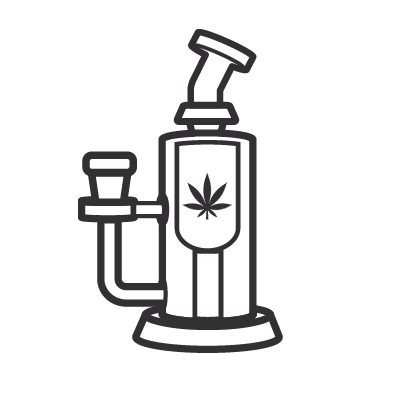
A dab rig is an accessory that’s usually made of glass. It features four parts:
- dome
- dabber
- a water pipe
- nail (or banger)
The nail is a small compartment where the cannabis extract is heated with a torch or a heated element.
Dab rigs are used with highly concentrated cannabis extracts such as:
- wax
- hash
- rosin
- shatter
- live resin
- budder or batter
- butane hash oil (BHO)
- crumble or honeycomb
Minimize your risk when using a dab rig.
- Buy your accessory from an authorized retailer.
- If you share your dab rig, use a different mouthpiece to avoid spreading diseases or infections.
- Keep your dab rig clean by wiping it down and regularly switching out the water in the rig.
Dab pens (concentrate vaporizer)
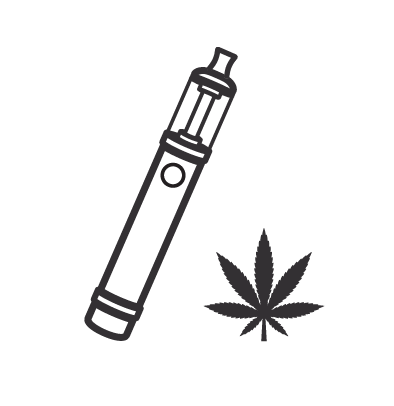
Dab pens differ from vaping accessories because they melt solid and semi-solid extracts rather than liquids or oil. The pen features a chamber, a battery and a mouthpiece. Because they use heat to melt extracts, they’re often covered in steel to protect the user from high internal temperatures.
Minimize your risk when using a dab pen.
- Buy your accessory from an authorized retailer.
- Follow manufacturer’s instructions on proper use and disposal of your accessory.
- Clean your accessory properly after use.
- Don't over-charge the batteries of your rechargeable accessory.
- Learn about battery safety, including proper precautions and disposal of the lithium-ion battery for your rechargeable accessory.
- If you share your dab pen, use a different mouthpiece to avoid spreading diseases or infections.
Report a side effect or problem
If you experience side effects when using cannabis, you're encouraged to report them to indicate if there’s an issue with a cannabis product.
To report a problem with a cannabis vaping accessory from an authorized retailer, submit a reporting form. Your report can help make these products safer for all Canadians.
Related links
The most effective way to avoid the risks of cannabis use is to abstain from use. If you choose to consume cannabis, refer to the resources below to learn how to minimize your risk.
- About cannabis
- Consumer information – Cannabis
- Health effects of cannabis
- Reduce your risk: Choose legal cannabis
- Authorized cannabis retailers in the provinces and territories
- Clearing the smoke on cannabis: Edible cannabis products, cannabis extracts and cannabis topicals
Cannabis resource series
- Growing cannabis at home safely
- Health effects of cannabis on adults over 55
- How to read and understand a cannabis product label
- Is cannabis safe to use? Facts for youth aged 13–17 years
- Is cannabis safe to use? Facts for young adults aged 18–25 years
- Does cannabis use increase the risk of developing psychosis or schizophrenia?
- Is cannabis safe during preconception, pregnancy and breastfeeding?
- Is cannabis addictive?
Footnotes
- Footnote 1
-
Nguyen PK, Hammond SK. Fine Particulate Matter Exposure From Secondhand Cannabis Bong Smoking. JAMA Netw Open. 2022;5(3):e224744. doi:10.1001/jamanetworkopen.2022.4744
- Footnote 2
-
Meehan-Atrash J, Luo W, McWhirter KJ, Strongin RM. Aerosol Gas-Phase Components from Cannabis E-Cigarettes and Dabbing: Mechanistic Insight and Quantitative Risk Analysis. ACS Omega. 2019 Sep 16;4(14):16111-16120. doi: 10.1021/acsomega.9b02301. PMID: 31592479; PMCID: PMC6777088.
- Footnote 3
-
Meehan-Atrash J, Rahman I. Cannabis Vaping: Existing and Emerging Modalities, Chemistry, and Pulmonary Toxicology. Chem Res Toxicol. 2021;34(10):2169-2179. doi:10.1021/acs.chemrestox.1c00290
- Footnote 4
-
McDaniel C, Mallampati SR, Wise A. Metals in Cannabis Vaporizer Aerosols: Sources, Possible Mechanisms, and Exposure Profiles. Chem Res Toxicol. 2021 Nov 15;34(11):2331-2342. doi: 10.1021/acs.chemrestox.1c00230. Epub 2021 Oct 27. PMID: 34705462.