
Health Canada Protects Bees from Pesticides
Download the alternative format
(PDF format, 240 KB, 1 page)
Organization: Health Canada
Published: 2019-04-05
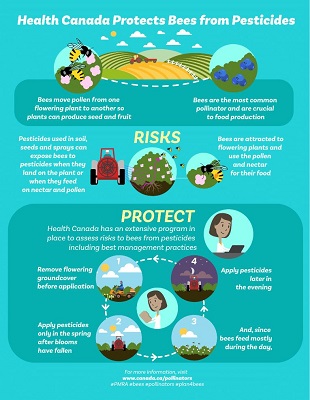
Bees move pollen from one flowering plant to another so plants can produce seed and fruit. Bees are the most common pollinator and are crucial to food production.
Risks
Pesticides used in soil, seeds and sprays can expose bees to pesticides when they land on the plant or when they feed on nectar and pollen.
Bees are attracted to flowering plants and use the pollen and nectar for their food.
Protect
Health Canada has an extensive program in place to assess risks to bees from pesticides including best management practices.
- Remove flowering groundcover before application
- Apply pesticides only in the spring after blooms have fallen
- Since bees feed mostly during the day, apply pesticides later in the evening.
For more information, visit www.canada.ca/pollinators.
#PMRA #bees #pollinators #plan4bees