
Sap beetles
Scientific name
Various species in the Genera Carpophilus, Glischrochilus
Classification
Secondary pest; Fungus feeder
Order: Coleoptera
Family: Nitidulidae
Acronym: CAR
Description
- Adults are 2 to 4 mm in length, oval, flattened and light brown to black in colour.
- Elytra are often shortened, exposing 2 or 3 abdominal segments.
- Elytra often with 1 or 2 yellow to reddish brown spots.
- Antennae end in 3-segmented, flattened club.
- Sap beetles are highly mobile.
Images


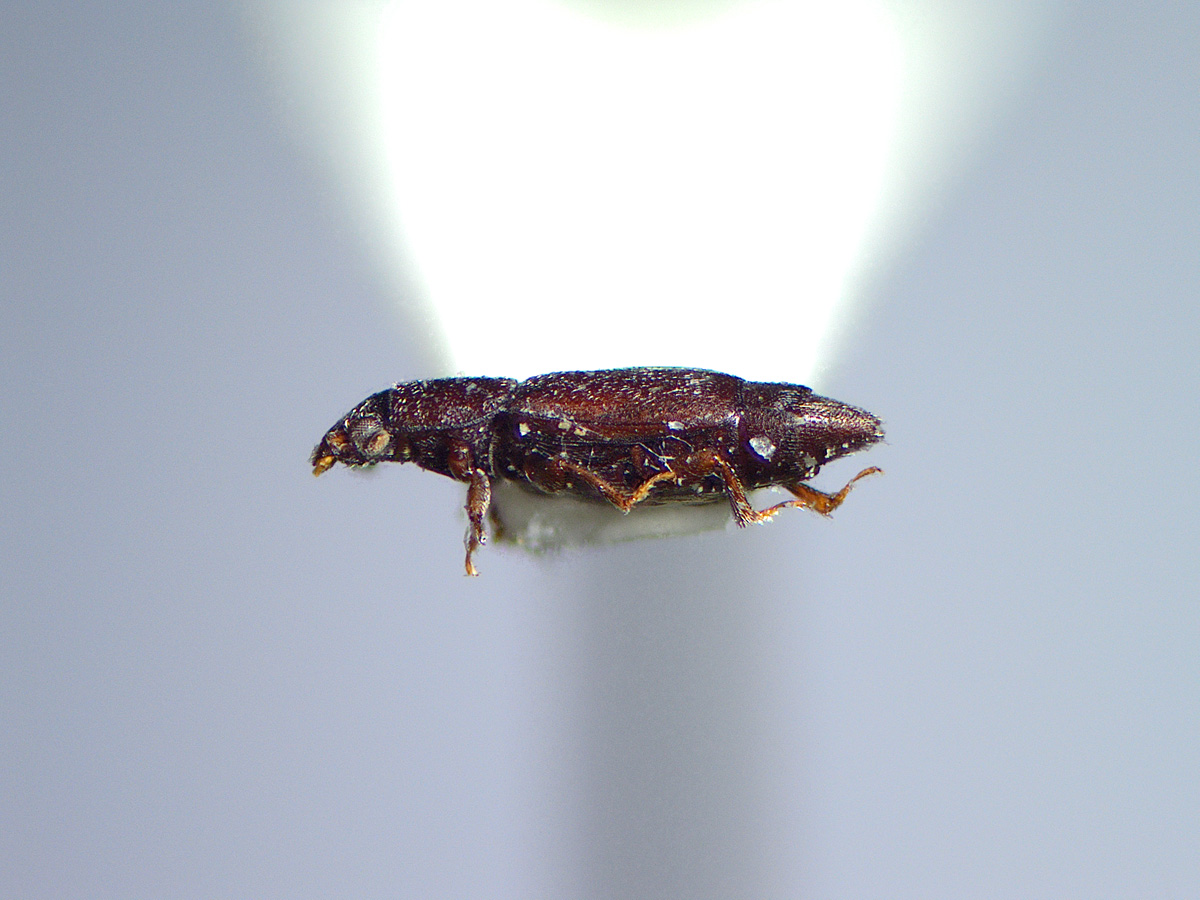
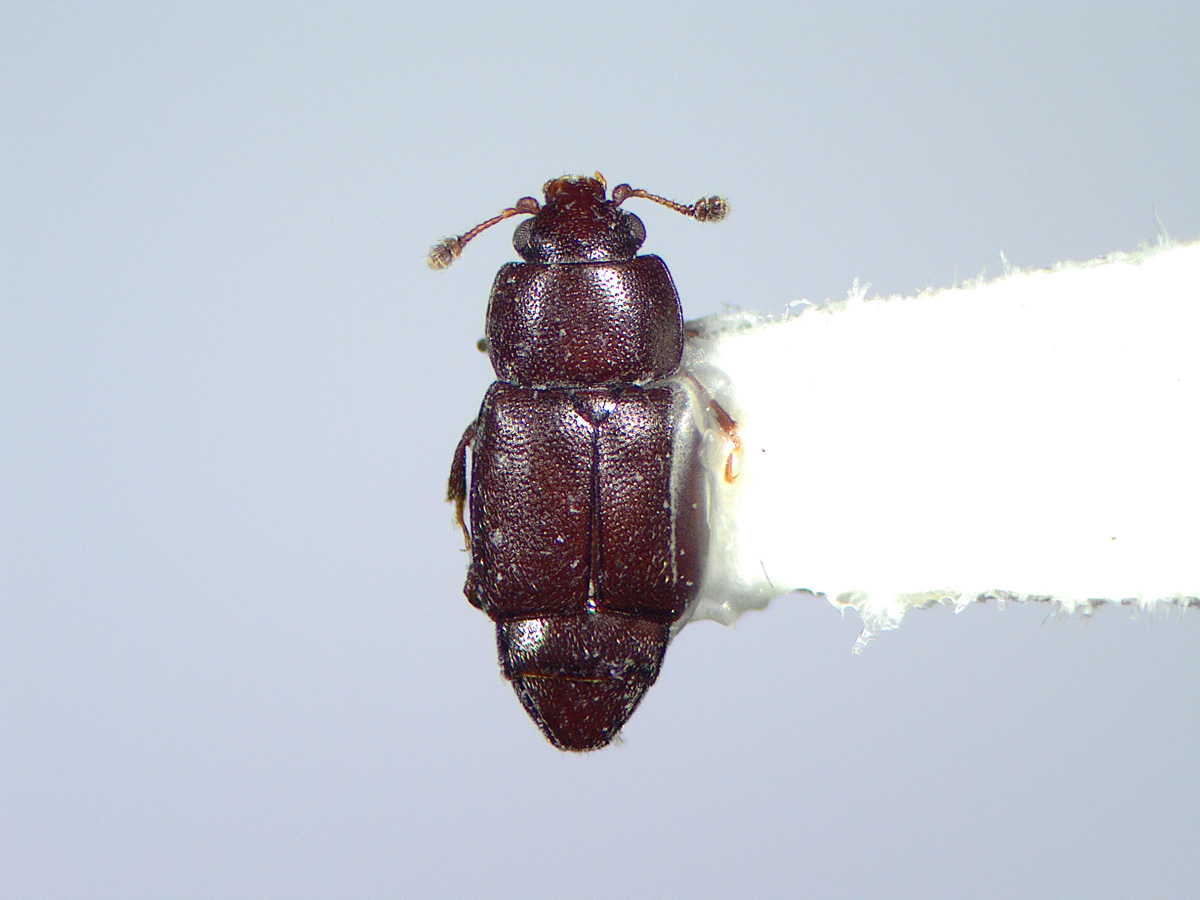


Similar species
- Other species within the same genera are similar in appearance
Commodities affected
- Sap beetles feed on stored grain, dried fruit, fresh fruit, flowers, fungi, carrion
- Some feed on sap of trees and juice of fruits
Signs of infestation
- Presence of holes in commodity
- Presence of adult beetles in sometimes large aggregations
Damage
- Larvae and adults both feed but damage is not distinctive.
- Larvae may burrow into mouldy grain residues.
- Adults will feed on dried and ripening fruit where their pest status is most significant.
- Sap beetles may transmit mould spores, bacteria and yeasts.
How to control
Geographic range
- Are distributed worldwide and across Canada
- 2 species are most important in Canada: the dried fruit beetle, Carpophilus hemipterus (L.) and the four-spotted sap beetle, Glischrochilus quadrisignatus (Olivier)
Where found
- Are attracted by moulds and yeasts on potential foods
- Are important pests of ripening fruits
Life history
- These beetles have a very high fecundity, a single female is able to lay up to 1000 eggs over a 3 to 4 month period
- Females lay eggs on or in food
- Larvae are active and move amongst the food, burrowing into food material
- Adults will fly readily
- Populations develop rapidly
Not what you're looking for?
Start over again from the Insect identification key page.