
Psocids
Classification
Secondary pest; Scavengers
Acronym: PSO
Various species including:
- Liposcelis bostrychophilus (Psocoptera: Liposcelididae)
- Trogium pulsatorium; (Psocoptera: Trogidae)
- Also Families: Lachesiilidae, Psyllipsocidae
Description
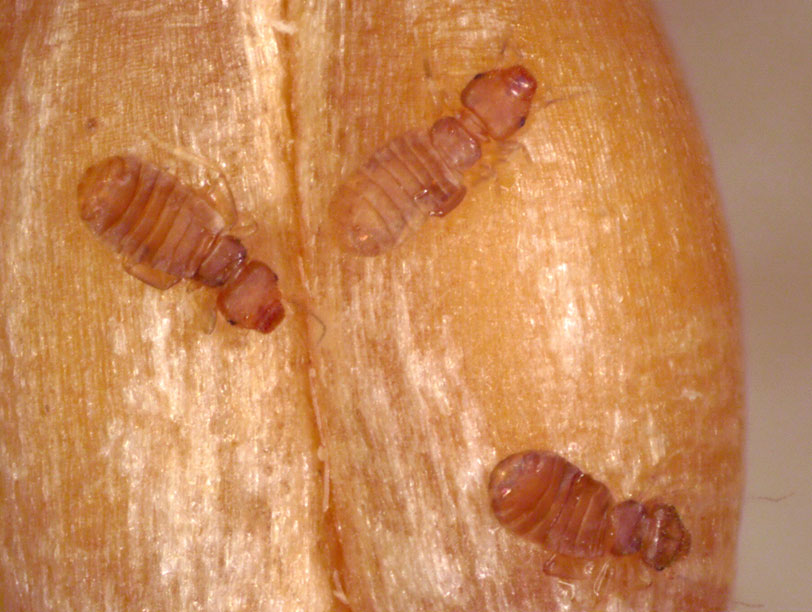
- Are quite small, 1 mm or less in length.
- Larger pale booklouse can reach lengths of 2 mm, similar to some stored-product beetles.
- Have very long, thread-like antennae and have an enlarged hind femur.
- Are soft bodied and often translucent, varying in colour from black to white.
Images


Similar species
- May be confused with some larger species of predatory mites
Commodities affected
- Animal and plant products, fungi
- Stored grain, packaged food, glues, paper products, fabrics
Signs of infestation
- Infestations develop in grain with moisture content higher than 14%.
- Booklice are often associated with presence of moulds.
Damage
- Is a minor pest of stored grain and does not damage sound grain
- Damage is indistinct
- Feeds preferentially on germ of broken kernels and on exposed endosperm of damaged kernels
- Populations may be significant enough to cover walkways in elevators, creating a slipping hazard
- May cause inhalation allergies and respiratory issues in susceptible individuals
How to control
Geographic range
- Are found around the world and across Canada
Where found
- Prefer moist, humid environments
- Found in granaries, elevators, households, warehouses, processing facilities, museums
- Are associated with high moisture content in stored grain and are found feeding at the tops of the grain bulk
Life history
- Life cycle is incomplete metamorphosis with nymphs morphologically similar to adults.
- Adults may be winged or wingless; nymphs are always wingless.
- Adults prefer breeding conditions with high temperature and high humidity.
- Generally, booklice require humidity higher than 60%.
- Females lay eggs randomly in the food source.
Not what you're looking for?
Start over again from the Insect identification key page.