
Remembering the first casualties of the First World War


Navy News / November 11, 2019
By Jennifer Gamble, Naval Museum of Halifax Curator
This Remembrance Day marks the 101st anniversary of the end of the First World War. When hostilities broke out in 1914, the Royal Canadian Navy (RCN) was only four years old.
With only two former British cruisers, His Majesty’s Canadian Ships Rainbow and Niobe, and a muster of roughly 350 sailors, the RCN faced the monumental task of how to defend the coastlines of Canada without a fleet.
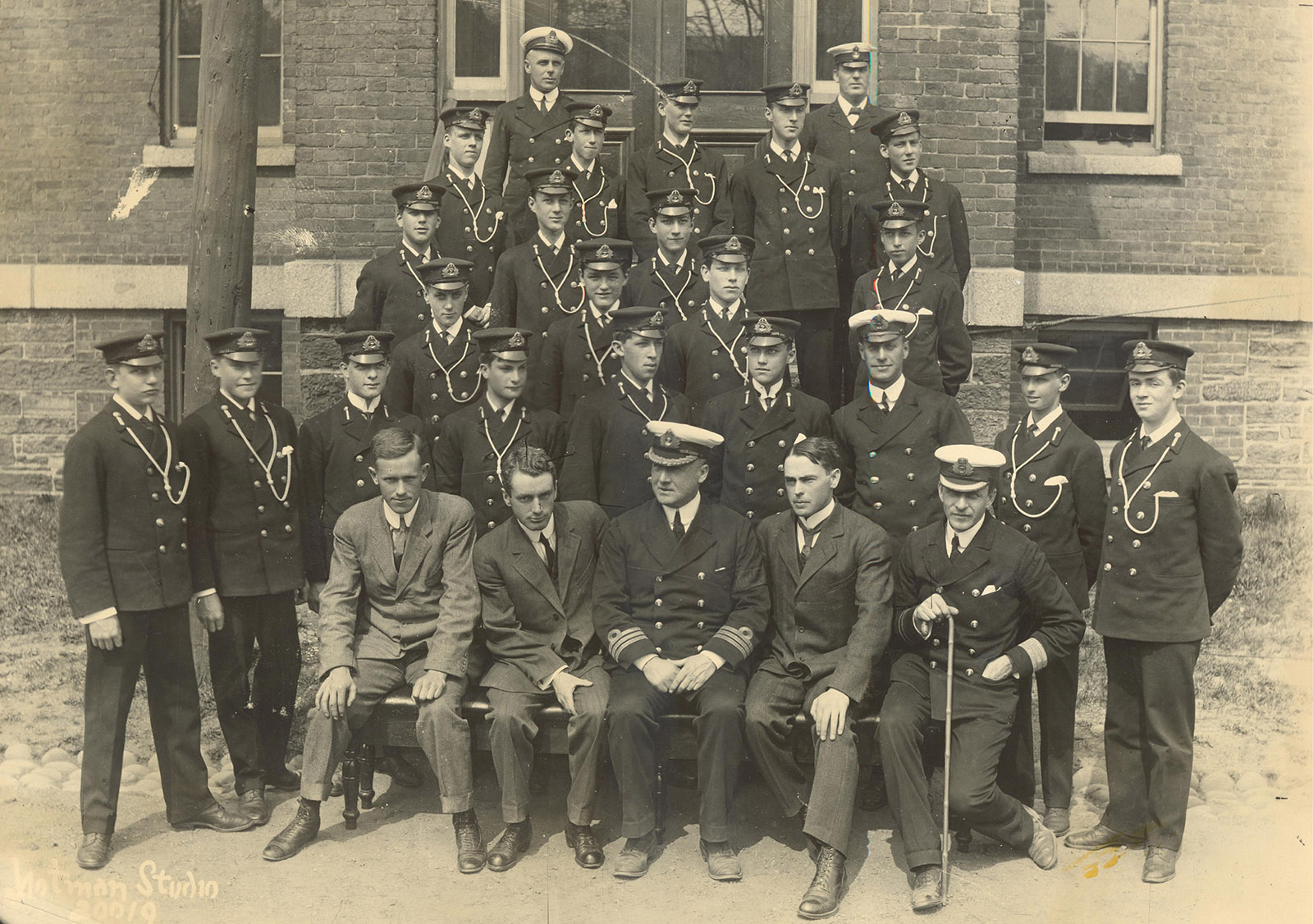
In Halifax, the navy was responsible for establishing defences such as nets across the harbour, coordinating minesweeping efforts and controlling traffic in the harbour. The demand was high for well-trained sailors and officers to take on this work, so the Admiralty looked to the Royal Naval College of Canada’s first graduating class.
Among its members were four bright and young Maritimers: Malcolm Cann, John V. W. Hatheway, William Archibald Palmer and Arthur Wiltshire Silver. Following their graduation in 1914, they were selected to serve in the Royal Navy’s West Indies Squadron and assigned to His Majesty’s Ship (HMS) Good Hope.
Within six weeks, all four of these midshipmen were lost. On November 1, 1914, off the coast of Chile, the Good Hope was sunk in what came to be known as the Battle of Coronel. All hands were lost.
Cann, Hatheway, Palmer and Silver were the first RCN and Canadian casualties of the war. A week later, newspapers back home in Canada announced the loss of HMS Good Hope and of the four midshipmen.
Before he left England for the coast of Chile, Cann sent a letter home to his mother in Yarmouth, N.S. By time Mrs. Cann received it, her son was already lost at sea and she would spend the rest of her life searching for him. This letter, along with Malcolm Cann’s medals, are on display at the Naval Museum of Halifax.
By the end of the war, the RCN had grown from a few hundred sailors to over 5,000. By the outbreak of the Second World War, the RCN had expanded further to 95,000 men and women in uniform.
Building on the foundation established during the First World War, Canada’s navy was better equipped to take on the challenges that the Second World War presented.
This Remembrance Day the Naval Museum of Halifax will be open from noon to 4 p.m. in honour and remembrance of the many Canadians who have served in the RCN over the past 100 years.