
Canada and the Philippines take defence cooperation to new heights
August 17, 2026 – Defence Stories
Estimated read time – 2:09
By: Major Christopher Daniel, Senior Public Affairs Officer, Indo-Pacific
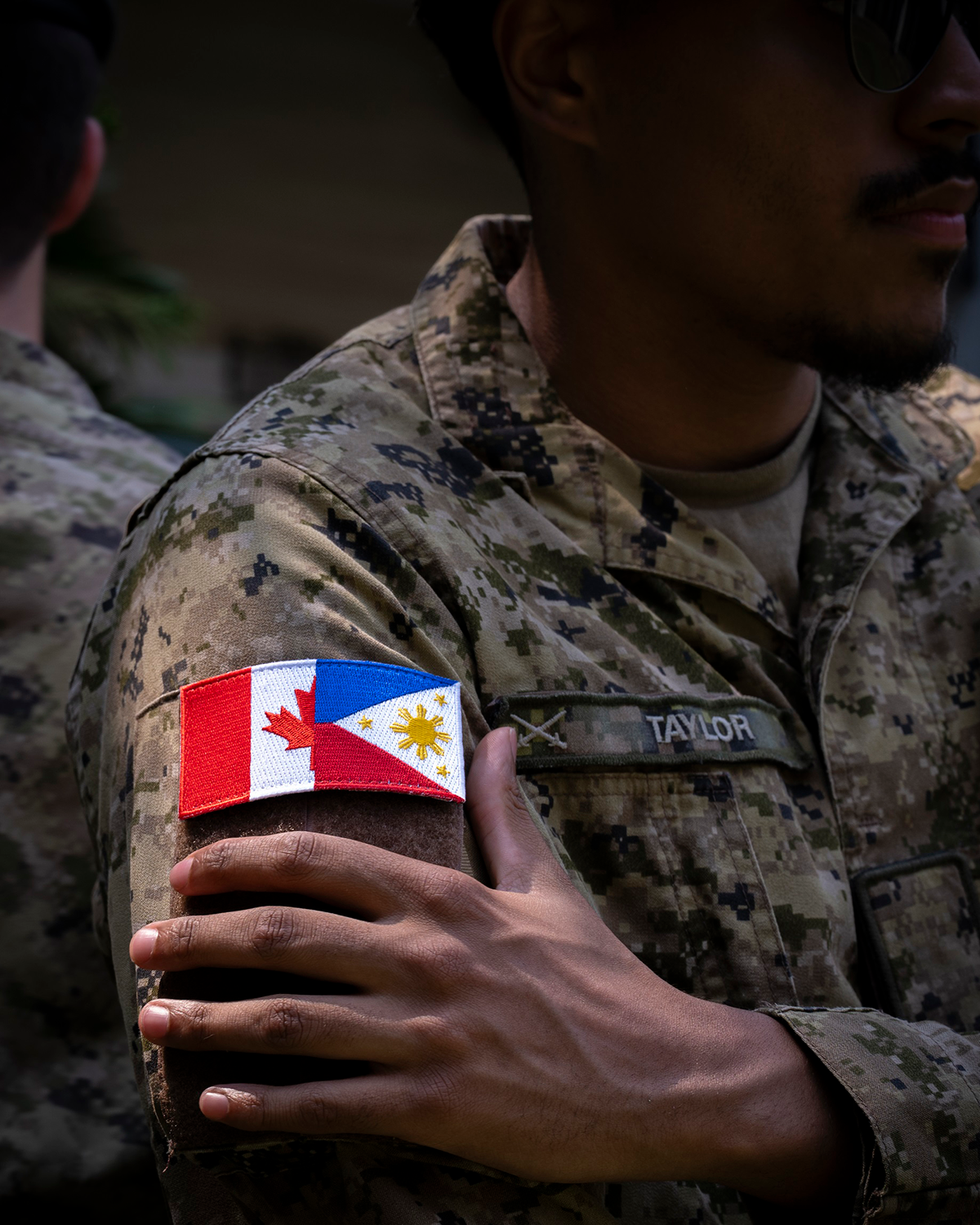
Caption
CAF participation in Exercise Balikatan 2026 was one of the many recent engagements reflecting the rapidly growing defence partnership between Canada and the Philippines.
Canada’s defence relationship with the Philippines is entering a new era, quickly becoming one of the strongest examples of Canada’s Indo-Pacific Strategy delivering real action where it matters most.
The latest milestone came on June 11, in Ottawa, when the Philippines Secretary of National Defense made the first-ever official visit to Canada by someone in that role. During the visit, both countries signed two new arrangements that further deepened an already fast-growing partnership. That momentum continued on August 11, when the Philippine Senate unanimously concurred in the ratification of the Canada-Philippines Status of Visiting Forces Agreement (SoVFA).
A Mutual Logistics Support Arrangement will allow the Canadian Armed Forces (CAF) and the Armed Forces of the Philippines (AFP) to support one another during exercises, deployments, and operations. Alongside it, a Statement of Intent on Strengthening Defence Cooperation sets the stage for expanded collaboration in maritime security, regional defence cooperation, and future joint activities.
For Lieutenant-Colonel Jason King, Canadian Defence Attaché to the Philippines, the significance of this progress is unmistakable.
“Canada and the Philippines are building a defence partnership grounded in trust, shared values, and a common understanding that regional security depends on strong and reliable partners,” he said.
Building the foundation
This partnership has been building steadily over the last two years.
In January 2024, both countries signed a Defence Cooperation Memorandum of Understanding, followed by a SoVFA in November 2025. With the Philippine Senate’s concurrence in its ratification in August 2026, the agreement provides a clear legal framework for cooperative activities between the CAF and AFP, including training and exercises, while strengthening interoperability, military coordination and knowledge transfer. This is the first and only bilateral SoVFA Canada has in the Indo-Pacific region.
Since then, cooperation has accelerated across nearly every domain. Senior defence leaders have met regularly in Manila and Ottawa, strengthened bilateral security dialogue, advanced Women, Peace and Security initiatives, and supported multiple Royal Canadian Navy port visits to the Philippines. In 2025, engagement deepened further through a bilateral Defence Cooperation Working Group, high-level government engagements, and a visit to the Philippines by Canada’s Chief of the Defence Staff and Minister of National Defence.
From agreements to action
That partnership is increasingly visible in operations. Earlier this spring, CAF personnel participated in Exercise BALIKATAN 2026, strengthening interoperability alongside allies in the Indo-Pacific. The CAF also continues to support the Multilateral Maritime Cooperative Activities (MMCA), reinforcing a shared commitment to a free and open Indo-Pacific through coordinated maritime operations with regional partners. Meanwhile, the CAF Cyber Command is advancing cooperation with the AFP Cyber Command to strengthen cyber resilience against evolving threats.
“A secure Indo-Pacific directly supports Canadian interests. By strengthening partnerships like this, we help reinforce regional stability while protecting the trade routes, economic relationships, and security Canadians rely on every day,” Lieutenant-Colonel King added.
Across land, maritime, cyber, and broader defence cooperation, Canada and the Philippines are building a modern partnership rooted in shared interests and a common commitment to regional stability.
In an increasingly complex Indo-Pacific, partnerships like this are no longer optional. They are essential.