
Welcome Package for the Deputy Minister of National Defence - January 2026
On this page
- Level 1 organizational information
- Defence Team Organizational Charts
- Overview of Defence Team Level 1 Organizational Mandates and Priorities
- Assistant Deputy Minister (Defence Research and Development Canada)
- Assistant Deputy Minister (Digital Services)
- Assistant Deputy Minister (Finance)
- Assistant Deputy Minister (Human Resources – Civilian)
- Assistant Deputy Minister (Infrastructure and Environment)
- Assistant Deputy Minister (Materiel)
- Assistant Deputy Minister (Public Affairs)
- Assistant Deputy Minister (Policy)
- Assistant Deputy Minister (Policy-Industry)
- Assistant Deputy Minister (Review Services)
- Canadian Army
- Canadian Coast Guard (Special Operating Agency)
- Canadian Forces Intelligence Command
- Canadian Joint Forces Command
- Canadian Joint Operations Command
- Canadian Special Operations Forces Command
- Chief Professional Conduct and Culture
- Corporate Secretary
- Department of National Defence and Canadian Forces Legal Services Advisor
- Independent Review Panel for Defence Acquisition
- Judge Advocate General
- Military Personnel Command
- North American Aerospace Defense Command
- Royal Canadian Air Force
- Royal Canadian Navy
- Sexual Misconduct Support and Resource Centre
- Strategic Joint Staff
- Vice Chief of the Defence Staff
- Defence lexicon
Level 1 organizational information
Defence Team Organizational Charts

Caption
- Minister of National Defence
- Associate Minister of National Defence (Veteran Affairs) – At the discretion of the Prime Minister
- Communication Security Establishment (CSE)
- Ombudsman (OMB)
- Military Police Complaints Commission (MPCC)
- Military Grievance External Review Committee
- Deputy Minister of National Defence (DM) – Civilian Structure
- Senior Associate Minister of National Defence (Sr Assoc DM)
- Associate Deputy Minister of National Defence (Assoc DM)
- Assistant Deputy Minister (ADM) Policy (ADM(Pol))
- ADM(Finance)/Chief Financial Officer (ADM(Fin)/CFO)
- ADM(Materiel) (ADM(Mat))
- ADM(Infrastructure & Environment) (ADM(IE))
- ADM(Digital Services)
- Canadian Coast Guard (CCG)
- Corporate Secretary (Corp Sec) – Executive Advisory Role
- Sexual Misconduct Support and Resource Centre (SMSRC) – Special Advisory Role
- Chief Professional Conduct and Culture (CPCC)
- ADM(Human Resources – Civilian) (ADM(HR-Civ))
- Chief of the Defence Staff (CDS) – military structure
- Royal Canadian Navy (RCN)
- Strategic Joint Staff (SJS) – Executive Advisory Role
- Canadian Army (CA)
- Military Personnel Command (MILPESCOM)
- Royal Canadian Air Forces (RCAF)
- Canadian Forces Intelligence Command (CFINTCOM)
- Canadian Joint Forces Command (CJFC)
- Canadian Joint Operations Command (CJOC)
- Canadian Special Operations Forces Command (CANSOFCOM)
- North American Aerospace Defence Command (NORAD)
- Report to DM and CDS
- Judge Advocate General (JAG)
- Chief of Defence Intelligence (CDI)
- Vice Chief of the Defence Staff (VCDS)
- ADM(Defence Research and Development Canada) (ADM(DRDC))
- ADM(Public Affairs) (ADM(PA))
- ADM(Digital Services) and Defence Chief Digital Officer (ADM(DS) and DCDO)
- Department of National Defence and Canadian Forces Legal Advisor (DND CF LA)
- ADM(Review Services) (ADM(RS))
- Chief of Military Personnel (CMP)
Included in the defense organizational structure but not reporting to the Minister of National Defense:
- Governor General of Canada and Commander-in-Chief
- Chief Military Judge

Caption
DEFENCE TEAM Organizational Chart
- Christiane Fox, Deputy Minister (DM)
- General Jennie Carignan, Chief of the Defence Staff (CDS)
- Natasha Kim, Associate Deputy Minister
- LGen Stephen Kelsey, Vice Chief of the Defence Staff
- Report to DM:
- Scott Millar, ADM (Policy)
- Heather Sheehy, ADM (Materiel)
- Judith Bennett, Associate ADM (Materiel)
- Peter Hammerschmidt, ADM (Infrastructure and Environment)
- Taylor Paxton, Corporate Secretary
- Wendy Hadwen, ADM (Policy-Industry)
- Jonathan Moor, ADM (Finance) & Chief Financial Officer
- Hongchao Wang, Associate ADM (Finance)
- Renée de Bellefeuille, ADM (Human Resources-Civilian)
- Mario Pelletier, Canadian Coast Guard
- Sophie Martel, Associate ADM (Digital Services)
- LGen Paul Prévost, Chief Professional Conduct and Culture
- Martin Gravel, Sexual Misconduct Support and Resource Centre
- Report to DM and CDS:
- Gibby Armstrong, ADM (Review Services)
- Ross Ermel, ADM (Digital Services)
- Geneviève Binet, ADM (Public Affairs) & Chief Privacy Officer
- Dr. Jaspinder Komal, Defence Research & Development Center
- Larry Murray, Independent Review Panel for Defence Acquisition
- Daniel Roussy, DND/ CF Legal Advisor
- MGen Rob Holman, Judge Advocate General
- MGen Dave Abboud, Chief of Defence Intelligence
- Report to CDS:
- LGen Jamie Speiser-Blanchet, Commander Royal Canadian Air Force
- VAdm Angus Topshee, Commander Royal Canadian Navy
- LGen Michael Wright, Commander Canadian Army
- MGen Bob Ritchie, Director of Staff, Strategic Joint Staff
- LGen Erick Simoneau, Commander Military Personnel Command
- LGen Steve Boivin, Commander Joint Operations Command
- MGen Steve Hunter, Commander Canadian Special Operations Forces Command
- LGen Iain Huddleston, Deputy Commander NORAD
- LGen Darcy Molstad, Commander Canadian Joint Forces Command

Caption
Canadian Armed Forces (CAF)
CAF Components
- Regular Force (65,677 / 71,500; 92%)
- Reserve Force
- Primary Reserve (25,183 / 30,000; 84%)
- Canadian Rangers (4,826 / 5,689; 85%)
- Junior Canadian Rangers (~3,500)
- Cadet Organizations Administration and Training Service (COATS) (~6,000)
- Supplementary Reserve (4,524)
- Primary Reserve (25,183 / 30,000; 84%)
Strategic
- Minister of National Defence
- Deputy Minister of National Defence
- Associate Deputy Minister
- Canadian Coast Guard
- Assistant Deputy Ministers
- Chief of the Defence Staff
- Vice Chief of the Defence Staff
- Strategic Joint Staff
- Professional Conduct and Review Services
- Judge Advocate General (JAG)
Operational
Force Employers - Designated Supported Commanders (DSCs)
- Canadian Joint Operations Command (CJOC)
- Canadian Special Operations Forces Command (CANSOFCOM)
- North American Aerospace Defence Command (NORAD)
Force Employers – Component Commanders (CCs)
- Maritime Component Command
- Land Component Command
- Air Component Command
- Space Component Command
- Cyber Component Command
- Intelligence Component Command
Force Generators
- Vice Chief of Defence Staff
- Royal Canadian Navy (RCN)
- Canadian Army (CA)
- Royal Canadian Air Forces (RCAF)
- Canadian Armed Forces Cyber Command (CAFCYBERCOM)
- Canadian Forces Intelligence Command (CFINTCOM)
- Canadian Special Operations Forces Command (CANSOFCOM)
- Canadian Joint Forces Command (CJFC)
- Military Personnel Command (MPC)
- Public Affairs (ADM(PA))
Overview of Defence Team Level 1 Organizational Mandates and Priorities

Dr. Jaspinder Komal - Assistant Deputy Minister (Defence Research and Development Canada)
Context
Overview
- Joined the Public Service in 1994, progressing through senior science and leadership roles across the Canadian Food Inspection Agency, Agriculture and Agri-Food Canada, and Health Canada.
- A graduate of the University of Montreal with degrees in veterinary medicine and microbiology, Dr. Komal became ADM(DRDC) in 2022, bringing extensive expertise in scientific innovation and collaboration.
Mandate
Provide national leadership on defence and security science, technology and innovation (ST&I) to enhance Canada’s defence and security posture
- Act as the Chief Science Advisor to the Department of National Defence (DND), the Canadian Armed Forces (CAF) and the public safety and national security communities.
- Engage and collaborate with an extended network of stakeholders, including domestic and international partners.
- Exercise functional authority to ensure coherence of the DND/CAF ST&I investment.
Key Facts
Civilian and CAF Personnel: 1,600+
Budget: $689M
Primary Locations:
- National Capital Region (NCR)
- Seven research centres across Canada, each with unique science and technology (S&T) expertise.
Key Partners
Internal
- Defence Team
- Science-Based Departments and Agencies
- Safety and Security Departments and Agencies
Top Issues
Implementing the Continental Defence S&T Investment
- Implement the vision of Our North, Strong and Free to strengthen Canada’s security in North America.
- Assess emerging threats and enable relevant research and development (R&D) and technological innovation.
- Collaborate with the innovation ecosystem and establish government-level collaborative arrangements.
- Accelerate pull-through of S&T investments using capability demonstrators to support acquisition.
Establishing the Bureau of Research, Engineering and Advanced Leadership in Innovation and Science (BOREALIS)
- Enable secure collaboration with trusted industry, academic, and government partners through Defence Innovation Secure Hubs (DISH).
- Align and integrate existing defence-relevant innovation programs to reduce fragmentation and duplication.
- Accelerate the transition of priority science and technology outcomes into operational and industrial capabilities.
Advancing Defence and Security ST&I
- Deliver a DND/CAF Defence and Security ST&I Strategy to signal priority ST&I areas and drivers for collaboration.
- Continue the evolution of the Innovation for Defence Excellence and Security (IDEaS) program, including supporting BOREALIS and the Defence Industrial Strategy.
- Support DND in the review of existing authorities to support increased spending and expedite procurement.
Modernizing DRDC Capabilities and Infrastructure
- Modernize infrastructure and information technology capabilities to support priority defence R&D.
- Revitalize and upgrade DRDC’s research centres and laboratories to foster increased scientific collaboration and capacity across critical domains.
- Expand Arctic research capabilities to bolster support for continental defence and NORAD modernization.
Enhancing Research Security
- Strengthen internal systems, processes, and culture for a reinforced research security posture.
- Introduce and implement a research security policy to guide practices and safeguard external collaborations.
- Establish a Centre of Expertise to build capacity through training, tools, and proactive measures to mitigate research security risks.
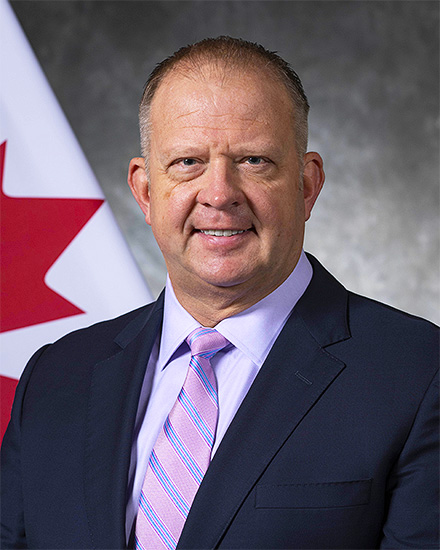
Ross Ermel - Assistant Deputy Minister (Digital Services)
Overview
The Digital Services Group (DSG) is DND/CAF’s digital warfighting enabler. DSG goes beyond corporate IT support, delivering Command, Control, Communications, Computers, Intelligence, Surveillance, and Reconnaissance (C4ISR) capabilities that connect advanced sensors and military systems to decision-makers in real time. DSG’s work directly generates Canadian Armed Forces digital capabilities, giving troops on operations enhanced situational awareness and robust command-and-control, rather than just maintaining back-office systems.
What sets the Digital Services Group apart is a renewed focus on operational outcomes and alliance integration, and a leadership role for digital transformation (business process transformation). In short, DSG uniquely blends traditional IT services with the delivery of mission-critical digital capabilities – ensuring the Defence Team has the modern, secure digital tools needed to fight and win, a scope far beyond that of other departments’ IT organizations.
Uniquely, the Digital Services Group contains the CAF’s Cyber Command while fulfilling the military’s J6 communications function, managing national radar and antenna infrastructure, and providing deployed forces with resilient connectivity. This dual role gives DND/CAF a decisive operational advantage, making the Digital Services Group the foundation of secure, deployable digital infrastructure that supports command and control across operations. Its blend of enterprise IT and mission-critical communications is essential to CAF readiness and operational success.
As one of three capital project implementors in DND, the Digital Services Group currently sponsors or implements 41 capital projects valued at approximately $46B.
Context
Key Facts
Strength: 4,721
Budget: $1.2B
Primary Locations:
- National Capital Region (NCR)
- Canadian Forces Bases across Canada
- Locations across the United States, Europe and Australia
Key Stakeholders
Internal:
- All Level 1s
External:
- Shared Services Canada (SSC)
- Communications Security Establishment (CSE)
- Treasury Board Secretariat (TBS)
- Innovation, Science and Economic Development Canada (ISED)
- Public Safety Canada
- Defence Investment Agency (DIA)
- Public Services and Procurement Canada (PSPC)
- Five Eyes partners (US, UK, Australia, and New Zealand), and
- NATO
Top Issues
Building the Defence Digital Foundation
- DND's significant technical debt, federated organizational structure coupled with present and future DND/CAF capability growth requires the department to take a new approach to providing digital services that support corporate and operational needs domestically and globally.
- DSG has begun aggressively building a single modernized digital foundation that encompasses all digital services (e.g. Cloud, unified data layer, identity and credentials management, application platforms etc...) on which all business and operational capabilities will rely. This edge to enterprise approach ensures scalability, security, and cost effectiveness. Furthermore, this foundation ensures that L1s know what services DSG will provide for them.
- Future Needs
- In the process of implementing elements of digital foundation, DM and CDS support of DSG's work will be essential, as until recently L1s have been able to build digital systems on their own, creating significant risk and lack and interoperability (e.g. data).
Advance CAF Cyber Capabilities and CAF J6 Readiness
- To remain a relevant partner, investment required in offensive cyber capabilities and the mechanisms to bring CAF/CSE integrated capability to bear in support of military operations and defence policy obligations.
- To solidify and sustain CAF Cyber capabilities, investment required for baseline key activities such as core training for the Cyber Operators occupation.
- To ensure DND/CAF networks are interoperable with allies, such as through federated identity and secure access (ICAM) with the U.S. and Five Eyes partners, facilitating seamless information sharing across allied forces.
- To ensure CAF J6 Readiness: address gaps in oversight, capability development, delivery and accountability.
- Future Needs:
- Resiliency Under Threat with Secure and Sovereign Digital Capabilities.
- Digital identity management, modernization of tactical and strategic defence communications and satellite systems, and quantum-ready solutions.
Digital Readiness Investment and Acquisition
- Digital products and systems form key pillars of Buy Canada Policy Framework and Defence Industrial Strategy.
- Procurement models will need to be modernized to enable these policy objectives, to address emerging capabilities, and to allow for scalability to enable industry innovation and agile delivery models.
- Program Integrity: focus on digital procurement transformation and maturing investment and expenditure practices to ensure stewardship follows investment.
- Getting to 2%: Digital Foundations Initiative (costed at 3.6B + 800M ongoing; allocated 2.25B + 560M ongoing).
- Future Needs:
- Streamlined/Tailored digital procurement and funding pathways to achieve Defence Industrial Strategy and Buy Canada objectives and enable faster purchasing decisions that support integrated and agile acquisitions as a whole of defence capability.
- Digital investment needed to fulfill the Government of Canada’s defence mandate.

Jonathan Moor - Assistant Deputy Minister (Finance) / Chief Financial Officer
Overview
Joined the Department of National Defence (DND) in June 2024 as ADM(Fin) and CFO, where he is responsible for an annual budget of more than $44B and a multi-year investment programme of over $330B. Prior to joining DND, he was the Vice-President of the Finance and Corporate Management Branch at the Canada Border Services Agency. Jonathan came to Canada on interchange from the Government of the United Kingdom in 2018. He joined the UK’s civil service in 1992 with the Audit Commission and held a number of senior roles at the Department of Transport. Jonathan trained as a Chartered Accountant in the private sector with Touche Ross & Co.
Context
Mandate
ADM(Fin) is the principal organization tasked with managing DND’s finances and leading the effective, and efficient stewardship of financial resources
- Provide the Minister of National Defence with timely strategic financial advice and guidance on key departmental financial decisions to better support Defence’s mandate and operations.
- Be a trusted partner that provides financial support services and advice to enable sound decision-making and accountability across the department.
- Lead the departmental financial community by building financial capacity to support operations and enable the business of Defence.
Key Facts
Employees: ~545
Vote 1 Notional Budget 25-26: ~$56M
Vote 10 Notional Budget 25-26: ~$455M
Primary Location: National Capital Region (NCR)
Key Partners
Internal:
- All of Defence Team
External:
- Treasury Board Secretariat
- Office of the Comptroller General
- Privy Council Office
- Department of Finance
- Office of the Auditor General
- North Atlantic Treaty Organization (NATO)
- Five Eyes Partners
Top Priorities 2026-2027
Secure and Sustain Funding and timely access to Resources (2%)
Ensure stable, predictable funding aligned to operational and transformation priorities. Secure major project funding while managing a $30B operational portfolio. Enable the implementation of Defence policies and provide continuous support in meeting NATO defence spending targets. Improve internal processes to unlock funding efficiently and reduce delays. Provide financial oversight on corporate submissions including Treasury Board submissions, Memoranda to Cabinet and Budget requests.
Deliver on Planned Investments
Strengthen execution and spending discipline to maximize value for money and minimize lapses. Support a pathway to maintain 2% of Gross Domestic Product on defence expenditures. Coordinate with other government departments and agencies within the Government of Canada to identify NATO defence expenditure reporting on behalf of Canada. Support the modernization and renewal of key platforms and fleets, improve readiness and address key capability gaps for the Canadian Armed Forces (CAF).
Develop Organizational Sustainability
Conduct financial management and accounting operations to properly manage and account for DND financial resources. Build a sustainable organization while delivering and monitoring progress on priorities across DND and the CAF. Complete the transfer and integration of the Canadian Coast Guard by ensuring a smooth transition of functions, people and systems into DND.
Advance Integrated Business and Financial Planning
Strengthen the integration of business and workforce planning, financial management and investment decisions to drive better value for money. Delivery of DND’s Refocusing Government Spending and Comprehensive Expenditure Review plans to meet the targets and implementation of an Efficiency Program across department activities.
Drive Change Management & Workforce Sustainability
Through financial leadership, support cultural and operational change to advance a more integrated, enterprise-wide finance function using the One Finance Model. Bolster and build capability across the financial community, both military and Defence Team. Enhance knowledge-sharing, succession planning, and the professionalization of finance professionals. Improve talent management, leadership capacity, employee experience and overall workforce health. Put Finance at the heart of decision-making.

Renée de Bellefeuille - Assistant Deputy Minister (Human Resources – Civilian)
Overview
Renée de Bellefeuille was appointed ADM HR-Civ on May 22, 2025 and brings over 25 years of experience in human resources leadership across federal, provincial, and private sectors. She previously served as Chief Human Resources Officer at CSIS, leading HR transformation and workforce modernization, and held senior roles at Treasury Board Secretariat and the Privy Council Office. Renée is President of the Human Resources Council, an employer representative on the Public Service Health Care Plan Partners Committee, and a member of the Clerk's ADM Task Team on Anti-Racism, Equity, and Inclusion. She holds a Master's in Labour Relations and Human Resources, dual Bachelor's degrees in Business and Psychology, and is a Chartered Professional in Human Resources (CPHR).
Context
Mandate
ADM(HR-Civ) develops and implements plans, policies and programs to recruit, develop and retain public service employees to effectively support the DND / Canadian Armed Forces (CAF) mandate.
- ADM(HR-Civ) supports the department by providing guidance, tools and ensuring sound stewardship in the human resources (HR) management of DND's public service employees.
- ADM(HR-Civ) informs strategic decision-making and develops HR strategies that support a modern, healthy, and inclusive workforce reflective of Canada's rich diversity.
Key Facts
Employees: 1,475
Budget: $132M
Primary Locations:
- National Capital Region (NCR)
- Québec
- British Columbia
- Nova Scotia
- Alberta
Key Partners
Internal:
- Vice Chief of the Defence Staff
- Military Personnel Command (MPC)
- ADM (Finance)
- ADM (Review Services (RS))
- ADM (Digital Services)
- Chief, Professional Conduct and Culture (CPCC)
External:
- Treasury Board Secretariat, Office of the Chief Human Resources Officer
- Public Service Commission
- Public Services and Procurement Canada
- Canada Bargaining Agents
- Office of the Commissioner of Official Languages
- Human Resources Council
Top issues
Public Service Growth Towards 2% Defence Spending by March 31, 2026
- HR-Civ has accelerated hiring to meet NATO 2% targets, achieving 53.4% of the goal (1,282 of 2,400 new hires by March 31, 2026) as of the end of November 2025.
- HR-Civ is leveraging digital tools, hiring flexibilities, Pathway to Mobility and other talent inventories, to ensure timely access to qualified talent and providing functional HR advice, staffing support, and reporting to enable CAF readiness and support accelerated workforce growth.
Support Organizational Structure Reviews
- Create an HR Integration function in partnership with ADM(RS), MPC, CPCC & VCDS to support readiness.
- Support the ongoing integration of over 6,900 FTEs from the Canadian Coast Guard (CCG) to the DND portfolio and nearly 500 FTEs from Fisheries and Oceans Canada (DFO) by the end of March 2026.
- HR-Civ supports Army Modernization by aligning civilian workforce planning, talent acquisition, training, organizational design, and change management to deliver the right skills and structures for new capabilities.
- HR-Civ is providing wrap-around HR support for the transition of Transport Canada's aviation services to DND, including workforce integration and skillset alignment.
Implement Strategic HR Planning
- Guide the Defence Team in creating Level 1 Strategic HR Business Plans for the Public Service Workforce to better support longer-term business needs and deliver on broader government and departmental priorities.
- Optimize workforce planning and organizational structure consistent with HR policies, guidelines and best practices. This work will help support an ambitious Defence Team agenda as well as DND's contribution to the Refocusing Government Services initiative
Lead HR Digital Transformation
- Partnership with ADM(DS) to upgrade and expand HR data systems, with a view to digitalizing processes as much as possible.
- Support departmental readiness and data clean-up for whole-of-government HR-to-Pay modernization, including Dayforce readiness.
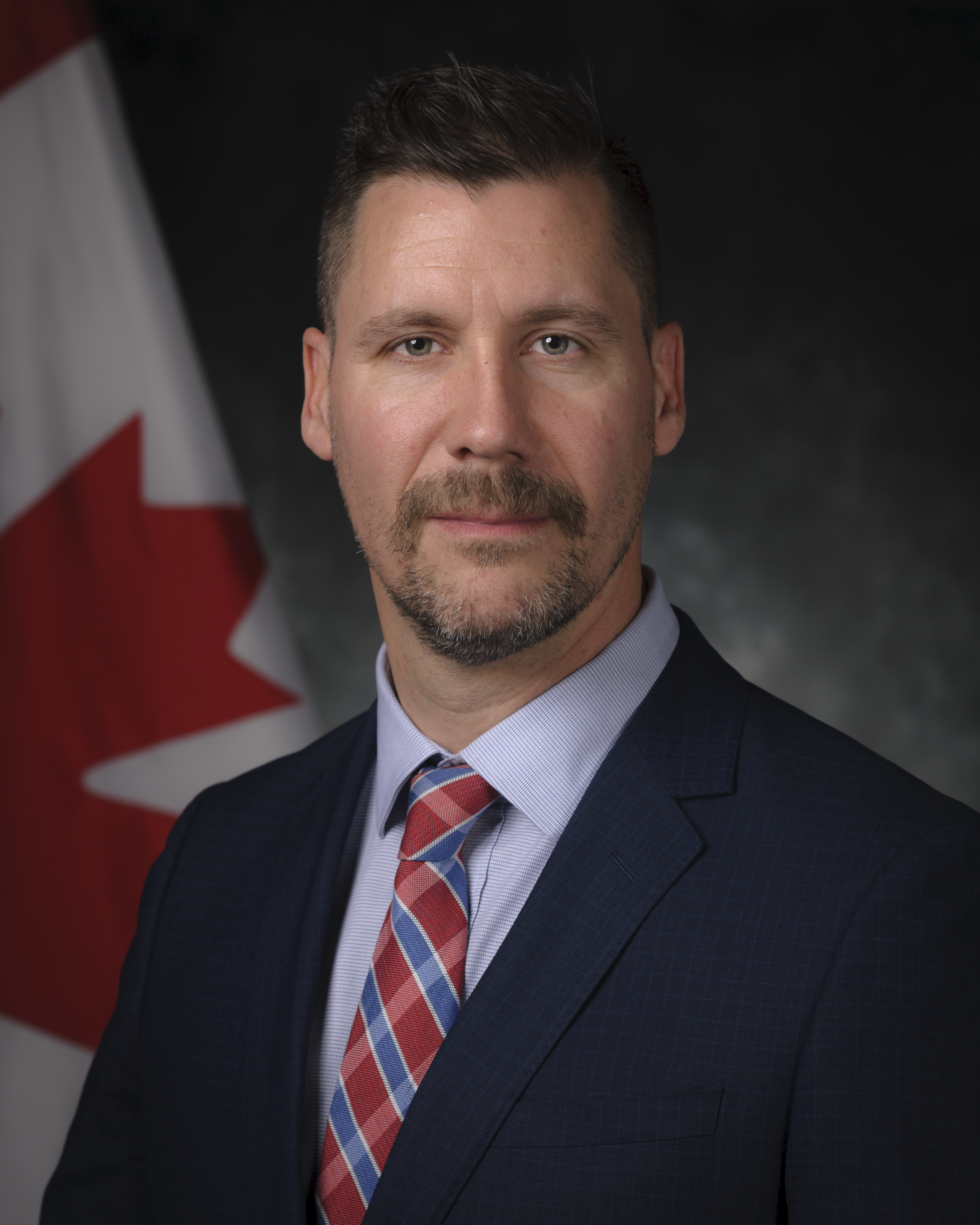
Peter Hammerschmidt - Assistant Deputy Minister (Infrastructure and Environment)
Overview
- Appointed ADM(IE) in August 2024.
- Was Assistant Deputy Minister (Policy) from January 2018 to August 2024.
- Previously held positions with the Privy Council Office, the Treasury Board Secretariat, the Permanent Mission of Canada to the United Nations in New York, and various positions within the Department of National Defence (DND).
- Holds a Master's degree from the University of Wales, Aberystwyth and a Bachelor's degree from Queen's University.
Context
Mandate
- Infrastructure Custodian and Functional Authority – Senior Designated Official for the management of real property enabling modern, resilient, and sustainable infrastructure in support of CAF operations and Defence priorities
- Also is Functional Authority for:
- Environment and climate;
- Indigenous affairs;
- Fire and respiratory safety and protection; and
- Ionizing radiation regulation and safety.
Key Facts
Civilians: 3,314
CAF: 323
Budget: $3.25B
Locations:
- National Capital Region (NCR)
- Defence establishments across Canada
Key Partners
Internal:
- All Defence Team
External:
- Defence Construction Canada
- Treasury Board Secretariat
- Crown-Indigenous Relations and Northern Affairs Canada
- Indigenous Services Canada
- Public Services and Procurement Canada
- Environment and Climate Change Canada
- Canada Lands Company
- Local Communities
- Indigenous Peoples
- Other Levels of Government
- Industry Associations
- Bargaining Agents
- North Atlantic Treaty Organization & Five Eyes Partners
Top issues
Recapitalizing Our Infrastructure and Putting Our Portfolio on a More Sustainable Path
- Addressing declining real property portfolio condition through recapitalization, maintenance and sustainment efforts.
- Better aligning authorities and streamlining processes to increase agility in responding to emerging risks and future requirements.
Building Modern Infrastructure to Meet Evolving Operational Needs
- Building modernized, secure, and resilient infrastructure to meet evolving operational needs. Collaborating early, intentionally, and in a coordinated manner with industry, academia, Indigenous rightsholders, other Government departments (OGDs), and other levels of Government (e.g., Capital Assistance Program) to deliver on mandate.
- Enhancing collaboration within the Defence Team to more effectively integrate considerations for infrastructure requirements into the identification, definition and implementation of new CAF capabilities.
- Delivering fiscally sustainable new facilities that reflect ongoing operations and maintenance costs
Enabling the CAF to Protect and Defend Our North
- Enhancing and enabling northern Defence infrastructure to support sustained CAF operations and expanded CAF capabilities in the North, including and adapting both existing and future infrastructure to withstand the accelerating impacts of climate change.
- Advancing partnerships and exploring opportunities for dual-use and multi-purpose infrastructure with Indigenous groups, OGDs, and other stakeholders, where feasible.
Improving Availability of Accommodations and Housing for CAF Members
- Improving the availability and condition of accommodations for CAF members, including supporting quality of life infrastructure that contributes to CAF readiness and retention.
- Increasing availability of CAF housing through investment and policy changes (e.g., the goal is to construct 668 Residential Housing Units (RHUs) over the next five years, convert existing RHUs into multi-family dwellings, acquire additional RHUs, and expand access through service agreements, transfers, and leases).
Enabling Resilient Critical Infrastructure
- Investing in the reinforcement of critical assets vulnerable to climate impacts, including energy generation and storage, expanding redundancy measures to improve the survivability and readiness of the CAF and engaging with community stakeholders early to support resilient and sustainable solutions.

Heather Sheehy - Assistant Deputy Minister (Materiel)
Overview
Heather Sheehy was named Assistant Deputy Minister (Materiel) on September 25, 2025. Prior to joining DND, Heather was the Assistant Secretary of the Government Operations Sector at the Treasury Board Secretariat. Throughout much of 2020, Heather worked on the federal government's response to the COVID-19 pandemic and the delivery of benefits to Canadians. Prior to this, she was Associate Assistant Deputy Minister, Strategic and Service Policy Branch at Employment and Social Development Canada (ESDC) since September 2017. She previously spent three years as the Director of Operations, Machinery of Government at the Privy Council Office. Prior to this, she was Chief of Staff to the Deputy Minister at ESDC.
Context
Mandate
Deliver the materiel and services required by the CAF.
- Deliver end-to-end materiel acquisition and support– from acquisition of capability, through sustainment to disposal.
- Lead defence materiel coordination and strategic liaison across federal departments, allied governments, and interdepartmental organizations.
- Provide materiel and procurement support to CAF operations, manage major service delivery initiatives and provide procurement services across DND/CAF
- Departmental Senior Designated Official for the Management of Procurement and Materiel; centre of excellence for Complex Project Management
- Canada's National Armaments Director for the North Atlantic Treaty Organization
Key Facts
Employees: 5,000
Budget: $17.6B
Primary Locations:
- National Capital Region (NCR)
- Alberta: Calgary, Edmonton
- British Columbia: Victoria, Nanoose
- Manitoba: Winnipeg
- Nova Scotia: Halifax
- Ontario: Toronto, London
- Québec: Montréal, Québec
- 67 personnel outside of Canada
Key Partners
Internal
- Vice Chief of the Defence Staff
- Service Commanders
- Canadian Joint Force Command
- Chief of Military Personnel
- ADM(Finance)
- ADM(Digital Services)
External
- Defence Investment Agency
- Public Services and Procurement Canada (PSPC)
- Treasury Board Secretariat
- Innovation, Science and Economic Development Canada
- Canadian and international defence industry
Top issues
Achieve the NATO 2% Target
- Rapidly increasing defence spending through proactive overplanning.
- Leveraging procurement flexibilities to use surplus funds including accelerating signing of contracts and providing advance payments on projects where sound stewardship and value for money is demonstrated.
- Currently on track to meet 2025-26 spending targets and monitoring closely with the CFO.
Accelerate Defence Procurement
Working with intra and interdepartmental colleagues to leverage existing authorities and seek new flexibilities to accelerate defence procurement. Efforts include, but are not limited to:
- Removing ongoing asset replacement and technology upgrades out of formal project processes;
- Taking an evolving program management approach to long, enduring CAF requirements;
███████████████████████████████████████████████████████████████████████████████████████████████████████████████████████████████████████████████████████████████████████████████████████████
- Working with PCO to conduct a sludge audit of National Defence's internal capability acquisition process;
██████████████████████████████████████████████████████████████████████████████████████████████████████████████████████
- Launching a National Defence-led Canadian Defence Industry Resilience program to provide funding to Canadian businesses to increase their production capacity for defence-related goods, equipment, services and materials. There is strong potential to expand this program moving forward.
Leverage and Partner with the new Defence Investment Agency (DIA)
- Draw upon private sector experience of the Agency to negotiate contract terms that meet the needs of the Canadian Armed Forces and provide value for money.
- Leverage the DIA to help build Canada's defence industrial base so that over time will provide for more Canadian options to meet military materiel requirements in line with the government's Buy Canadian policy and the desire for greater domestic economic resiliency.

Geneviève Binet - Assistant Deputy Minister (Public Affairs)
Overview
- Appointed ADM(PA) in April 2023.
- Defence Team Chief Privacy Officer and Co-Champion for Official Languages.
- 19 years in the Public Service, including at the Privy Council Office (Communications and Consultations, and Emergency Preparedness), the Canada Border Services Agency, and the Canada Revenue Agency in various executive roles.
Context
Mandate
Provide strategic public affairs advice and innovative, transparent communications services that protect privacy, achieve objectives, and strengthen Defence credibility with all audiences, stakeholders, and partners. We do this with a focus on:
- Developing and implementing strategic communications plans and products, and managing issues;
- Understanding the views of Canadians and defence stakeholders through public opinion research, public environment analysis, and consultations;
- Coordinating public affairs activities across the Defence Team to enable a unified message; and,
- Administering the Access to Information Act and the Privacy Act for the Defence Team.
Key Facts
Employees: 597 – Including 468 civilians and 129 Canadian Armed Forces (CAF) members.
Budget: $72.3M
Primary Locations:
- National Capital Region (NCR)
- Regional operations for stakeholder engagement teams and the CCG (Victoria, Vancouver, Yellowknife, Calgary, Toronto, Ottawa, Montreal, Dartmouth / Halifax, and St. John's)
Key Partners
Internal
- All Defence Team members and leadership
- Internal EEDI champions and networks
External
- Central agencies
- Other government departments (including Global Affairs Canada, Public Services and Procurement Canada, the Defence Investment Agency, Innovation, Science and Economic Development Canada, Veterans Affairs Canada, and Public Safety Canada)
- North American Aerospace Defence Command (NORAD)
- Defence and security experts' community (e.g.: academia, Canadian Global Affairs Institute (CGAI), the Canadian Defence Associations Institute (CDAI), Canadian Defence and Security Network (CDSN))
- Defence industry (including umbrella organizations such as the Canadian Association of Defence and Security Industries (CADSI), the Aerospace Industries Association of Canada (AIAC) and the Atlantic Canada Aerospace & Defence Association (ACADA))
- North Atlantic Treaty Organization (NATO), Allies Five Eyes Partners, and other allies
- Canadian War Museum and other Crown corporations
Top issues
The Defence Team Narrative
- Ongoing opportunity to proactively communicate progress on key Defence priorities, major investments, and capital projects through various channels, including technical briefs for Parliamentarians, stakeholders, and the media. Focus on clearly articulating the 'why,' the 'how,' and the resulting impact for Canadians.
- The rapidly evolving information environment – frequently influenced by misinformation and disinformation – presents significant challenges. This necessitates continuous engagement with the public and the media so that the CAF narrative remains accurate and is not overshadowed by external voices.
- Strengthen coherence and trust across the Defence Team by aligning senior leadership and public affairs practitioners around shared thematic narratives. These include the threat environment, Arctic security, defence modernization, and the Defence Industrial Strategy, all while demonstrating delivery, transparency, and adaptability as priorities evolve.
Public Affairs Functional Authority and Strategy
- ADM(PA) is the functional authority for public affairs, operating in a decentralized model that requires consistent collaboration and cooperation between ADM(PA) and all Defence Team organizations. Timely sharing of communications products and approaches in a challenging and very dynamic information space is key.
- The Defence Team Public Affairs Strategy 2025–2028 underpins an integrated approach to offset the decentralized model, guiding and coordinating public affairs efforts under four specific objectives, and establishing a strong narrative frame linking major investments, to demonstrate clear progress toward achieving Canada's defence objectives.
- The Strategy increases awareness of the Defence Team's role in national security to build trust with the public and to bolster the credibility of our organization under a unified approach. It includes a robust and responsive performance measurement framework to assess the impact of our communications activities, allowing us to remain agile, pivot as required, and continually improve.
Transparency and Privacy
- ADM(PA) is the functional authority for Access to Information and Privacy, focusing on maintaining a balance between transparency obligations and operational security while handling an increasing volume of complex requests.
- Transparency remains a key focus, as low compliance rates with the Access to Information Act and a significant backlog have led to increased scrutiny from Parliament, the media, and the Information Commissioner of Canada.
- Compliance with the Privacy Act is essential to maintaining public trust, as the protection of personal information remains a priority across the Defence Team.
Recruitment, General Awareness, and Mobilization
- Recruitment is a top priority, as the Defence Team requires sufficient personnel to effectively carry out operations and fulfill missions. This includes recruitment for the CAF, CCG, and Defence Team public servants.
- Topline Results from the 2025-26 CAF Tracking Study Survey show that recall of media coverage of the CAF remains low, with less than half of Canadians (45%) reporting having recently seen, read, or heard anything about the CAF; awareness is showing a positive trajectory, significantly increasing from 35% in 2024 to 45% in 2025. Two in five Canadians (42%) say they are familiar with the CAF (compared with 44% in 2024).
- Ongoing targeted communications, including paid advertising campaigns, are critical to reaching diverse audiences, increasing awareness of opportunities, driving applications, and meeting recruitment targets.
- With renewed investment and public interest in our mandate and activities, advertising is essential to increasing general awareness of the CAF and Canadians' willingness to support defence activities and efforts.
Conduct, Culture, and Legal Matters
- Legislative and legal communications support for defence-related Government of Canada action plans, initiatives and legislation, including C-11 (Military Justice Modernization), C-65 (CAF harmonization with the Workplace Harassment and Violence Prevention Program), C-13 (Official Languages), and Final Settlement Agreements, including for the Systemic Racism Class Action.
- Focus on communicating the continued implementation of external reports' recommendations, demonstrating actions to address sexual and other types of misconduct.
- A key element is demonstrating how the CAF is evolving to be an employer of choice by providing a healthy and effective team environment.
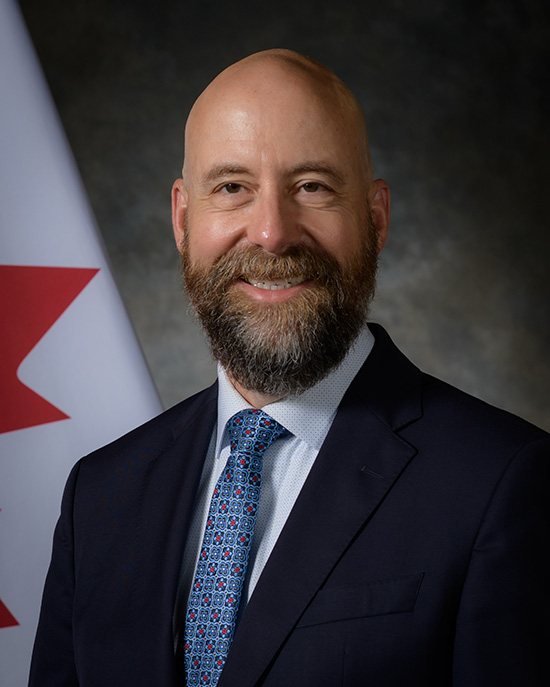
Scott Millar - Assistant Deputy Minister (Policy)
Overview
- Appointed in October 2024.
- Previously the Associate Deputy Minister of Horizontal Policy within the Department.
- 30 years in the Public Service, including at the Canada Border Services Agency, Treasury Board Secretariat, Privy Council Office and Communications Security Establishment.

Wendy Hadwen - Assistant Deputy Minister (Policy - Industry)
Overview
- Appointed in November 2024.
- Previously the Deputy Chief of Policy, Planning and Partnerships at the Communications Security Establishment.
- 23 years in the Public Service, including at Natural Resources Canada, Privy Council Office, Public Safety and the Treasury Board Secretariat.
Context
Mandate
The Assistant Deputy Minister (Policy) leads the development and management of defence policy in support of the Defence Team.
- Provide the Minister with advice and support on the development and implementation of Canada's defence policy.
- Provide the Minister with policy advice on Canadian Armed Forces (CAF) operations as well as on trends and implications of the global security environment.
- Manage the Minister's international defence and security relations.
- Advise and support ministerial Cabinet and Parliamentary responsibilities.
- Manage relations with other government departments and agencies, as well as provincial and territorial governments.
Key Facts
Employees: ~310
Budget: $2.5B
Primary Location:
- National Capital Region (NCR)
Director Generals (DGs)
- DG Continental Defence Policy
- DG International Security Policy
- DG Policy Coordination
- DG Defence Intergovernmental Affairs
- DG Military Assistance Coordination
- DG Defence Industrial Strategy
Key Partners
Internal
- All Defence Team
External
- Other government departments – Central Agencies; Global Affairs Canada; Innovation, Science and Economic Development; Public Safety; etc.
- Academia and think tanks
- Defence industry
- United States (U.S.) Office of Secretary of Defense
- North Atlantic Treaty Organization (NATO) and Five-Eyes Partners
- International organizations, stakeholders, etc.
Top issues
Deterring Russian Aggression ████████████████████
███████████████████████████████████████████████████████████████████████████████████████████████
- ADM(Pol) provides strategic and policy guidance for CAF activities and fortifies Canada's international partnerships in deterring and defending against adversaries. This includes Operation REASSURANCE to deter Russia, and Operation HORIZON to promote peace and stability in the Indo-Pacific.
- ADM(Pol) continues to work with the National Security community to explore additional means to deter and defend against threats to Canada from adversaries.
Strengthening North American Defence and Security
- Canada must bolster its "homeland" defences to help safeguard North America and contribute to shared Canada-U.S. interests in the face of an ever-changing geopolitical landscape.
- ADM(Pol) will continue to provide strategic policy advice to reinforce Canada's continental defence and Arctic security capabilities, support CAF plans and operations, enable North American Aerospace Defense Command (NORAD) modernization, and provide policy leadership to advance Canada's defence relationship with the U.S., other key allies and domestic national security partners.
Supporting the Implemention of Defence Investment Commitments
- CAF modernization efforts, including the procurement of new capabilities and improvement of infrastructure, are ongoing, but increased investments are needed to maintain progress and meet Canada's domestic and international obligations.
- ADM(Pol) will continue to provide strategic policy advice that supports the implementation of past investment commitments, as well as the current efforts to increase Canada's defence spending to strengthen the CAF, develop the warfighting force needed to face threats, and fulfill Canada's commitments to NATO.
Bolstering Canada's Defence Industry
- Having an innovative and effective defence industrial base means that Canada can mobilize resources to reinforce the CAF and make meaningful contributions to allies and partners in a world of renewed geostrategic competition.
- ADM(Pol) will continue to engage with leaders in government and industry to bring strategic coherence to Canada's defence spending commitments in a way that delivers timely and modern capabilities for the CAF while providing growth opportunities for Canadian businesses in the defence supply value chain.
Supporting ADM(Pol) Staff and Institutional Effectiveness
- ADM(Pol) continuously works to improve the skills of its staff and the tools available to them to enable team members to provide consistent, strong policy support to the Minister and the Defence Team.

Gibby Armstrong - Assistant Deputy Minister (Review Services)
Overview
- Appointed in May 2023. Former roles include Chief Financial Officer and Assistant Deputy Minister (Corporate Services) at Communications Security Establishment, Deputy Chief Financial Officer at Canada Border Services Agency, and Executive Director Economic Program Sector at Treasury Board Secretariat, Chief Audit Executive at Immigration, Refugees and Citizenship Canada
- Certified Professional Accountant (CPA), Chartered Accountant (CA)
- Chief Operating Officer Program – Massachusetts Institute of Technology (April 2024)
- Executive Certificate in Public Policy – Harvard Kennedy School (May 2022)
- Candidate for ICD.D Designation through Institute of Corporate Directors (expected graduation March 2026)
- Defence Team Champion for Persons With Disabilities
Context
Mandate
We provide independent, objective and timely assurance services to the Department of National Defence and the Canadian Armed Forces (DND/CAF). We review and promote improvements to defence policies, programs, operations and activities.
- Deliver professional internal audit and evaluation programs
- Conduct investigations into disclosures related to integrity
- Manage the Fraud Risk Management Program
- Facilitate compliance with Conflict-of-Interest policies
- Support administrative investigations led by the CAF Chain of Command
- Coordinate activities of external assurance providers (e.g., Office of the Auditor General, National Security and Intelligence Agency, etc.)
- Fulfill the secretariat function for the Defence Intelligence Oversight Board, the Departmental and Non-Public Property Audit Committees, and the Performance Measurement and Evaluation Committee
Key Facts
Employees: ~200
Budget: $24.3M
Primary Location:
- National Capital Region (NCR)
Key Partners
Internal
- Defence Team (All)
- Provost Marshal
- Intelligence Functions
External
- External Assurance Providers / Review Agencies (National Security and Intelligence Review Agency (NSIRA), National Security and Intelligence Committee of Parliamentarians (NSICOP), OAG, etc.)
- Canadian Forces Morale and Welfare Services
- Public Service and Procurement Canada Integrity Team
- Office of the Public Sector Integrity Commissioner
- Security and Intelligence community
Top issues
Supporting Integrity
Current Capabilities:
- Annual Ministerial reporting on gross misconduct and gross mismanagement investigations (Public Servants Disclosure Protection Act)
- Fraud Risk Assessments: Two Annually
- Fraud Awareness and Investigations
- Proactive Conflict of Interest screening across DND / CAF
- Administrative investigations
In Progress:
- Aligning Chain of Command requirements to investigate injuries and death to Veterans Affairs Canada accountabilities
Fraud Program Enhancement
- Data analytics
- Continuous monitoring and fraud detection
- Fraud Training (enhance awareness)
- Targeted Conflict-of-Interest activities
Audit, Evaluation, and Other Oversight Activity
Internal audits underway:
- Review of Risk Management of Defence X Implementation
- Audit of Cyclical Staffing
- Efficiency Review of Navy High Dollar Value Procurement
- Audit of Vessel Life Extension Project (CCG)
- Audit of the Implementation of the Accessibility Act
- NPP Audit of Inventory Management
Future proposed internal audits:
- Talent Management & Succession Planning in the CAF
- Efficiency Reviews
Evaluations underway:
- Organizational Climate and Culture
- Ready Naval Forces
- Mobilizing Insights in Defence and Security
- Search and Rescue
- North American Aerospace Defense Command (NORAD) Modernization – Science and Technology
External audits underway:
- Net-Zero Emissions Accountability – Spring 2026
- Protecting federal assets, services and activities from climate change – Spring 2026
- Basic Training – Fall 2026
- Ammunition – Fall 2026
Future proposed evaluations:
- Indo-Pacific Strategy
- Digital Readiness
- Military Family Housing
- Indigenous Affairs
- Cyber Operations
- Defence Infrastructure Construction, Recapitalization and Investment
National Security and Intelligence Oversight work underway:
- NSIRA review of AI use and governance in national security and intelligence activities
- Support to NSIRA litigation

Lieutenant-General (LGen) M.C. Wright - Canadian Army (CA)
Overview
LGen Mike Wright enrolled in the Canadian Armed Forces (CAF) in 1990 and joined Princess Patricia’s Canadian Light Infantry in 1994. Operationally, he has deployed to Bosnia, Afghanistan, and the Middle East, and served on domestic operations in support of the 2010 Winter Olympics and the 2011 Manitoba floods. He was Commander of the Canadian Forces Intelligence Command (CFINTCOM) and Chief of Defence Intelligence from June 2021 to July 2024. On promotion to LGen in July 2024, he was appointed as the Commander of the Canadian Army (Comd CA).
Context
Mandate
The CA generates combat effective, multipurpose land forces capable of executing concurrent operations to enable Canada's defence objectives.
Operations
- On average 3,000 soldiers are deployed on expeditionary and domestic operations at any one time.
- The GRTF, comprised of up to 540 personnel, is ready to move within 7 days of notice. Last year, this task force deployed on short notice in support of high-readiness and non-combatant evacuation operations.
Force Generation
- Currently we generate combat power at the Brigade Group level such as our commitment to NATO's deterrence mission in Latvia.
- With modernization we will scale to the division level to include division level enablers such as Ground Based Air Defence amongst others.
Key Facts
Personnel: 50,300
Budget: $1.5B
Primary Locations:
- 21,700 Regular Force on 21 land bases.
- 20,000 Reserve Force in more than 115 communities.
- 4,850 Canadian Rangers in 203 patrols across Canada.
- 3500 public servants across the CA.
Characteristics
- We are primarily a medium force, with limited light and heavy capability.
- The CA integrates Regular, Reserve, Canadian Rangers, and civilian components into the One Army Team.
Canadian Army Modernization
Rapidly Rebalancing the Army for Large Scale Combat Operations
- Modernization is how we meet the threat that's already here.
- We are re-establishing an Army optimized for division level warfighting.
- Agile, scalable, interoperable with Allies, we are moving from contribution warfare to credible warfighting.
- This means building the full system of combat power, one that is digitally connected, data-enabled, and lethal across the spectrum of conflict.
Delivering the Tools to Fight and Survive
- Our North, Strong and Free begins to address key capability gaps, but more is needed.
- We need a modern, flexible approach to capital projects. One that delivers faster, adapts continuously and supports sustained technological advantage.
- The CA currently has 49 Capital Projects. The priorities are: (1) Long-Range Precision Strike-Land. (2) Indirect Fire Modernization. (3) Ground Based Air Defence. (4) Domestic Arctic Mobility Enhancement; and (5) Digitized Command and Control as the backbone.
- We must take lessons-learned and unleash innovation, both internal to the Force and externally with Defence Industry.
- We cannot wait decades for the tools our soldiers need to fight and survive.
Operational Readiness
Trained, Equipped, Ready to Respond
- The CA defends Canada by fighting forward with Allies, denying adversaries the ability to reach our shores.
- From Latvia to the Arctic, we will strengthen strategic deterrence and collective defence.
- The CA will arrive trained, equipped and self-sustained. Ready to fight alongside Allies when and where required.
- The CA remains ready to respond at home. Modernization enables us to respond faster, more effectively, and at scale, anywhere in Canada, including the North.
Reconstitution
Generating the Force we Need
- The CA is short nearly 8,000 trained uniformed personnel, including critical trades like technicians and specialists. This does not include the required growth to achieve CA Modernization objectives.
- Our Strategic Intake Plan (+10%) is underway but we have not yet seen positive results and certain occupations remain critically low.
- Restoring strength is essential to generate combat power, sustain operations, and scale to Division Level readiness.
The Strength of the One Army Team
- The CA is a unified team, Regular, Reserve, Rangers, and civilians, working together in the One Army Team.
- CA will foster and reinforce a disciplined, inclusive, diverse, respectful, and team-based culture that reflects Canadian Values and reinforces our identity as a warfighting force.
- This cohesion strengthens our resilience, readiness, and operational effectiveness, at home and abroad.
Key Messages
- The modernized Canadian Army will provide a force that Canada Needs, Allies Want, and our Adversaries must respect.
- Canadian Army modernization must be accelerated and enabled at scale to generate Division Level combat power.
- Sovereignty, deterrence, and operational credibility depend on personnel, equipment, training and sustainment being funded as core warfighting capabilities.

Canadian Coast Guard (Special Operating Agency)
Overview
The Canadian Coast Guard owns and operates the federal government's civilian fleet, providing key maritime services to Canadians. As a Special Operating Agency, within the Department of National Defence, the Canadian Coast Guard ensures the safety of mariners in Canadian waters and protects Canada's marine environment.
We support Canada's economic growth through the safe and efficient movement of maritime trade. We help ensure Canada's sovereignty and security through our presence in Canadian waters, especially in the Arctic.
Context
Our Mandate
From Coast-to-Coast-to-Coast, the Great Lakes and the St. Lawrence
The Canadian Coast Guard's responsibility covers 243,000 km of Canada's coastline, the longest in the world. Our vessels and aircraft operate on over approximately 5.3 million km2 of ocean and inland waters. We employ nearly 6,400 employees, with 87% located across four regions—Atlantic, Central, Western, and Arctic.
The Canadian Coast Guard Academy
The Canadian Coast Guard Academy in Sydney, Nova Scotia, turns 60 in 2025. It plays a pivotal role as the Canadian Coast Guard's national, bilingual, centre of excellence in training. Key activities include:
- Training for Ship Officers and Marine Communication and Traffic Services Officers.
- Specialized learning development, design, and delivery of educational services through curriculum design, quality assurance, and certification.
- Delivery of continuing education for operational personnel, incorporating state-of-the-art simulators, practical training, and country-wide online learning.
- A controlled facility for testing alternative fuels to support emission reduction.
Canadian Coast Guard Regions & Assets
Asset Management
The Canadian Coast Guard manages the lifecycle of fleet and shore-based assets to ensure they are readily available, capable, and reliable to support the delivery of programs:
- 12 Marine Communications and Traffic Services Centres and 184 remote communications sites (including radios, radars, towers, buildings, and operational systems).
- 17,000 fixed and floating aids to navigation (including buoys, day markers, range lights, beacons, lanterns, and fog systems).
- 10,840 pieces of environmental response equipment (including specialized vehicles, incident command trailers, booms, oil skimmers)
On an Average Day, the Canadian Coast Guard
- Coordinates 18 search and rescue responses, assists 47 people, and saves 13 lives.
- Monitors 4,498 vessel movements.
- Carries out 11 fisheries patrols and 11 scientific surveys with partners.
- Surveys more than 3.5 km of navigational waters.
- Receives 6 pollution event calls.
Canadian Coast Guard Programs
Aids to Navigation & Waterways Management
- Ensures smooth and uninterrupted flow of goods along waterways.
- Manages and maintains over 17,000 aids to navigation.
- Provides navigational safety information to mariners.
- Surveys channel conditions, water depths/levels, and maintains a minimum depth in specific navigation channels.
Icebreaking Operations
- Provides icebreaking services year-round, including ship escorts, harbour breakouts, and flood prevention.
- Enables marine commerce in Canada by communicating navigational advice and ice information.
- Supports Arctic sovereignty, economic development, and community re-supply.
- Works closely with the United States Coast Guard in transboundary waterways.
Marine Communications and Traffic Services
- Monitors radio frequencies, responds to calls for assistance, and broadcasts maritime safety information.
- Regulates marine traffic in designated waterways 24/7/365.
- Provides navigational information and assistance.
Maritime Search and Rescue
- Leads marine search and rescue in Canada federally.
- Provides 24/7/365 search and rescue services in partnership with the Department of National Defence, the Canadian Armed Forces, and over 4,000 volunteer members of the Canadian Coast Guard Auxiliary.
- Coordinates responses through three Joint Rescue Coordination Centres and two Maritime Rescue Sub-Centres.
Marine Environmental & Hazards Response
- Leads the national network of marine environmental and hazards responders.
- Works with ship-owners, industry, Indigenous communities, and stakeholders to provide a unified approach to preparedness and response activities, including integrating science and local knowledge.
- Maintains the National Inventory of Wrecked, Abandoned or Hazardous Vessels and enforces the Canadian Coast Guard's legislated mandate.
- Verifies owner compliance with obligations in the Canada Shipping Act, 2001, the Wrecked, Abandoned or Hazardous Vessels Act, and implements the Marine Liability Act.
Maritime Security
- Contributes to Maritime Domain Awareness and maritime expertise in Canada's three multi-partner Marine Security Operations Centres.
- Provides platforms to support federal security partners that deliver security and enforcement programs.
- Strong Borders Act (Bill C-12) proposes amendments to the Oceans Act to expand the CCG's responsibilities to include security activities such as security patrols and the collection, analysis, and disclosure of security information or intelligence.
Support to Other Government Departments
- Supports other government departments, boards, and agencies through the provision of ships, aircraft and other services.
- Provides platforms for fisheries enforcement, hydrographic services, and oceans science.
Canadian Coast Guard Priorities
The drivers of change that will impact future planning include onboarding new security capabilities, the United Nations Declaration on the Rights of Indigenous Peoples Act, a changing climate, more demand for presence and information about the maritime domain in the Arctic, geopolitical and security considerations, a changing workforce, and the need to prepare for new major resource and infrastructure projects that will increase marine traffic on all coasts.
Recruiting and training an operational workforce to meet the needs of tomorrow
Ensuring the Canadian Coast Guard is able to attract, develop, and retain a diverse and skilled workforce to deliver essential services to Canadians, while considering the global shortage of seafarers, evolving demographics, and the technological changes in the maritime industry.
Preparing to welcome and operate a new and modern fleet
Renewing shore-based assets and infrastructure, and upskilling personnel to prepare for a future fleet that is technologically sophisticated, while securing interim measures to maintain operational capacity until new assets are delivered.
Modernizing marine navigation services through digitalization
Continuing the modernization of Canadian Coast Guard digital infrastructure by enhancing asset interoperability, advancing electronic navigation, ship-to-shore communication, and real-time data collection to inform Maritime Domain Awareness and support the competitiveness of Canada's maritime sector.
Canadian Coast Guard Fleet: Present and Future
The Canadian Coast Guard fleet of red and white ships, helicopters, and air cushion vehicles is an iconic symbol of maritime safety and sovereignty.
The National Shipbuilding Strategy includes the renewal of the Canadian Coast Guard's fleet of large and small vessels over the next 20 years, taking delivery of 88 vessels by 2045. The two new polar icebreakers will enable a year-round presence in the Arctic.
Current Fleet (126 Vessels / 23 Helicopters)
The Canadian Coast Guard fleet consists of:
- 61 Search and Rescue Lifeboats
- 31 Small Vessels
- 26 Large Vessels
- 23 Helicopters
- 4 Air Cushion Vehicles
- 4 Interim Icebreakers
The fleet is supplemented by two leased Emergency Towing Vessels on the West Coast.
Canadian Coast Guard Partnerships
Partner and Stakeholder Collaboration
Our partnerships leverage existing assets, expertise, and local capabilities to improve interoperability, information-sharing, and extend capacity across the Canadian coastline. This is primarily achieved by:
- Collaborating and forming partnerships with First Nation, Inuit, and Métis communities, governments, and organizations to support marine safety and incident management.
- Coordinating operational capacity with the Canadian Coast Guard Auxiliary, a network of over 4,000 volunteers and 1,100 vessels, which support maritime search and rescue across Canada.
- Working with federal departments and agencies, such as the Royal Canadian Mounted Police and the Canada Border Services Agency, to support federal priorities and implement interoperability across assets and operations.
- Supporting relationships with the shipping industry through regional and national advisory boards.
International Collaboration
The Canadian Coast Guard engages internationally to strengthen maritime safety, innovation, and interoperability through:
- MOUs with peer Coast Guards (e.g., Sweden, Denmark, South Korea, Japan) and institutions like the World Maritime University to exchange best practices and support officer training.
- Multilateral forums: Arctic, North Atlantic, North Pacific, and Global Coast Guard Fora; International Maritime Organization; International Organization for Marine Aids to Navigation; and the Five Eyes Maritime Domain Awareness Forum—where the Canadian Coast Guard contributes to joint exercises, shares best practices, and builds operational partnerships.
Canada and the United States share a deep operational partnership grounded in trust, joint priorities, and mutual support through:
- Annual Canada–US Coast Guard Summit aligning leadership on shared priorities.
- Bilateral umbrella MOU consolidating 20+ agreements and guiding future cooperation.
Key Highlights
The Canadian Coast Guard is Canada's eyes and ears on the water and delivers essential services related to marine safety, security and sovereignty, environmental protection, ocean science, and economic prosperity.
People are the heart of the organization and its most important resource. Recruitment efforts recognize the uniqueness of Canadian Coast Guard operations, and retention efforts prioritize the importance of safety, health and wellness, career development, and employee engagement.
Within the Defence Team, the Canadian Coast Guard remains a civilian agency with its own unique culture and identity.
The future fleet will open new doors to enhanced Arctic presence, new opportunities to contribute to Maritime Domain Awareness, and the delivery of programs and services that meet evolving Government of Canada priorities.
Budget 2025 announced the transition of the Aircraft Services Directorate from Transport Canada to the Canadian Coast Guard, as well as new investments to expand the Agency's reach and capabilities.
Deputy Commissioner Programs - Canadian Coast Guard
Overview
Marc Mes – Deputy Commissioner, CCG Programs
- Deputy Commissioner as of May 2024.
- 24-year career in the federal government working for the CCG, Transport Canada, Health Canada, and Foreign Affairs and International Trade.
- Leads the Fleet and Maritime Services, Response, Marine Navigation Programs, and Safety Management teams.
Contexte
Mandate
Oversee all CCG programs and its fleet of ships, helicopters, operations centres, and program assets by providing strategic leadership and operational direction, setting program policy, and maintaining effective delivery management in alignment with the mandates of the CCG, and the Department of National Defence, and the priorities of the Government of Canada.
We do this with a focus to:
- Maintain aids to navigation
- Lead maritime search and rescue
- Address vessels of concern
- Strengthen marine pollution and hazardous vessel response
- Conduct icebreaking and ice-management operations
- Provide marine communications and traffic management services
- Contribute to MDA and maritime security
Key Facts
Budget: $700M+
Employees: 5,000+
Key External Partners
- Other Government Departments
- First Nation, Métis, and Inuit groups
- International Maritime Organizations
- Various Coast Guard fora
- International partners
Synergies with National Defence
- Asset and Operational Readiness and Support
- Arctic Operations and relationships with northern communities
- Emergency Coordination
- Maritime Search and Rescue
- External partners support operations, especially in remote areas
Top Issues / Files
Implementing an expanded security mandate
- Bill C-12 (pending) will provide the CCG with the legislation authority for security and surveillance, enhancing maritime domain awareness (MDA) with capabilities, assets, and systems to identify risks, threats, illicit or suspicious activities, anomalies, and emerging trends.
- It will also strengthen intelligence analytics, information sharing, assets, capacity, and alert partners to situations and/or vessels of interest on a 24/7 basis.
Asset reliability and availability
- Timely vessel maintenance is increasingly difficult given capacity in the vessel repair industry. This combined with aging assets that require longer, and more frequent repair periods makes Fleet reliability challenging and has a direct impact on fleet readiness and program delivery.
Fleet renewal, infrastructure, and sustainability
- The new fleet will be larger than Coast Guard's current fleet and will require more personnel as well as new and additional marine infrastructure to support successful operation and maintenance (e.g., wharf space and shore power infrastructure).
- The CCG will require additional funding to address critical immediate to mid-term infrastructure, vessel berthing and warehousing requirements, Indigenous engagement and consultation, and the sustainable disposal of decommissioned assets.
Marine Environmental and Hazards Response (MEHR) and MSC Baltic III
- The CCG leads the national network of marine environmental and hazard response to ship-source and mystery source marine pollution as well as response to environmental hazards posed by vessels. The CCG is funded for preparedness, not response. Funding to support the vessels of concern initiative from the Oceans Protection Plan expires March 2027.
MSC Baltic III
- In February 2025, the MSC Baltic III, a 700-foot container ship ran aground near Bay of Islands, Newfoundland. The CCG has removed 1.7 million litres of hydrocarbons and 409 containers, though progress has been impeded by extreme weather conditions.
National Strategy for Emergency Towing
- The CCG is working with Transport Canada to co-develop a National Strategy for Emergency Towing for cabinet consideration in early 2026. This strategy will propose both permanent and interim solutions for towing capacity in Canada.
- Funding for existing interim emergency towing capacity expires in fall 2026.
Modernization of Marine Navigation
- The CCG is developing a long-term strategy for Marine Navigation Programs, including Marine Communications and Traffic Services, Icebreaking Services, Aids to Navigation and Waterways Management programs.
- This strategy responds to the demands of new international obligations for digitalized and modernized marine navigation services and aims to address data and service gaps in the Arctic, to reinforce Canada's data sovereignty over Arctic waters, and to enhance maritime domain awareness and support security partners.
- Modernization efforts will focus on adopting new technologies (i.e., vessel traffic monitoring and optimization systems) that support the shift toward modern and digital navigation.
Robert (Robb) Wight – Deputy Commissioner Shipbuilding and Materiel, Canadian Coast Guard
Overview
- Deputy Commissioner as of January 2026.
- 25 years in the Public Service and the Canadian Coast Guard (CCG)
- Leads the Vessel Procurement, Integrated Technical Services and Fleet Renewal Planning teams.
Context
Mandate
Provide strategic leadership to advance the renewal of the Canadian Coast Guard's fleet within the broader framework of the National Shipbuilding Strategy, while upholding the effective delivery of in-service support and technical readiness of existing fleet and shore-based assets for continued service to Canadians.
We do this with a focus to:
- Deliver a world-class fleet through collaboration and rigorous stewardship.
- Secure policy and funding approvals to advance future fleet projects.
- Bolster interim capacity to maintain continuous operations.
- Implement lifecycle asset management.
- Provide integrated logistics support.
Key Facts
Budget: $44.6 M
Employees: 1,000+
Primary Locations
- National Capital Region (NCR)
- Inspection Offices (Vancouver Shipyards, Chantier Davie and Irving Shipyard)
- Regional Integrated Technical Services Offices (across all 4 CCG regions)
Key Partners
External
- Central Agencies
- Other government departments (including Public Services and Procurement Canada, Transport Canada, and Innovation, Science and Economic Development Canada)
- Defence and Marine industry, including shipbuilding and vessel repair
Top Issues/Files
Effective Delivery of Shipbuilding Procurement Projects
- Since 2005, the CCG has been working to procure its future fleet of 31 large vessels, 95 small vessels and 26 helicopters to sustain operations for future generations.
- Over the past 15 years, CCG large shipbuilding projects under the National Shipbuilding Strategy (NSS) have experienced challenges related to shipyard performance, timely delivery, and affordability.
In-Service Support of Fleet Assets
- Until new ships are delivered, interim measures (including $2B Vessel Life Extension program and acquisition of interim icebreakers) have been put in place to maintain operational readiness.
- Vessel Life Extension and maintenance projects have experienced schedule delays and cost pressures due to limited Canadian shipyard capacity caused by workforce shortages, supply-chain disruptions, and evolving technical expertise.
Shore-Based Asset Readiness
- Aging assets impact the effective delivery of CCG programs and services to Canadians. Ensuring their effective life-cycle management is essential to the continuation of programs while also modernizing assets to deliver services.
- Integrating new technologies and modernizing systems will allow the CCG to maintain its connectivity and exchange data between sea-going and shore-based assets in a threat informed environment.
Strategic Planning and Program Policy
- Secure policy approvals, authorities, and access to funding for CCG Fleet Renewal projects.
- Lead research and analysis on the implementation of procurement approaches, assessing policy landscape, strategic direction and opportunities.
- Collaborate with NSS and Defence Procurement Strategy (DPS) partner departments on policy research, analysis and recommendations for strategic decisions.
Synergies with DND
- CCG and DND are strategic partners in the implementation of the federal procurement strategies and foundational members of the National Shipbuilding Strategy and Defence Procurement Strategy governance.
- Investigate shared infrastructure opportunities (e.g., DND naval dockyards and CCG contracted facilities), and joint procurement of common equipment (e.g., engines, electronics) to optimize scheduling, achieve economies of scale, and reduce supply chain risks.
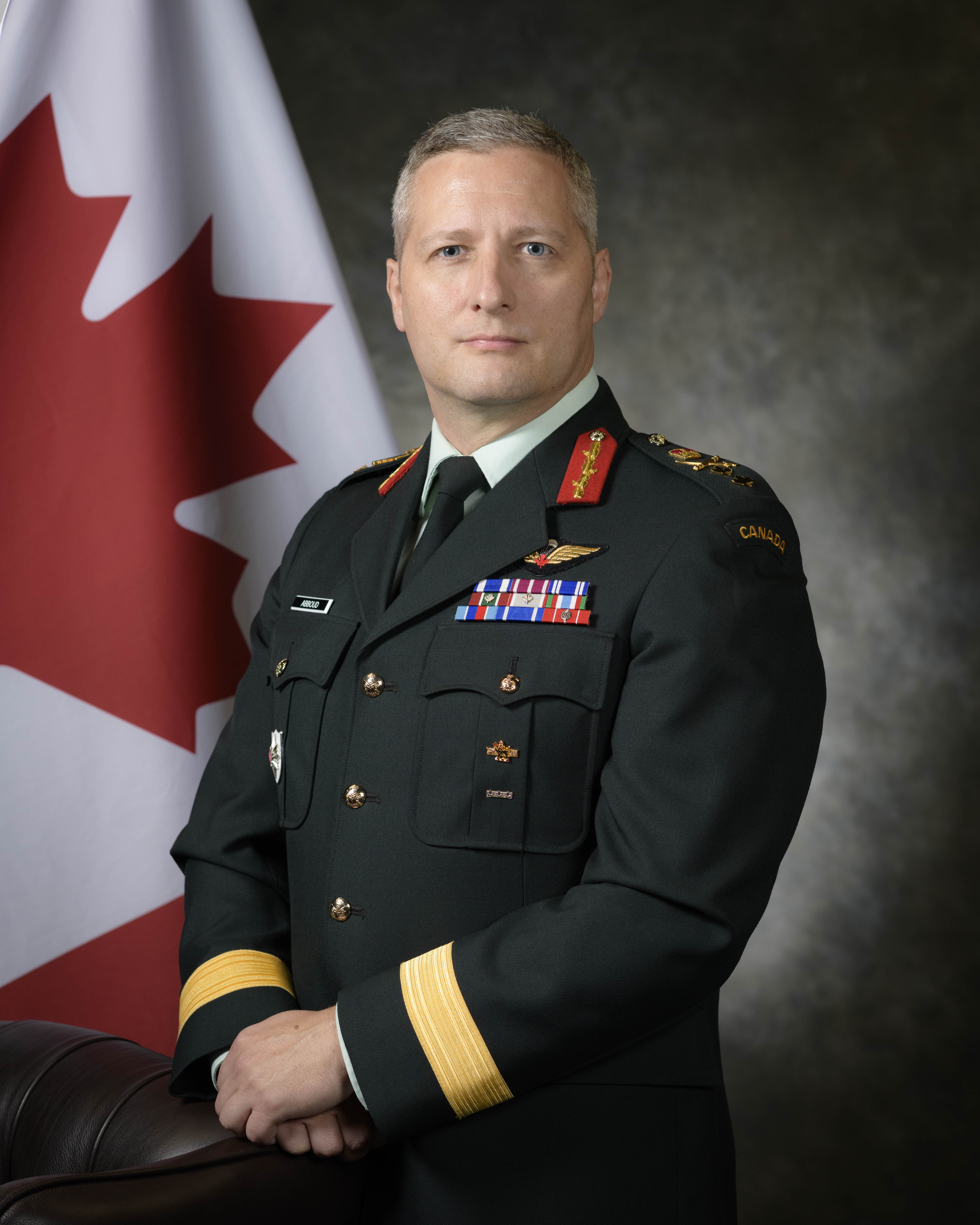
Major-General (MGen) Dave Abboud - Canadian Forces Intelligence Command / Chief Defence Intelligence
Overview
- MGen Abboud joined the Canadian Armed Forces (CAF) in 1994 as an infantry officer with the Royal 22e Regiment. He led a combat team in Afghanistan from July 2007 to March 2008, and has also deployed on operations to Haiti, Bosnia and Herzegovina, and Jordan. He was appointed Commanding Officer of the Canadian Forces Leadership and Recruit School in July 2014, Commander 2nd Canadian Division Support Group in July 2019, and Commander 2nd Canadian Division and Joint Task Force (East) in July 2023.
- MGen Abboud has served in a variety of staff positions within National Defence Headquarters, notably as Chief of Staff (COS) to the Vice Chief of the Defence Staff, COS Operations within Canadian Army Headquarters, COS Support at CFINTCOM, and as Canadian Joint Operations Command (CJOC) J5Plans. He holds degrees in Political Science, Military Art and Science, and Public Administration. He was appointed as Commander CFINTCOM and CDI on July 8, 2024.
Context
Mandate
Provide credible, timely and integrated defence intelligence capabilities, products and services to DND/CAF, the Government of Canada, and allies in support of Canada's defence and security objectives Commander CFINTCOM exercises command and control over CFINTCOM and serves as the Senior Military Intelligence Advisor to the Chief of the Defence Staff (CDS).
- The position is dual-hatted, serving as Commander of CFINTCOM which is a CAF L1 appointment and organization, and as CDI which is a NDHQ L1 appointment and organization.
- As Commander CFINTCOM, is accountable to the Chief of Defence Staff (CDS), exercises command and control over CFINTCOM, and serves as the Senior Intelligence Advisor to the CDS.
- As CDI, is accountable to both the Deputy Minister and the CDS, is the functional authority for Defence Intelligence and the Strategic Integrator for the Defence Intelligence Enterprise (DIE).
Key Facts
Personnel: ████
Budget: $235M
Primary Locations:
- National Capital Region (NCR)
- Kingston
- Winnipeg
- Gagetown
Key Partners
Internal
- Strategic Joint Staff, CJOC, Special Operations Forces Command, Cyber Command, Royal Canadian Navy, Canadian Army, Royal Canadian Air Force, North American Aerospace Defense Command, Assistant Deputy Minister (ADM) Policy, National Security and Intelligence Review and Oversight Coordination Secretariat, Judge Advocate General, ADM Digital Services, ADM Defence Research and Development Canada
External
- Privy Council Office
- Global Affairs Canada
- Communication Security Establishment Canada
- Canadian Security Intelligence Service
- Five Eyes
- North Atlantic Treaty Organization
Top issues
Evolving Organizational Culture
- Continue curating the Defence Intelligence culture, including by fostering greater integration across the DIE, encouraging the adoption of digital solutions, and improving workforce resilience.
- Continue to mature CFINTCOM as a Level 1 organization, including by formalizing authorities and processes, and achieving greater integration and complementarity between the military and civilian workforce.
- Continue to improve the health of the CAF's five intelligence occupations and posture for increased training demand.
- Hire and retain civilian personnel and improve support for civilian learning and development including second language.
Further Integrating the DIE and Optimizing Intelligence Support
- CFINTCOM represents only approx. 50% of the DND/CAF intelligence capacity.
- To respond to the steadily increasing demand for Defence Intelligence and to consistently enable decision and operational advantage across all domains (land, maritime, air, space, cyber, and the information environment) and levels (strategic, operational and tactical), we must:
- Operationalize the latent capacity across the DIE;
- Continue improving and standardizing the management of Intelligence Requirements, Collection, Production, and Dissemination; and
- Adopt digital solutions to increase data processing and analytical capacity, at speed and scale.
Strengthening and Modernizing Defence Intelligence
- Defence Intelligence 2030 is the plan that guides a 5-year growth and modernization effort.
- It is inclusive of the entire Defence Intelligence Enterprise.
- It has four Focus Areas (People, Capabilities, Enterprise, and Partnerships) and over 200 change initiatives.
- It includes four formal projects on the DND/CAF Key Capabilities List:
- Intelligence Mission Data (to enable next generation defence systems);
- Counter-Intelligence Capability Modernization;
- Geospatial Intelligence Modernization; and
- Open-Source Intelligence Modernization.
- It also seeks to accelerate digital transformation and modernize DND/CAF Top Secret and Defence Intelligence networks and systems, in collaboration with stakeholders.
- This growth and modernization effort will improve our sovereign Defence Intelligence capabilities and capacity.
Developing and Reinforcing Partnerships
- Broad Defence Intelligence network, including as a member of the Canadian Intelligence community, NORAD, the Five Eyes, and NATO.
- Developing a Global Engagement Plan for Defence Intelligence.
- Prioritizing collaboration with Arctic partners.
- Expanding existing partnerships with traditional allies, including by increasing contributions.
- Establishing information sharing instruments and developing opportunities for collaboration with emerging partners in the Euro-Atlantic and Indo-Pacific regions.
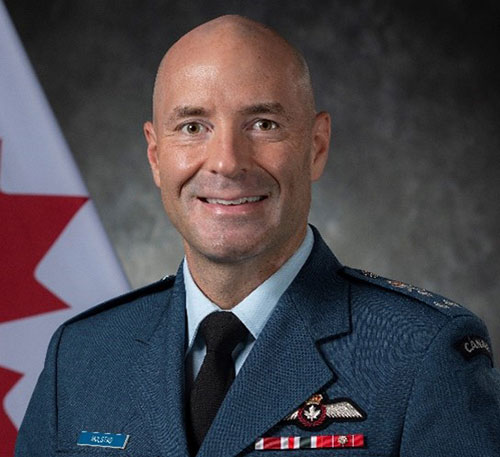
Lieutenant-General Darcy Molstad - Canadian Joint Forces Command
Overview
- Appointed CJFC Commander in December 2025
- Successfully logged over 2200 hours as a CF-18 pilot, including operational tours in Bagotville, Cold Lake, and in Beaufort, South Carolina. Command positions on Deployed Air Task Forces in Iceland, Romania, and Hawaii, and as Director of the US Combined Air and Space Operations Center in Al Udeid, Qatar
- Served as Chief of Force Development, Deputy Comd CJOC, Director General of Strategies, Effects, and Readiness at the Strategic Joint Staff, and Special Advisor to the Minister of National Defence.
Context
Mandate
The Canadian Joint Forces Command will lead, integrate, and deliver joint capabilities that strengthen CAF readiness and enhance operational advantage. The CJFC was created to advocate on an equal footing for CAF joint capabilities across all domains, to cohere joint capability efforts, and accelerate pan-domain investments.
Key Responsibilities
- Manage operational sustainment for the CAF
- Provide health services to the CAF
- Accelerate decision-making via implementation of Pan-domain Command and Control (PDC2)
- Lead advancement and innovation of joint capabilities and interoperability
Key Facts
Personnel: 9,280
Notional Budget FY 2026/27: $1.1B
- $785M to be transferred IAW ICCTs
- $331M from the Canada’s Commitment to Increase Defence Investments TB Submission
Structure:
- Canadian Forces Health Services
- Chief of Joint Logistics
- Military Police Group (transfer to CJFC pending)
- Chief Joint Capabilities Integration
- Joint Engineering (pending)
- Joint Warfare Centre
Key Partners
Internal
- Canadian Joint Operations Command
- Canadian Forces Intelligence Command; CAF Cyber Command
- Canadian Army, Royal Canadian Air Force, Royal Canadian Navy
- Vice Chief of the Defence Staff Group, Strategic Joint Staff
- Assistant Deputy Minister (ADM) (Policy), ADM(Materiel), ADM(Infrastructure & Environment), ADM(Digital Services)
- Defence Research and Development Canada (DRDC)
- Canadian Coast Guard
External
- Veterans Affairs Canada; Public Health Agency of Canada
- Public Services and Procurement Canada
- Shared Services Canada; Provincial/territorial health systems
- Canadian Blood Services
- Five Eyes; NATO allies and partners
- Royal Canadian Mounted Police; Transport Canada
- Innovation, Science and Economic Development Canada; National Research Council
Top issues
Establishment of the new Command
- Approval of proposed Authorities, Responsibilities and Accountabilities
- Integration of CJFC into Defence Team business planning for Fiscal Year 26/27 to establish baseline funding
- Integration into Departmental Results Framework for Fiscal Year 27/28
- Prioritization of identified military and civilian positions to provide adequate command and control of joint capabilities
Development and Delivery of Joint Capabilities
CJFC, supported by ADM(Materiel) – Director General Joint Equipment Program Management, and the Digital Services Group, must be enabled to develop and deliver the joint capabilities necessary for operational readiness and advantage of the CAF:
- Operationalization of the capabilities required to achieve Pan-Domain Command and Control (PDC2)
- Establishment of Interagency Task Force for Joint Counter Uncrewed Systems to rapidly deliver counter-drone capabilities for domestic and expeditionary employment
- Cohere CAF efforts to deliver Integrated Air Missile Defence
- Support the creation of a Defence Innovation Secure Hub (DISH) for rapid capability development and delivery of joint capabilities in the NCR
Implementation of Operational Sustainment Modernization (OSM) Strategy
CJFC will guide the modernization of the defence sustainment enterprise by improving readiness and strategic coherence to better align the linkages between Institutional Sustainment and Operational Support
- Implementation of Joint Logistics Modernization Campaign Plan to achieve speed and advantage at the pace of operations through an integrated and interoperable logistics network
- Establishment and Implementation of Health Services Support Campaign Plan including functional alignment of Canadian Forces Health Services to maintain the fighting force
- Establishment and Implementation of Military Police Campaign Plan including alignment with legal and policy obligations, improvement of infrastructure and investment in retention
- Establishment of Joint General Engineer Support Campaign Plan to align engineering capabilities with CAF operational needs, including development of Joint General and Specialized Engineering capabilities
- Development of Royal Canadian Electrical Mechanical Engineers (RCEME) and Communications Information Systems (CIS) Campaign Plans
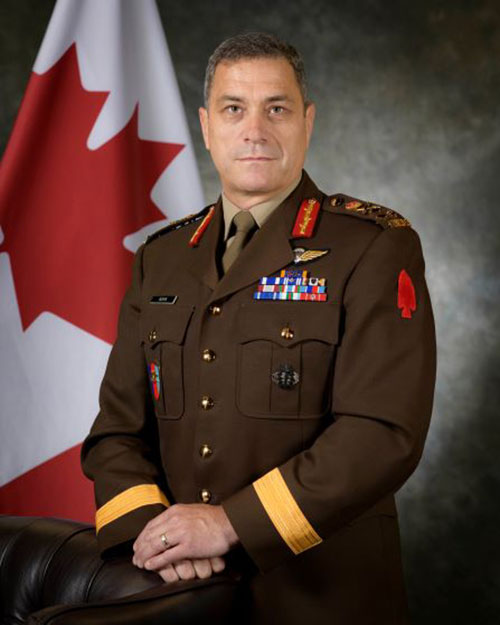
Lieutenant-General (LGen) Steve Boivin - Canadian Joint Operations Command
Overview
LGen Steve Boivin joined the Canadian Armed Forces (CAF) in 1991 and attended the Collège Militaire Royal, transferring to the Royal Military College for his final year. He graduated in 1996 and was posted to the 3rd Battalion Royal 22nd Regiment in Valcartier, Quebec where he deployed to Haiti, to East Timor and to Bosnia-Herzegovina. In July 2004, he completed the Special Operations Assaulter Course and joined Joint Task Force 2 (JTF2), serving the next six years with the Unit, including multiple rotations to Afghanistan. He was seconded to the Privy Council Office with the Afghanistan Task Force in 2012 and assumed command of JTF 2 in 2013 for 3 years. After serving as Special Advisor to the Chief of the Defence Staff, he became the Deputy-Commander of Canadian Special Operations Forces Command in 2019 and the Commander in May 2021. In July 2024, he assumed his current position as Commander CJOC.
Context
Mandate
To prepare for and conduct operations to defend Canada, assist in the defence of North America and as directed, to promote peace and security abroad.
- Conduct domestic and expeditionary defence operations.
- Global Integrator of Operational Effects in the pan-domain.
- Coordinate and conduct Search and Rescue operations.
- Conduct Humanitarian Assistance and Non-Combatant Evacuation operations.
- Develop campaign and contingency plans for future operations.
- Deliver joint capability development (e.g. the Northern Operational Support Hub (NOSH) Program and National Defence Operations and Intelligence Centre) and training activities.
Key Facts
Personnel: 2,000 CAN, 2970 Deployed
Budget (CJOC): $106M
Budget (Operations): $702M
Primary Locations:
- National Capital Region (NCR)
- 1st Canadian Division HQ and CFJoint Operational Support Group, Kingston, ON
- Joint Task Force North, Yellowknife, NWT
- Regional Joint Task Forces (double-hatted from Navy and Army HQs) in Halifax, Montreal, Toronto, Edmonton and Victoria
Key Partners
Internal
- Strategic Joint Staff (SJS)
- Assistant Deputy Minister (Policy) (ADM(Pol))
- Force Generators
- Canadian Coast Guard
- Vice Chief of the Defence Staff
External
- United States Global Combatant Commands
- North Atlantic Treaty Organization (NATO)
- Joint Headquarters of Key Allies
- Global Affairs Canada (through SJS/ADM(Pol))
- Royal Canadian Mountain Police and Public Safety, primarily through the Government Operations Centre
Top issues
Continental Defence
- Canada's renewed emphasis on the Arctic and Northern Regions has driven CJOC to strengthen the CAF's enduring presence and operational posture in the North. Through the development of the Canada All Domain Defence Plan and the evolution of Operation NANOOK into a campaign-style framework, CJOC is sequencing integrated sub-operations that advance readiness, interoperability, and deterrence in competition while preparing for crisis and conflict. Looking toward 2030, this approach prioritizes large-scale response rehearsals, expanded surveillance, and deeper allied and partner integration. Complementary operations, including LIMPID and LATITUDE, remain under continuous review to ensure a robust continental defense posture. To sustain this, CJOC is reviewing the Joint Task Force North (JTFN) structure to ensure it possesses the capabilities and capacity required for long-term success.
Moving Forward on Operation UNIFIER
- Canada's support to Ukraine has steadily expanded since Russia's full-scale invasion in February 2022. The CAF has focused primarily on training Armed Forces of Ukraine (AFU) recruits, along with specialized instruction in medical care, military engineering, and leadership. To date, the CAF has trained more than 47,000 AFU personnel, delivering capabilities that have shown strong results on the battlefield. Beyond training, Canada has provided significant military assistance through Op UNIFIER, including equipment and materiel donations. Canada also serves as an integrated member of the Coalition of the Willing planning staff in Paris, co-led by the UK and France
Operation REASSURANCE
Canada's commitment to the defence and security of Eastern Europe is anchored on the NATO Multinational Brigade-Latvia for which Canada is the Framework Nation, with approximately 2300 CAF members currently deployed. ████████████████████████████████████████████████████████████████████████████████████████████████████████████████████████████████████████████████████████████████████████████████████████████████████████████████████████████████████████
Global Integration of Operational Effects Across Domains (i.e. land, sea, air, space, cyber, and information)
- As the CAF's primary force employer, CJOC leverages and executes strategic-level (global and regional) policy instruments and directives to develop theatre operational plans and to conduct operations. During pre-conflict/competition phase, CJOC's focus is on ensuring that CAF engagements, messaging, operations, activities, and investments are coherent and coordinated to deliver operational effects across domains, both regionally and globally. Clear direction, guidance, and delegation of authority are essential for CJOC to optimize the use of limited personnel and equipment.
Resource Availability
In the coming years, several major CAF platforms ██████████████████████████████████████████████████████████████████████████████████ will become less available for employment as fleets reach end-of-life, are modernized, and as existing crews shift to qualifying on new platforms. ███████████████████████████████████████████████████████████████████████████████████████ The ability to generate for new and existing operations is also impacted by the personnel, equipment and materiel demands of CAF reconstitution. New capabilities must be developed with a "joint" lens to ensure the CAF's ability to rapidly force project, effectively integrate for pan-domain operations, and sustain operations up to and including major combat.
Major-General Steve Hunter - Canadian Special Operations Forces Command
Overview
- Appointed Commander in May 2024.
- Joined the Canadian Armed Forces (CAF) Reserve in 1994 as an artillery officer and transferred to the Regular Force in 1997.
- Successfully selected for Joint Task Force 2 (JTF 2) in 2002 with numerous deployments to Afghanistan, Iraq, Haiti, Central Africa, and the Middle East.
- Served as Commanding Officer of the Canadian Special Operations Regiment from 2014-2017, Director Special Operations from 2018-2020, and Deputy Commander CANSOFCOM from 2021-2023.
Context
Mandate
CANSOFCOM is a high-readiness organization, able to deploy agile special operations forces on very short notice on behalf of the Government of Canada in order to protect Canadians from threats at home and abroad.
Three Core Strategic Capabilities:
- Delivery of effective counter-terrorism response;
- Accessing, understanding, and influencing operational environments; and
- Reacting rapidly to emerging or immediate threats.
Command Priorities:
- Delivering Operational Excellence (current operations and future planning);
- Supporting our People;
- Modernizing our Force (CANSOFCOM 2030);
- Evolving CANSOFCOM Culture; and
- Expanding and Reinforcing Partnerships (internally and externally).
Key Facts
Personnel: ████
Budget: $413.7M*
* Budget figure: Allocation as of Fiscal Year 2025/26 Q3
Structure
CANSOFCOM is organized into six units:
- Command Headquarters
- JTF 2
- Canadian Joint Incident Response Unit (CJIRU) (chemical, biological, radiological, nuclear response)
- Canadian Special Operations Regiment (CSOR)
- 427 Special Operations Aviation Squadron (427 SOAS)
- Canadian Special Operations Training Centre (CSOTC)
Key Partners
Internal
- Canadian Joint Operations Command
- Canadian Forces Intelligence Command
- CAF Cyber Command
- Canadian Army, Royal Canadian Air Force (RCAF), Royal Canadian Navy
- Vice Chief of the Defence Staff Group, Strategic Joint Staff
- Assistant Deputy Minister (ADM) (Policy), ADM(Materiel), ADM(Infrastructure & Environment), ADM(Digital Services)
External
- Interdepartmental: Communications Security Establishment; Canadian Security Intelligence Service; Royal Canadian Mounted Police; Canadian Coast Guard; Global Affairs Canada; Public Safety Canada; Public Services and Procurement Canada; Shared Services Canada
- External: Five Eyes, North Atlantic Treaty Organization, Special Operations Forces partners, Japan, Republic of Korea
Top issues
Advanced SOF Capability Development
To outpace the rapid evolution in the global threat environment, CANSOFCOM is in the process of pivoting its acquisition program toward an asset management model and is focused on advancing:
- Special Operations Forces (SOF) Command, Control, Communications, Computers, Intelligence, Surveillance, and Reconnaissance (SOF C4ISR);
- Special Access Programs / Special Technical Operations (SAP/STO);
- Uncrewed systems and Counter-uncrewed systems capabilities; and
- The next Tactical Aviation Capability Set (nTACs), with support of the RCAF.
Investment in advanced SOF capabilities is required in order to:
- Maintain technological overmatch of adversaries;
- Safeguard information security and protect identities and capabilities;
- Deliver classified capabilities while reinforcing relationships with key allies and partners; and
- Ensure CANSOFCOM has the platforms and equipment necessary to meet the full breadth of operational requirements.
People
- CANSOFCOM operates in a very high operational tempo environment. While this provides our personnel with purpose and a clear mission focus, it also requires increased resources to ensure our SOF professionals are fit for duty. To sustain this tempo in the service of Canadians and the Government of Canada, CANSOFCOM needs sustained investment in unique:
- Physical and mental supports, and
- Prioritization of currently unfunded civilian positions.
- Recruitment and retention pressures within the CAF will have follow-on effects on CANSOFCOM and its long-term operational output.
- CANSOFCOM relies heavily on low-density enablers (i.e., Intelligence, signals, medical, and signals intelligence (SIGINT)) to meet its critical mission requirements. The Command's exceptionally high operational tempo has resulted in increased demand for these specialized support personnel.
The composition of CANSOFCOM personnel: 81% from the Regular Force, 12% from the Reserve Force, and 7% civilians.
Re-baselining CANSOFCOM Funding
- In response to historical under-resourcing in CANSOFCOM's baseline funding, ADM(Finance) is reviewing CANSOFCOM's funding in the current business planning cycle.
- CANSOFCOM needs additional predictable and sustainable resourcing to continue to support tasks from the Government of Canada.
Notice: Due to the nature of CANSOFCOM's work, other key items are at a higher security classification. CANSOFCOM will provide further information on these items and CANSOFCOM operations under separate cover as part of transition briefings.
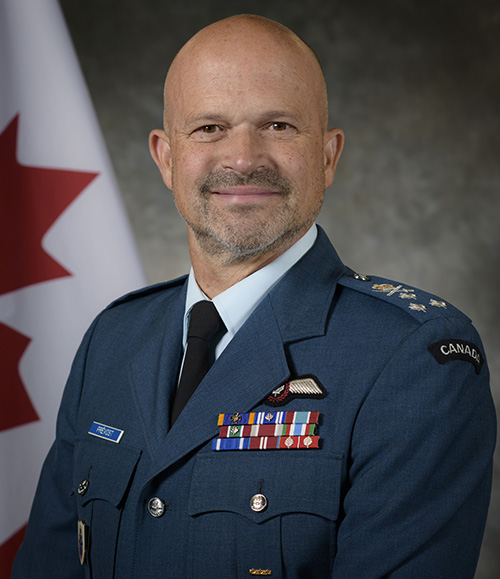
Lieutenant-General (LGen) Paul Prévost - Chief Professional Conduct and Culture
Overview
LGen Prévost, from St-Bruno-de-Montarville, Québec, joined the Canadian Armed Forces (CAF) in 1990. A CF-18 pilot with over 2,500 flight hours, he commanded 425 Squadron and later both 2 and 3 Wing in Bagotville. He deployed to the Balkans, commanded the Joint Task Force Afghanistan Air Wing, and was Director of Coalition Middle East air operations in Qatar. He has held many staff roles, including within the North American Aerospace Defense Command (NORAD), the Royal Canadian Air Force (RCAF), the Canadian Joint Operations Command (CJOC), and several Strategic Joint Staff (SJS) positions, including Director of Staff from 2021 to 2024. On July 17, 2024, he was promoted to his current rank and was appointed CPCC.
Context
Mandate
The CPCC mandate is to establish an enduring capability to continuously evolve professional conduct and ethics to meet the standards expected of the Defence Team and Profession of Arms.
To achieve this, CPCC will:
- improve team cohesion by fostering work environments that enable personnel to make their best contributions to our shared goals and common purpose.
- cascade these efforts throughout the institution to reinforce and cultivate a readiness-focused mindset.
- prioritize the full implementation of the Comprehensive Implementation Plan (CIP) milestones, as well as the operationalization of our Culture Evolution Strategy (CES).
Key Facts
Personnel: 543 – Including 394 civilians and 149 CAF members (94 Regular Force, 55 Reserve Force)
Budget: $63M
Primary Locations:
- National Capital Region (NCR)
- 16 Conflict and Complaint Management Services (CCMS) offices across Canada
Key Partners
Internal
- Military Personnel Command/Canadian Defence Academy
- Assistant Deputy Minister (ADM) (Human Resources – Civilian)
- Sexual Misconduct Support and Resource Centre
- Judge Advocate General
- ADM (Public Affairs)
- ADM (Review Services)
External
- Like-minded Allies
- External Monitor
- Veteran Affairs Canada (VAC)
- Women and Gender Equality Canada (WAGE)
- Employment and Social Development Canada (ESDC)
Top issues
Grievance and Complaints Transformation
- Grievance transformation will provide a modern, timely and efficient redesigned CAF Grievance System by improving the member experience, encouraging informal resolutions, increasing accountability and Chain of Command oversight, and ensuring the system can withstand legal scrutiny. The Complaint Process Transformation (CPT) initiative includes updating policies, procedures, and technology, to enhance the experience for all members reporting conduct issues and empower senior leadership to proactively address systemic issues. These initiatives are tied to NATO 2% funding commitments
Systemic Racism Class Action Final Settlement Agreement Implementation
- The implementation of the Systemic Racism Class Action Final Settlement Agreement (FSA) represents a critical initiative to address systemic barriers experienced by racialized personnel in the CAF. As outlined in the FSA, CPCC will coordinate key systemic relief measures, including research on retention challenges affecting Indigenous, Black, and other racialized members and support for the delivery of the Restorative Engagement program by SMSRC. These efforts seek to enable operational effectiveness by building trust, promoting accountability, and strengthening relationships within the Defence Team (DT).
Continued Implementation of the CIP and the CES
- The Comprehensive Implementation Plan (CIP) enhances cross-functional engagement and collaboration across the DT to streamline recommendation implementation and address key milestones for successful completion. It will deliver measurable progress on the 206 CIP recommendations, ensuring alignment with public commitments. The Culture Evolution Strategy (CES) serves as a comprehensive guide for the DT, aiming to cultivate a healthier and more resilient organizational culture through an iterative approach that fosters incremental, cumulative change over time.
Departmental Update to the DND/CAF Code of Values & Ethics
- DND/CAF are working to update their Code of Values and Ethics this year, aligning with the Government of Canada's Values and Ethics Code for the Public Sector. New Values & Ethics pillars were approved in summer 2025, and consultation is underway for the update of the fulsome Code and Implementation Directive. This update will provide a clear north star for the DT, enabling alignment, clarity and coherence on principles and values and informing updates on training and education programs.
Evolution of CPCC
- Over the past four years, CPCC has delivered meaningful change while maintaining a strong commitment to a respectful, inclusive, and ethical workplace. Recognizing that our people are central to our success, a Task Force on People Management was established in October 2024 to strengthen our workforce, improve systems, and build a ready and resilient Defence Team. Its recommendations have informed final decisions, which are due to be communicated and implemented in Q4. These approved organizational changes across CPCC, ADM(RS), HR-CIV, and CMP will streamline structures, reduce duplication, enhance oversight, and improve coordination to better support our growing organization.
Taylor Paxton - Corporate Secretary
Overview
- Appointed to the Corporate Secretary role in September 2023.
- 18 years in the Public Service, including at National Defence, the Privy Council Office (PCO), Western Economic Diversification Canada and Transport Canada.
- Experience extends from coordinating public affairs, executive events, leading the governance committee framework and litigation oversight.
Context
Mandate
The Corp Sec is an executive advisor responsible for providing the deputy minister with integrated, timely, and expert advice in governance, GiC appointments, litigation oversight and senior executive support and guidance.
- Enable effective governance by supporting senior-level decision-making, coordinating core governance bodies, and ensuring coherence across the organization.
- Defence regulatory portfolio, Governor in Council appointments, ministerial correspondence, policy coordination including Defence Administrative Orders and Directives, and the Accountability, Responsibility and Authority Framework.
- Manage and oversees complex litigation activities and enable the Department to meet its obligations related to court decisions and Final Settlement Agreements.
Key Facts
FTEs: 130
Budget: SWE: $13M, O&M: $1.2M, SPA: $2M
Primary Locations:
- National Capital Region (NCR)
- National Defence Head Quarters
Key Partners
Internal
- Minister of National Defence Office
- Deputy Minister's Office
- Chief Defence Staff Office
- Vice Chief of Defence Staff Office
- All Civilian Assistant Deputy Ministers' and Military Commanders' Offices
External
- PCO
- Treasury Board Secretariat
- Prime Minister's Office
- Department of Justice Canada
Top Issues
Senior Executive Advice and Guidance
- Upcoming GiC priorities: RMC Saint-Jean, Military Grievances External Review Committee, Military Judges Compensation Committee
- DM co-chairs the following governance executive committees: ADMC, DSX, DMC, IRMC and SEBMX. Forward agenda is available to facilitate to proactive decision making.
- Integration of CCG and update to the Defence team authority, responsibility and accountability framework, regulatory framework and corporate policy framework.
Internal Engagements
- Terms of Reference updates for core executive committee review to be launched in spring 2026.
- 2026 executive events proposal: Executive Town Hall (February and September), GOFO Conference (April), L1 Retreat (May, October), Defence Leadership Symposium (November).
- Coordination of a collaboration event in February between select L1s and defence industry representatives.
External Engagements
- Systemic Racism Class Action: 150M$ in settlement funds approved by Federal court in 2025. Status: Claims window open from October 2025 – October 2026.
- Sexual Misconduct Class Action: 800M$ in settlement funds approved in 2019, 596M$ has been paid in financial compensation. Status: Claims window is closed, external review will be launched and projects focused on awareness and culture change.
- The LGBT Purge 4th Supplementary Agreement: Final stages of implementation. Status: Review of previously released records held by DND and other departments and agencies within the security portfolio.
Strategic Enablement
- The Corp Sec Comptroller reporting to the Director of Management Services (DMS) provides financial advice and guidance to the Minister's office and Deputy Minister's office.
- The Departmental Assistant's Office (DAO) collaborates closely with internal and external partners and acts as departmental liaison for the Minister of National Defence's Office (MNDO).
- Creation of a Strategic Coordination Cell to unify key themes and align departmental priorities with government objectives.
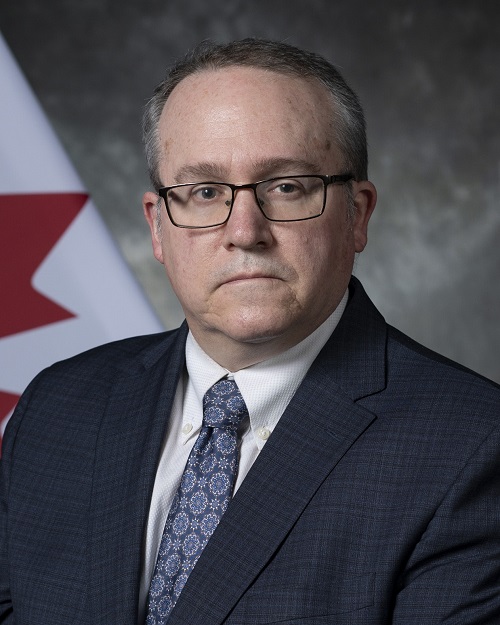
Daniel Roussy - Department of National Defence and Canadian Forces Legal Services Advisor
Overview
- Appointed as Senior General Counsel and DND/CF LA in March 2022.
- Throughout his 25+ year career with the Government, he has held numerous senior legal positions, including Deputy Assistant Deputy Minister at the Privy Council Office Legal Services Sector, Executive Director and Senior General Counsel of the Global Affairs Canada Legal Services Unit, and Deputy Executive Director and General Counsel at the Canadian Radio-television and Telecommunications Commission Legal Services Sector, among others.
- University of Ottawa Faculty of Law (LL.L-LL.B). Member of the Barreau du Québec and the Law Society of Ontario.
Context
Mandate
Legal Services Unit of the Department of Justice. Provides legal advisory services and litigation support pursuant to sections 4 and 5 of the Department of Justice Act.
- Works closely with the Judge Advocate General (JAG) in areas of overlap, including National Security.
- Supports the Department of National Defence and the Canadian Armed Forces (DND/CAF) Litigation Management Committee on the implementation and coordination of complex litigation, such as class actions, that impact several areas of DND/CAF.
- Interface with Justice Canada on DND/CAF requirements.
Key Facts
Employees: 87
Budget: $34.4M
Litigation Budget:
- Baseline for fiscal year 2025-26 is $15.8M.
- $75M for the 2024-2025 fiscal year (variable from year to year)
Primary Locations:
- National Capital Region (NCR)
Key Partners
Internal
- All Defence Team
External
- Privy Council Office
- Justice Canada including LSUs from other departments and agencies (e.g. Public Services and Procurement Canada, Treasury Board Secretariat, National Litigation Sector, Veterans Affairs Canada)
Top issues
██████████
██████████████████████████████████████████████████████████████████████████████████████████████████████████████████████████████████████████████████████████████████████████████████████████████████████
█████████████████████████████████████████████████████████████████████
█████████████████████████████████████████████████████████████████████████████████████████████████████████████████████████████████████████████████████████████████████████
█████████████████████████████████████████████████████████████████████████████████████████████████████████
█████████████████████████████████████████████████████████████████████████████████████
████████████████
█████████████████████████████████████████████████████████████████████████████████████████████████████████████████████████████████████████████████████████████████████████
█████████████████████████████████████████████████████████████████████████████████████████
█████████████████████████████████████████████████████████████████████████████████████████████████████████████████████████████████████████████████████████████████████████████████████████████████████████████████████████████
████████████████████████████████████████████████████████████████████████████████████████████████████████████████████████████████████████████████
█████████████████████████████████████████████████████
██████████████
█████████████████████████████████████████████████████████████████████████████████████
████████████████████████████████████████████████████████████████████████████████████████████████████████████████████████████████████████████████████████████████████████████████████
████████████████████████████████
██████████████████████████████████████████████████████████████████████████████████████████████████████████████████████████████████████████████████████████████████████████████████████████████████████
██████████████████████████████████████████████████████████████████████████████████████████████████████████████████
████████████████████████████████████████████████████████████████████████████████████████████████████████████████████████████████████████████████████████████████████████████████████████████████████████
█████████████████████████████████████████████████████████████████████████████████████████████████████████████
███████████████████████████████████████████████████████████████████████████████████████████████████████████████████████████████████████████████████
███████████████████████████████████████████████████████████████████████████████████████
███████████████████████
█████████████████████████████████████████████████████████████████████████████████████████████████████████████████████████████████████████████████████████████████████████████████████
███████████████████████████████████████████████████████████████████████████████████████████████████████████████████████████████████
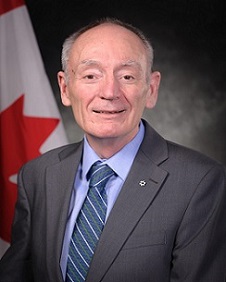
Larry Murray - Independent Review Panel for Defence Acquisition
Overview
Larry Murray held a number of positions in the Canadian Armed Forces (CAF), including Deputy Chief of the Defence Staff, Commander Maritime Command, Vice Chief of the Defence Staff, and Acting Chief of the Defence Staff. After his retirement from the military, he served as Deputy Minister at the Department of Veterans Affairs and the Department of Fisheries and Oceans. Mr. Murray has been Chair of the IRPDA since it was stood up in 2015 and is honorary Grand President of the Royal Canadian Legion.
Context
Mandate
The IRPDA is mandated to help validate requirements for major procurements by providing independent, third-party advice to the Minister of National Defence.
- Reviews all projects with an estimated cost above $100M or that meet other criteria under the IRPDA's mandate.
- Brings a broad range of outside expertise through its five members: two with senior CAF or Government of Canada expertise; two with senior-level private sector experience; one academic.
- Advice is routinely requested by the Treasury Board Secretariat to validate credibility of requirements for submissions on defence capabilities.
Key Facts
Employees: 13 – Five part-time Governor in Council appointees and eight employees
Budget: $1.7M
Primary Location:
- National Capital Region (NCR)
Results
- Since its inception, the IRPDA has produced advice on over 90 projects, and initiated reviews of over 110 projects.
Key Partners
Internal
- Vice Chief of the Defence Staff
- Assistant Deputy Minister (Materiel)
- Assistant Deputy Minister (Digital Services)
- Royal Canadian Navy
- Canadian Army
- Royal Canadian Air Force
Top issues
Ministerial Advice
The IRPDA will continue to play its role of challenge function and provide independent written advice to the Minister of National Defence on priority projects to support confidence in the development of capability requirements by the Department. Advice expected to be provided to the Minister in 2026 includes:
███████████████████████████████████████
████████████████████████████
███████████████████████████████████
███████████████████████████
████████████████████████████
███████████████████████████████████
Forward Agenda
The IRPDA will continue to carefully synchronize its agenda with Departmental priorities to ensure timely and meaningful engagements on key projects. In addition to the projects for which advice will be provided to the Minister, the IRPDA is also expected to begin reviews of several projects including:
███████████████████████████████████████████████████
██████████████████████████████████████████████
███████████████████████████████
█████████████████████████████████
████████████████████████████████
Accelerating Defence Procurement
The IRPDA has been engaging with Departmental and Defence Investment Agency officials to determine how to most effectively implement the Prime Minister's September 2025 direction to the Minister of National Defence and to the Secretary of State (Defence Procurement) to expand the Panel's mandate, while maintaining its ability to independently validate core operational requirements.

Brigadier-General (BGen) R.F. Holman - Judge Advocate General
Overview
MGen Robin F. Holman joined the Canadian Armed Forces (CAF) in 1986. After initially serving as a pilot, he was selected for the Military Legal Training Plan and joined the Office of the JAG (OJAG) as a legal officer. He served as a military prosecutor, deployed to Afghanistan and served as Deputy JAG for both military justice and operational and international law. After serving as Acting JAG from November 2021, he was appointed by the Governor in Council as the JAG on June 28, 2023. MGen Holman is a graduate of the Royal Military College (Bachelor of Engineering), Queen’s University (Bachelor of Laws) and McGill University (Master of Laws). MGen Holman and his wife have three children.
Context
Mandate
- Acts as legal advisor to the Governor General, the Minister, the Department and the Canadian Forces in matters relating to military law.
- Has the superintendence of the administration of military justice in the Canadian Forces.
- Responsible to the Minister in carrying out duties and functions.
Mission:
- Deliver timely, client-focused, options-oriented, and operationally driven military legal services in support of the Government of Canada and Department of National Defence (DND)/CAF priorities and objectives.
- Superintend the administration of military justice, and promote the maintenance of discipline, efficiency and morale in the CAF by enabling the proper operation of the military justice system.
- Lead by example, inspire excellence, and empower team members to reach their full potential.
Key Facts
Employees: 401
Budget: $15.1M
Primary Locations
- National Capital Region (NCR)
- North American Aerospace Defense Command (NORAD) / Europe
- Locations across Canada
- Deployed locations
Key Partners
Internal
- Vice Chief of the Defence Staff
- DND/Canadian Forces Legal Advisor
- Assistant Deputy Minister (Policy)
- Chief of Defence Intelligence
- Strategic Joint Staff
- Force Generators
- Force Employers
External
- Department of Justice
- Five Eyes, North Atlantic Treaty Organization and Canadian Partners' Military and Strategic Legal Advisors
- Global Affairs Canada Legal Bureau
Top issues
Promoting Canadian Armed Forces Readiness and Operational Effectiveness
The CAF legal enterprise must promote CAF readiness and operational effectiveness, including through the provision of legal services that enable the lawful accomplishment of CAF operations, lawful administration of the CAF and its members and discipline, efficiency and morale through the proper operation and administration of the military justice system. Legal Officers are employed to support all CAF lines of effort.
- Force Employment – CAF operations are authorized by the law and conducted in compliance with the applicable Canadian and international law. Alleged breaches are investigated, and where appropriate, prosecuted.
- Force Generation – Legal support is required by all force generators. This support helps lead to ready, resilient, relevant forces. A ready force requires disciplined, effectively trained troops, including in the application of the law of armed conflict. Ready forces are administered in accordance with the law. Legal Officers support this entire enterprise.
- Force Development – Military law helps to shape and define the CAF of tomorrow. Planned capabilities must be lawfully designed, acquired, staffed and fielded.
Implementing Governmental Responses to External Reviews Recommendations
- Recent reports of the Third Independent Review Authority (the "Fish report"), the Independent External Comprehensive Review (the "Arbour" report), and the Auditor General made significant recommendations that have informed governmental decision-making in relation to the military justice system.
- The OJAG provides military justice policy and legal advice regarding options to implement these recommendations and provide legal support to advance selected options, including through legislation, regulation, orders, directives and policy-level instruments. Extensive resources have been required to prioritize, synchronize, and implement decisions in coordination with other governmental priorities.
Organizational Transformation of OJAG
Focus on People, Digital Transformation, and Leadership.
OJAG provides a low density, high impact capability that enables CAF readiness and operational effectiveness. Transformation must remain an internal focus in order to ensure efficient and effective employment of the legal capability in support of DND/CAF priorities.
- People – We are dedicated to empowering every member of our team, enabling them to achieve their full potential and contribute to the operational success of DND/CAF.
- Digital Transformation – We continue to evolve allowing professionals to effectively and efficiently produce legal products to support CAF operations. Adopting digital capabilities, like artificial intelligence, will ensure that OJAG remains ready, resilient, and relevant in support of operations.
- Leadership – We are committed to continuing to develop critical leadership skills for present and future leaders of the OJAG and DND/CAF.

Lieutenant-General (LGen) Erick Simoneau - Military Personnel Command
Overview
- LGen E.D.(Erick) Simoneau is Commander of the MPC and Chief Military Personnel.
- LGen Erick Simoneau, a Tactical Aviator, spent most of his career with postings in Valcartier, Kingston, and Ottawa, deploying to Haïti, Kosovo, and Afghanistan. He holds a bachelor's in business administration from Royal Military College Saint-Jean and a master's in Defence Studies from Canadian Forces College in Toronto.
Context
Mandate
- The Military Personnel Command generates and enables the core capability of the Canadian Armed Forces (CAF): personnel, the foundation of the Canadian Armed Forces.
- The Military Personnel Command supports people from recruiting to transition via pay, compensation, benefits, education, fitness and wellness, and care management to build a ready, resilient and relevant Canadian Armed Forces.
Key Facts
Personnel: 18,075 – Includes 13,184 military and 4,897 Civilian
Budget: $9.95B *
*includes $7.34B for Regular Forces salary
Primary Locations:
- National Capital Region (NCR)
- Canadian Forces Base Borden
- Toronto Canadian Forces College
- Kingston Royal Military College (RMC)
- St-Jean-sur-Richelieu RMC
- Recruiting Centres (26)
- Transition Centres (32)
Key Partners
Internal
- Navy, Army, Air Force, Special Operations Forces, Vice Chief of the Defence Staff
- Assistant Deputy Minister (Infrastructure & Environment), Canadian Forces Housing Agency
- Canadian Forces Morale and Welfare Services
External
- Five Eyes
- North Atlantic Treaty Organization
- Treasury Board Secretariat
- Veterans Affairs Canada
- Health Canada
- Governor General
- Provinces and Territories
- The Technical Cooperation Panel
Top issues
Recruiting
- Recover and rebuild the CAF to Strong, Secure, Engaged authorized strength of 71.5K Regular Force and 30K Primary Reserve Force.
- Planning growth to 85.5K Regular Force and 30.5K Primary Reserve Force (Reconstitution Directive 2.0 forward planning assumption)
- Reach Regular Force Strategic Intake Plan (SIP) for Fiscal Year 25/26 7,612 (external intake of 6,957 and component transfers of 655), the Strategic Intake Plan is met for all occupations while building the necessary capacity to increase the Strategic Intake Plan next Fiscal Year
██████████████████████████████████████████████████████████████████████
- Scale up the training system to Occupational Functional Point (OFP) to meet increased Strategic Intake Plan demands
Retention
- Offer a rewarding, empowering career dedicated to defending Canada's interests.
- Deliver on the suite of eight Compensation and Benefits announced by the Prime Minister on August 8, 2025
- Pay adjustment (in effect, back pay delivered to Canadian Armed Forces members on November 14)
- Military Service Pay
- Recruiting Allowance
- Instructor Allowance
- Domestic Ops Allowance
- Environmental Allowance
- Posting Frequency Allowance
- Improved Imposed Restriction Allowance
- Continue advancing the Return to Physical Fitness of the Canadian Armed Forces to meet Universality of Service and to minimize medical releases
Modernization
- Deliver on the update to the human resource management system from analog to digitally enabled.
- Deliver a new military pay system.
- Deliver a digitalized recruiting and training system.
- Implement the Canadian Military Colleges Review Board (CMCRB) per the Minister of National Defence's Strat Assessment

General (Gen) Guillot - Commander - North American Aerospace Defense Command
Overview
Gen Gregory Guillot is the American Commander of NORAD. He also serves as the Commander of the United States (U.S.) Northern Command (U.S. NORTHCOM). He previously served as Commander 9th Air Force and Deputy Commander U.S. Central Command in the Middle East. Gen Guillot is a senior air battle manager with more than 1,380 flying hours in the E-3 Sentry (Airborne Warning and Control System) and RC-135 Rivet Joint.

Lieutenant-General (LGen) Huddleston – Deputy Commander - North American Aerospace Defense Command
Overview
LGen Iain Huddleston is the Canadian NORAD Deputy Commander and Commander Canadian Element NORAD. He previously served as Deputy VCDS, Commander 1 Canadian Air Division and Canadian NORAD Region, and CJOC Chief of Staff. He earned his pilot wings in 1995 and has logged over 5,600 flying hours on multiple airframes, including the CP-140 Aurora, Nimrod MR2, and CC-177 Globemaster III.
Context
Mandate
NORAD has three binational missions to defend North America: aerospace warning, aerospace control, and maritime warning. NORAD's motto is WE HAVE THE WATCH.
- The Commander's top priority is defending the homelands – Canada and the U.S. NORAD has the watch 24/7, 365 days a year.
- NORAD relies on a layered network of satellites, ground-based and airborne radars, and fighter aircraft to detect and track potential aerospace threats to North America. This includes warning of all missile attacks against North America (e.g., cruise, ballistic and hypersonic).
- NORAD looks outward conducting air defence operations to deter and respond to state threats such as military aircraft and cruise missiles.
- NORAD looks inward responding to possible non-state actor threats.
- USNORTHCOM and the Canadian Joint Operations Command (CJOC) cooperate bilaterally to conduct complementary homeland defence operations, such as maritime control and defence.
Key Facts
Canadian NORAD personnel and budgets fall under VCDS in the U.S. or the RCAF in Canada.
314 Canadians in the U.S. for NORAD
40 Americans in Canada for NORAD
Primary Locations
- NORAD HQ + Joint Operations Center U.S. commander and Canadian deputy
- Canadian NORAD Region HQ Canadian commander and U.S. deputy
- Continental U.S. NORAD Region HQ U.S. commander and Canadian deputy
- Alaska NORAD Region HQ U.S. commander and Canadian deputy
- Canadian Air Defence Sector Canadian commander and U.S. deputy
- NORAD Forward Operating Locations Employed upon activation
Key Partners
Internal
- VCDS, RCAF (primarily), Royal Canadian Navy, Canadian Army, CJOC, Canadian Special Operations Forces Command, Canadian Forces Intelligence Command
- Assistant Deputy Minister (ADM) (Materiel), ADM(Infrastructure & Environment), ADM(Policy)
External
- U.S. force providers
- U.S. NORTHCOM
- Other U.S. and Allied Military Commands
- Transport Canada and U.S. Department of Transport
- NAV Canada and Federal Aviation Administration
- Royal Canadian Mounted Police (RCMP) and U.S. law enforcement
Top issues
Adversary Capabilities and Cooperation
- North America faces concurrent global threats from all avenues of approach, all domains, and spanning the diplomatic, informational, military and economic spectrum.
- Russia and the People's Republic of China (PRC) continue to rapidly field advanced weapons specifically designed to strike North America to degrade our will and ability to respond to a conflict in Europe and/or the Indo-Pacific. North Korea and Iran are also improving their capabilities.
- These countries are cooperating in new ways, expanding their capabilities and reach.
- For example, Russia and the PRC conducted their first combined bomber patrol in the Arctic in 2024. PRC aircraft operated from a Russian base bringing them in range of North America for the first time. This prompted a binational NORAD intercept.
Warning and Response Authorities
- For Canada, leaders in the binational command are responsible for warning, attack assessments and response options. This includes NORAD's warning against all air and missile attacks but does not involve the interception of ballistic missiles by USNORTHCOM.
- A small hierarchy of designated Canadian and U.S. senior officers are the recommending authorities for the use of military force in specific, non-conflict scenarios in Canadian airspace.
██████████████████████████████████████████████████████████████████████████████████████████████
█████████████████████████████████████████████████████████████████████████████████████████████████████████████████████████████████████████████████████████████████████████████████████████████████████████████████████████████████████████████████████████████████████████████████████████████████████████████████████████████████████████████████████████
Domain Awareness
- We cannot defeat what we cannot see. Domain awareness is critical to NORAD, enabling the command to anticipate, detect and track potential threats to North America. Responding to air and missile threats requires awareness from seabed to space and relies on integrated command and control systems.
- Canada must deliver on NORAD and continental defence modernization projects (e.g. Over the Horizon Radar, F-35s,P-8s, MQ-9s, Early Airborne Warning Aircraft and maritime sensors)
███████████████████████████████████████████████████████████████████████████████████████████
███████████████████████████████████████████████████████████████████████████████████████████████████████████████████████████████
██████████████████████████████████████████████████████████████████████████████████████████████████████████████████████████████████████████████████████████████████████████████████████████████████████
Arctic Readiness and Infrastructure
- The Arctic region is the most direct approach to North America from Russia/PRC and is seeing increased air and maritime activity.
- NORAD conducts integrated Canada-U.S. operations across the Arctic in Alaska, Canada, and from Pituffik Space Force Base in Greenland.
███████████████████████████████████████████████████████████████████████████████████████████████████
- Expedient development of the NORAD Northern Basing Infrastructure Project, other dual-use infrastructure and the improvement of energy resiliency in the Arctic will enable NORAD operations, other Canadian Armed Forces operations while also supporting Arctic communities.
- The development of defence and dual-use infrastructure presents opportunities to work within a whole-of-government approach.
- Trained personnel, specialized equipment and infrastructure are necessary to operate in the harsh Arctic environment.
Defence of Critical Infrastructure
- For NORAD, critical infrastructure includes a wide range of defence installations and civilian infrastructure providing power, water, sewage and logistics. The number of aerospace threats that can directly impact Canadian and U.S. critical assets, such as advanced cruise missiles, ballistic missiles, hypersonic glide vehicles, and uncrewed aerial systems (UAS) is ever-increasing.
- In the U.S., the President has directed the deployment of a next-generation missile defense shield – the Golden Dome for America. Commander NORAD and USNORTHCOM is the supported commander for Golden Dome. ONSAF recognizes the same threats and committed Canada to exploring Integrated Air and Missile Defence. The Prime Minister has since removed Canada's policy restrictions on ballistic missile defence.
- NORAD is tracking the growing threat posed by small-UAS domestically, to both our operating locations and other critical infrastructure. Addressing this threat requires increased coordination and cooperation with civilian agencies and law enforcement, both in the U.S. and in Canada.
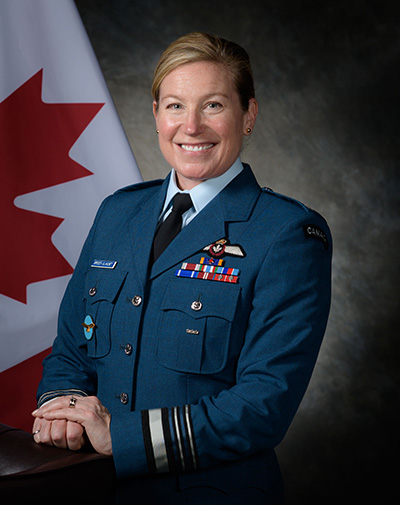
Lieutenant-General (LGen) Jamie Speiser-Blanchet - Royal Canadian Air Force
Overview
- LGen Speiser-Blanchet was appointed Commander of the RCAF on July 10, 2025.
- Trained as a CH-146 Pilot and has held various operational and administrative positions, including with 430 Tactical Helicopter Squadron, 1 Wing Headquarters, 1 Canadian Air Division Headquarters, and 403 Operational Helicopter Training Squadron. LGen Speiser-Blanchet has been deployed multiple times and has been involved in missions in Haiti and Bosnia. She also served as Deputy Commander (Operations) for Joint Task Force-IMPACT in Kuwait in 2019 - 2020.
Context
Mandate
- Generate relevant, responsive and effective air and space power at home and abroad
Description of secondary mandates and key responsibilities
- Detect, defend and defeat threats in Canadian and North American airspace through NORAD.
- Employ air and space warfare capabilities to detect, deter, and defend against threats to Canada, Allies, and to protect Canadian interests.
- Support Canadian Armed Forces (CAF) operations through strategic airlift and space capabilities.
- Provide 24/7/365 Aeronautical Search and Rescue across Canada.
- Train and equip the RCAF to address future threats.
Key Facts
Personnel: 14,938
Budget: $1.6B
Primary Locations:
- RCAF Headquarters – National Capital Region (NCR)
- 1 Canadian Air Division / Canadian NORAD Region – Winnipeg
- 2 CAD – Winnipeg
- 3 Canadian Space Division – Ottawa
- RCAF Aerospace Warfare Centre – Trenton
RCAF Assets
- 16 Aircraft Fleets
- 392 Aircraft
- 5 Satellite systems
Key Partners
Internal
- Military Personnel Command
- Vice Chief of the Defence Staff
- Assistant Deputy Minister (ADM) (Materiel)
- ADM (Infrastructure & Environment) (IE)
- ADM (Digital Services)
- NORAD
- Canadian Special Operations Forces Command
- Canadian Joint Operations Command
- Defence Research and Development Canada
- Strategic Joint Staff
- Military Personnel Command (MPC)
External
- North Atlantic Treaty Organization
- Five Eyes
- Public Services and Procurement Canada
- Innovation, Science and Economic Development Canada
- Transport Canada
- Industry
Top issues
People
- The RCAF is approximately 2,000 trained Regular Force members short of its establishment.
- Three initiatives address this shortage: the RCAF is analyzing its occupations to better understand and tailor solutions to meet 2029 personnel goals; the Future Occupation Working Group is working to ensure the RCAF is equipped with the right occupations and people; and the Force Structure Review team is optimizing the delivery of future air and space capabilities, all while the RCAF continues to invest in MPC-led initiatives to recruit, train and retain personnel.
Delivering RCAF Modernization
- Given current prevalence in discussions, early F-35 briefings and classified read-ins are critical for decision makers.
- The RCAF is undergoing a massive modernization which will upgrade, replace or introduce many new fleets and capabilities including aircraft for search and rescue, fighters, surveillance, transport, air-to-air refueling, plus five new aircrew training fleets. Full delivery will require increased trained personnel and new infrastructure, including improved northern basing and modernized command and control systems.
- To ensure timely delivery of capabilities, the RCAF will need to make tough decisions regarding the prioritization of projects, personnel, operational commitments and divestment of less relevant capabilities.
Improving Operational Readiness
- The RCAF has set the goal of achieving operational relevance focused on continental defence by 2028. This will inform prioritization of current and new capabilities to ensure Canada can defend against threats to the continent.
- To deter, detect, and defeat current and emerging threats, the RCAF will advance Long-Range Air-Air Missile and Long-Range Precision Strike projects to ensure sufficient ammunition stockpiles.
- To meet operational mandates, the RCAF must repair and/or replace deteriorating infrastructure with ADM(IE).
- Relevant, modern and integrated training is essential and the RCAF will advance the Range Advancement for Generation-Next and Airspace Revitalization project to support the readiness of our new tactical fleets with current equipment and ranges.
Space Capability Development
- Strategic context has changed – space is now weaponized. Adversaries are developing and fielding counter-space capabilities faster than ever to disrupt, degrade, deny, and destroy Canadian and allied space assets.
- Space is no longer simply an "enabling" domain – it is a full operational domain like all others.
███████████████████████████████████████████████████████████████████████████████████████████████
████████████████████████████████████████████████████████████████████████████████████████████████████████████████████████████████████████████████████████████████████████████████████
Advancing Future Capabilities
- Enhanced domain awareness is critical to defeating threats to Canada and achieving NORAD's mission. The RCAF must rapidly advance the Over The Horizon Radar projects and define the scope for Airborne Early Warning Capabilities.
- The RCAF will continue to lead efforts in addressing the ONSAF IAMD challenge and implement an initial counter -Unmanned Aircraft Systems (UAS) capability.
- In 2026, the RCAF will seek to complete options analysis for both the Next Tactical Aviation Capability Set, determine a way forward for Maritime Helicopter Upgrade, continue work to define a suite of surveillance and strike UAS and address the need to replace the Snowbird Air Demonstration Aircraft. In response to constantly advancing threats, RCAF will support near-term recommendations to government for Canada to partner in a 6th
- Generation Air Combat Capability program and will continue to assess opportunities for near-term domestic development and coproduction on Collaborative Combat Aircraft.
Royal Canadian Navy
Context
Key Figures
Personnel: 16,600
Budget: $1.27B
Including 4,300 Defence Civilians
Key OGD Relationships
- Public Services and Procurement Canada
- Defence Investment Agency
- Innovation, Science and Economic Development Canada
- Global Affairs Canada
- Provinces and Territories
Current Fleet
- 12x Halifax-class
(Surface Combatant) - 4x Kingston-class
(Mine Countermeasure) - 6x Harry Dewolf-class
(Arctic and Offshore Patrol) - 4x Victoria-class
(Submarine) - 8x Orca-class
(Training)
███████████
███████████████
█████████████████████████████████████████████
█████████
██████████████████████████████████████
██████████████████████████████████
██████████████████████████████████████████████████████████████████████████████
█████████████████████████
████████████████████████
████████████
Top issues
Personnel
- Restoring the RCN to 100% Trained Effective Strength by December 22, 2028.
- Utilize the Naval Reserve Divisions (NRDs) to speed recruiting & training.
- Expand the Naval Reserve to create new NRDs growing population centres and underrepresented regions (Arctic).
- █████████████████████████████████
Future Fleet
- Delivery of River Class Destroyers (RCD).
- Progressing the Canadian Patrol Submarine Program (CPSP) and Continental Defence Corvette (CDC).
- Future At Sea Sovereignty and Training Vessel (FASST-V) is critical to increasing training capacity and surveillance.
- Essential to ensuring the defence of Canada.
████████████████████████████████████████████████████████████████████████████████████████████████████████████████████████████████
Readiness
- Sustainment of the current fleet of Halifax-class frigates to ensure the defence of Canada until future fleet arrives.
- Critical supporting infrastructure is aging or degraded, and availability of key spare parts is increasingly constrained.
████████████████████████████████████████████████████████████████████████████████████████████████████████████████████████
Authorities
- Existing $1M Delegation of Authority to Base Commanders has accelerated local procurement and reduced reliance on centralized contracting for most requirements.
Roadblocks remain. ████████████████████████████████████████████████████████████████████████████████████████████████████████████████████████████████████████████████
███████████████████████████████████████████████
Industrial Workforce
- RCN Future Fleet requires a robust and resilient Canadian workforce to ensure timely delivery and long-term support.
- Workforce availability at National Shipbuilding Strategy shipyards remains a concern, particularly in British Columbia.
██████████████████████████████████████████████████████████████████████████████████████████████████████████████████

Martin Gravel - Sexual Misconduct Support and Resource Centre
Overview
- Martin Gravel was appointed as Chief Operating Officer of the SMSRC in February 2025.
- Prior to joining the SMSRC, he served as the Director General for Corporate Integrity at National Defence, overseeing key integrity functions and advising senior officials. Prior to this, he played a central role in Canada's COVID-19 response and held various senior roles in defence, safety, and risk management across public and private sectors.
- He holds a Bachelor of Science in Public Service Administration from the University of Cincinnati.
Context
Mandate
The SMSRC provides and facilitates access to support services and resources for persons directly and indirectly affected by sexual misconduct within the Canadian Armed Forces (CAF) and the Department of National Defence (DND).
- The SMSRC provides advice, guidance and recommendations to the Canadian Armed Forces and the Department of National Defence, on all matters related to sexual misconduct, as well as awareness activities, both departmentally and more broadly, as they pertain to sexual misconduct subject matter expertise.
- Support services for currently serving and former Canadian Armed Forces members, National Defence public service employees, Cadets and Junior Canadian Rangers affected by sexual misconduct and their families, aged 16 and older.
- The SMSRC's services are confidential with prescribed limits and available to the Defence Community across Canada and the world.
Key Facts
Employees: 275
Budget: $32.2M
Primary Locations:
- National Capital Region: 132 employees
- Across Canada, outside the National Capital Region: 143 employees
Key Partners
Internal
- Chief, Professional Conduct and Culture
- DND/CAF Legal Services Advisor
- Judge Advocate General
- Canadian Forces Health Services
- Canadian Forces Provost Marshal
- Chaplain General
- National Defence/Canadian Forces Ombudsman
- Other Level 1 organizations and the Environments
External
- People with lived experience
- External Advisory Council to the SMSRC
- Other Government Departments: Veterans Affairs Canada, Department of Justice, Women and Gender Equality Canada, Ombudsperson Offices
- Academics/Researchers
- Five Eyes partners (United States, United Kingdom, Australia, New Zealand)
Top issues
Mandate Expansion
In spring 2025, the SMSRC was directed to extend its services to provide support for people affected by harms beyond sexual misconduct. The SMSRC is implementing a phased expansion of its mandate.
Phase 1 (Fiscal Year 2025–26) supports current Canadian Armed Forces members and Veterans affected by racism. In addition, the SMSRC is selecting a new name to reflect its expanded mandate. Phase 2 (Fiscal Year 2026–27) will extend services to additional SMSRC client groups. A strategic pause in Fiscal Year 2027–28 will enable evaluation and incorporation of lessons learned before further expansion.
All services are trauma-informed and grounded in anti-racism and anti-oppression principles, with ongoing consultation to ensure responsiveness to client needs.
Restorative Engagement Programs
The Sexual Misconduct Class Action Restorative Engagement Program is entering its close-out phase and will conclude by March 31, 2026. A final report will be published, as required by the Class Action Final Settlement Agreement.
As part of the commitments of the Systemic Racism Class Action Final Settlement Agreement, the SMSRC has been entrusted with the design and implementation of Restorative Engagement on Systemic Racism. The SMSRC is currently in the design phase of this program, which is scheduled and required under the Final Settlement Agreement (FSA), to launch in Fall 2026.
Clarifying the SMSRC's Independence
The SMSRC's Chief Operating Officer reports directly to the Deputy Minister and operates independently of the Canadian Armed Forces chain of command. However, misunderstandings about this independence persist, creating reputational risk. Clear and consistent messaging on the SMSRC's mandate, role, and responsibilities is essential to maintain and promote client trust and reinforce its position as a Centre of expertise.
Stability of SMSRC Services
After several years of relying on in-year funding, the SMSRC has secured ongoing baseline funding to support the long-term delivery and sustainability of its services. Recent investments tied to Canada's 2% NATO funding commitment further strengthen the SMSRC's capacity to fulfill its current and expanding mandate.

Major-General (MGen) Bob Ritchie – Director of Staff (DOS), Strategic Joint Staff
Overview
- Major General Bob Ritchie enrolled in the Canadian Armed Forces (CAF) in 1994. He has commanded from platoon to brigade level and has also served as the Deputy Command General – Operations for XVIII Airborne Corps of the US Army.
- His staff experiences include Aide de Camp to the Chief of the Defence Staff (CDS), Canadian Army G35 Plans, a secondment to Foreign and Defence Policy Secretariat at the Privy Council Office, Canadian Joint Operations Command J3, and Chief of Staff for the Vice Chief of the Defence Staff. He assumed the duties of the DOS SJS on August 16, 2024.
Context
Mandate
The SJS provides military analysis, decision support, and command enablement to the Chief of Defence Staff who is the principal military advisor to the Government of Canada.
- Empower CDS’ strategic leadership and CAF command.
- Provide strategic awareness: CDS, DM, MND, PCO, Other Government Departments and Agencies (OGDAs).
- Manage and optimize readiness as central output of Defence.
- Conduct strategic planning with OGDAs, Allies and Partners.
- Enable CDS via formulation of advice up and orders down.
- Integrate strategically: planning, direction, synchronization, command and control, effects, and sustainment.
Key Facts
Employees: 432
Budget: $61M
SJS Directorates - All Ottawa (less Pentagon)
- DG Operations
- DG Plans
- DG Strategy, Effects, and Readiness
- DG Mobilaization
- DG Coordination
- CDS’ Liaison Officer to the Pentagon
Key Partners
Internal
- Designated Supported Commanders (DSCs)
- NORAD, CJOC, CANSOFCOM, CCG
- Force Generators: Navy, Army, Air Force
External
- NATO
- Coalitions
- PS: RCMP, CSIS, CBSA
- GAC, VAC
- PHAC, TC, IRCC
Top issues
- CAF Current Operations and Future Plans
- Strategy: 3R Directive & Strategic Campaign Plan for the Defence of Canada
- Strategic Effects (including engagement): Across All Domains
- DND/CAF Readiness: People, Equipment, Training, Sustainment
- Defence Mobilization (including new form of Reserve Service) and Whole of Society Resilience
Priority Regions
- Arctic
- Euro-Atlantic
- Indo-Pacific
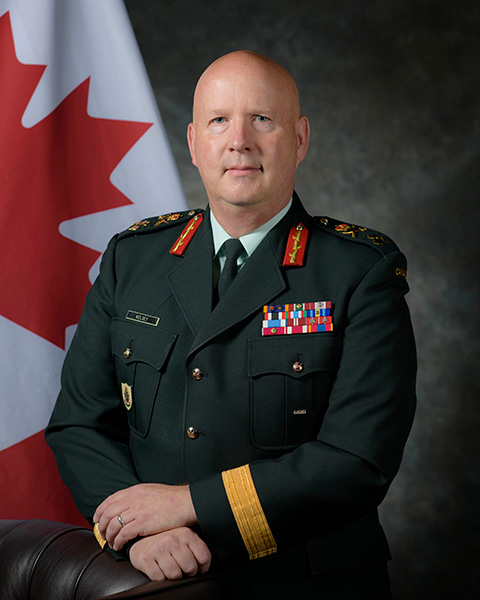
Lieutenant-General S.R. (Steve) Kelsey - Vice Chief of the Defence Staff
Overview
- Enrolled in October 1985 as an Infantry Private, he commissioned into the Regular Force and Royal Canadian Armoured Corps in 1988. He served with average distinction in West Germany, Canada, and Italy but was roughly educated on five deployments of increasing rank in the Balkans, Afghanistan, and Iraq.
- As a Colonel he was assigned varied appointments including Director Army Force Development, Director Joint Readiness (Training and Exercises) and Commander CFB Kingston. As a General Officer since 2016 he served as Chief of Staff Joint Coalition Command, Baghdad, Chief of Staff Army Capability Development, Chief of Force Development, and the NATO Deputy Commander Joint Force Command Naples. Appointment VCDS in 2024, he holds a Master’s degree in Conflict Analysis.
Context
Mandate
Coordinates and when appropriate directs activities necessary to achieve Defence policy and strategic objectives. Commands the VCDS Group of CAF and DND enablers.
- Named appointment within the National Defence Act (NDA).
- Chief of Staff National Defence Headquarters with equal accountability to the DM and CDS for cross-functional CAF - Departmental coordination.
- TBS Senior Designated Official for the Management of Programmes and Projects; leads Defence Services Programme on behalf of CDS and DM.
- Acts as Second-in-Command of the CAF when designated by CDS.
- Commander of 16 organizations (2 or 1-star level /10K) distributed within the NCR, across Canada, the US, and globally.
Key Facts
Personnel: ~10,500
Budget: $447M
Primary Locations:
- National Capital Region (NCR).
- Military Police Units across Canada.
- 1,079 Cadet Corps in ~ 800 communities.
- Defence Diplomacy (Attaches) in 69 countries.
Key Partners
Internal
- DMA, CFO, VCDS (Cerberus)
- Senior Designated Officials: ADM Materiel, ADM Digital, ADM Infrastructure and Environment
- Services (Navy, Army, Air and Space Forces); Global Force Employers (Canadian Joint Force Command & Special Forces); Strategic Staff (SJS, INTCOM)
External
- NATO & NORAD
- Five Eyes Military Coord Group
- Independent Review Panel for Defence Acquisition
- Defence Investment Agency
- Public Services and Procurement Canada
Top Issues
Set Conditions
- Defence investment: meet the NATO target; assure value; demonstrate credible stewardship to Canadians
- Increase the ‘Readiness of the force we have;’ Grow the force to 71,500 Reg F, 30,000 – Res F.
- Continue to improve culture through accountability and example
Implement – Defence Policy and Investments
- Strong, Secure, Engaged, NORAD Modernization, and Our North, Strong and Free, to include project management, initiative synchronization, funding profile oversight and coordination of pan-departmental effort.
- Provision of expert advice on the means by which the Department may contribute to the plan to reach 2% of GDP on defence derived from and considering departmental resource requirements.
Deliver – Ready, Resilient and Relevant Forces
- 14 Key Tasks under three lines of effort : 1) Strengthening the Defence Team; 2) Delivering Operations and Enhancing Readiness; and 3) Modernizing our Forces and Institution.
- Four critical functions to aid in implementing signature initiatives: 1) sets clear priorities; 2) informs allocation of resources; 3) assigns responsibilities to Level 1 organizations; and 4) establishes a framework for performance measurement.
Modernize – Departmental Programme and Project Management
- Interoperability with allies and security partners along three lines of effort: 1) Advancing Joint and Emerging Capabilities; 2) Accelerating the Operationalization of Pan-Domain Command and Control Concept; and 3) Enabling the Operational Sustainment Modernization Strategy.
- Optimize internal processes to better define capability requirements and accelerate early governance (identification and options analysis) to deliver warfighting advantage and alliance commitments.
- Collaboration with stakeholders to ensure the CAF closes capability gaps as efficiently as possible while planning the Defence Team structure needed for the future.
Defence lexicon
Canadian Armed Forces Ranks
Canadian Army
General Officers

General (Gen)

Lieutenant-General (LGen)

Major-General (MGen)

Brigadier-General (BGen)

General Officer Gorget
Senior Officers

Colonel (Col)

Lieutenant-Colonel (LCol)

Major (Maj)

Colonel Gorget
Junior Officers

Captain (Capt)

Lieutenant (Lt)

2nd Lieutenant (2Lt)
Subordinate Officer

Officer Cadet (OCdt)
Warrant Officers and Senior Non-Commissioned Officers

Chief Warrant Officer (CWO)

Master Warrant Officer (MWO)

Warrant Officer (WO)

Sergeant (Sgt)
Junior Non-Commissioned Members

Master Corporal (MCpl)

Corporal (Cpl)

Private (Trained) (Pte (T))

Private (Basic) (Pte (B))
Senior Appointments

Canadian Forces Chief Warrant Officer (CFCWO)

Command Chief Warrant Officer (CWO)
Senior Appointment Chief Warrant Officer (CWO)
Appointments
Drum Major
Pipe Major

Trumpet / Bugle Major
Royal Canadian Air Force
General Officers

General (Gen)

Lieutenant-General (LGen)

Major-General (MGen)

Brigadier-General (BGen)
Senior Officers

Colonel (Col)

Lieutenant-Colonel (LCol)

Major (Maj)
Junior Officers

Captain (Capt)

Lieutenant (Lt)

2nd Lieutenant (2Lt)
Subordinate Officer

Officer Cadet (OCdt)
Warrant Officers and Senior Non-Commissioned Officers

Chief Warrant Officer (CWO)

Master Warrant Officer (MWO)

Warrant Officer (WO)

Sergeant (Sgt)
Junior Non-Commissioned Members

Master Corporal (MCpl)

Corporal (Cpl)

Aviator (Trained) (Avr (T))

Aviator (Basic) (Avr (B))
Senior Appointments

Canadian Forces Chief Warrant Officer (CFCWO)

Command Chief Warrant Officer (CWO)
Senior Appointment Chief Warrant Officer (CWO)
Appointments

Drum Major

Pipe Major

Trumpet / Bugle Major
Royal Canadian Navy
Flag Officers (shoulder boards)
Admiral (Adm)
Vice-Admiral (VAdm)
Rear-Admiral (RAdm)
Commodore (Cmdre)
Flag Officers (sleeve lacing)

Admiral (Adm)

Vice-Admiral (VAdm)

Rear-Admiral (RAdm)

Commodore (Cmdre)
Senior Officers

Captain(N) (Capt(N))

Commander (Cdr)

Lieutenant-Commander (LCdr)
Junior Officers

Lieutenant(N) (Lt(N))

Sub-Lieutenant (SLt)

Acting Sub-Lieutenant (A/SLt)
Subordinate Officer

Naval Cadet (NCdt)
Petty Officers

Chief Petty Officer, 1st Class (CPO 1)

Chief Petty Officer, 2nd Class (CPO 2)

Petty Officer, 1st Class (PO 1)

Petty Officer, 2nd Class (PO 2)
Junior Non-Commissioned Members

Master Seaman (MS)

Leading Seaman (LS)

Able Seaman (AB)

Ordinary Seaman (OS)
Senior Appointments

Canadian Forces Chief Warrant Officer (CFCWO)

Command Chief Petty Officer, 1st Class (CPO 1)
Senior Appointment Chief Petty Officer, 1st Class (CPO 1)
Appointments
Drum Major
Pipe Major

Trumpet / Bugle Major
Common Defence Team Acronyms
A
- ADM (DRDC)
- Assistant Deputy Minister (Defence Research & Development Canada)
- ADM (DS)
- Assistant Deputy Minister (Digital Services)
- ADM (Fin)
- Assistant Deputy Minister (Finance)
- ADM (HR-Civ)
- Assistant Deputy Minister (Human Resources – Civilian)
- ADM (IE)
- Assistant Deputy Minister (Infrastructure & Environment)
- ADM (Mat)
- Assistant Deputy Minister (Materiel)
- ADM (PA)
- Assistant Deputy Minister (Public Affairs)
- ADM (Pol)
- Assistant Deputy Minister (Policy)
- ADM (RS)
- Assistant Deputy Minister (Review Services)
- ASEAN
- Association of Southeast Asian Nations
- AOR
- Area of Responsibility
- AR-Sec
- Anti-Racism Secretariat
- ATIP
- Access to Information and Privacy
- AWACS
- Airborne Warning and Control System
B
- BLUF
- Bottom Line Up Front
- BN
- Briefing Note
C
- C2
- Command and Control
- C4ISR
- Command, Control, Communications, Computers, Intelligence, Surveillance and Reconnaissance
- C Air Force
- Chief of the Air Force
- C Army
- Chief of the Army Staff
- CA
- Canadian Army
- CAF
- Canadian Armed Forces
- CANEX
- Canadian Forces Exchange System
- CANFORGEN
- Canadian Forces General Message
- CANSOFCOM
- Canadian Special Operations Forces Command
- CDA
- Canadian Defence Attaché
- CDA
- Canadian Defence Academy
- CDLS (W)
- Canadian Defence Liaison Staff (Washington D.C.)
- CDS
- Chief of the Defence Staff
- CFB
- Canadian Forces Base
- CFD
- Chief of Force Development
- CFINTCOM
- Canadian Forces Intelligence Command
- CFGB
- Canadian Forces Grievance Board
- CFHA
- Canadian Forces Housing Agency
- CFLA
- Canadian Forces Legal Advisor
- CFLS
- Canadian Forces Language School
- CIMIC
- Civil-Military Cooperation
- CJOC
- Canadian Joint Operations Command
- CM
- Cruise Missile
- CMJ
- Chief Military Judge
- CMP
- Commander Military Personnel
- CO
- Commanding Officer
- COB
- Close of business
- COA
- Course of Action
- Corp Sec
- Corporate Secretary
- CPCC
- Chief Professional Conduct & Culture
- CR
- Canadian Rangers
- CSE
- Communication Security Establishment
- CSIS
- Canadian Security Intelligence Service
D
- DAOD
- Defence Administrative Orders and Directives
- DART
- Disaster Assistance Response Team
- DCB
- Defence Capacity Building
- DEP
- Defence Ethics Program
- DFL
- Directorate Foreign Liaison
- DG
- Director General
- DIB
- Defence Industrial Base
- DIN
- Defence Information Network
- DM
- Deputy Minister
- DMA
- Associate Deputy Minister
- DMC
- Defence Management Committee
- DMOC
- Defence Management Oversight Committee
- DND
- Department of National Defence
- DOS
- Director of Staff (Strategic Joint Staff)
- DRDC
- Defence Research and Development Canada
- DRMIS
- Defence Resource Management Information System
- DTO
- Digital Transformation Office
- DWAN
- Defence-wide Area Network
E
- ERP
- Emergency Response Plan
- ETA
- Estimated Time of Arrival
- Evac
- Evacuate / Evacuation
- EW
- Electronic Warfare / Early Warning
F
- FE
- Force Employment
- FG
- Force Generation
- FMS
- Foreign Military Sales (United States)
- FO
- Flag-Officer
- FOB
- Forward Operating Base
- FVEY
- Five Eyes
- FY
- Fiscal Year
- FYA
- For your Action
- FYI
- For your Information
- FYSA
- For your Situational Awareness
G
- GC
- Government of Canada
- GEOINT
- Geospatial Intelligence
- GOFO
- General Officer
- GPS
- Global Positioning System
H
- HADR
- Humanitarian Assistance and Disaster Response
- HAZMAT
- Hazardous Material
- HLVW
- Heavy Logistic Vehicle Wheeled
- HMCS
- His Majesty's Canadian Ship
- HMV
- High Mobility Vehicle
- HN
- Host Nation
- HQ
- Headquarters
I
- ICBM
- Intercontinental Ballistic Missile
- IMS
- International Military Staff (NATO)
- INTREP
- Intelligence Report
- INTSUM
- Intelligence Summary
- IOR
- Immediate Operational Requirement
- IP
- Intellectual Property
- IRBM
- Intermediate-Range Ballistic Missile
J
- JAG
- Judge Advocate General
- JC2IS
- Joint Command and Control Information System
- JCR
- Junior Canadian Rangers
- JSS
- Joint Support Ship
- JTF
- Joint Task Force
L
- LAV
- Light Armoured Vehicle
- LO
- Liaison Officer
- LOE
- Line of Effort
M
- MAD
- Mutual Assured Destruction
- MANPAD
- Man-Portable Air Defence System
- MBT
- Main Battle Tank
- MC
- Memorandum to Cabinet
- MGERC
- Military Grievances External Review Committee
- MILPERSCOM
- Military Personnel Command
- MILREP
- Military Representative
- MINA
- Minister of International Affairs
- MINDS
- Mobilizing Insights in Defence and Security
- MND
- Minister of National Defence
- MNDO
- Minister of National Defence Office
- MOU
- Memorandum of Understanding
- MP
- Military Police
- MPCC
- Military Police Complaints Commission
- MTCP
- Military Training and Cooperation Program
N
- NAC
- North Atlantic Council (NATO)
- NATO
- North Atlantic Treaty Organization
- NCO
- Non-Commissioned Officer
- NCR
- National Capital Region
- NDA
- National Defence Act
- NDDN
- Standing Committee on National Defence
- NDHQ
- National Defence Headquarters
- NLT
- No Later Than
- NORAD
- North American Aerospace Defense Command
- NSIROCS
- National Security and Intelligence Review and Oversight Coordination Secretariat
O
- O&M
- Operations and Maintenance
- OE
- Operating Environment
- OiC
- Order in Council
- Op
- Operation
- OPI
- Office of Primary Interest
- OPQ
- Order Paper Question (Parliament)
- OSINT
- Open-source intelligence
P
- P Res
- Primary Reserve
- PA
- Public Affairs
- PBO
- Parliamentary Budget Officer
- PRMNY
- Permanent Mission of Canada to the United Nations (New York)
- PSO
- Peace Support Operation
Q
- QRF
- Quick Reaction Force
- QP
- Question Period
R
- R&D
- Research and Development
- RCAF
- Royal Canadian Air Force
- RD/RoD
- Record of Decision
- RCD
- River-class Destroyer
- RCMP
- Royal Canadian Mounted Police
- RCN
- Royal Canadian Navy
- Res F
- Reserve Force
- RFI
- Request for Information
- ROE
- Rules of Engagement
S
- SA
- Situational Awareness
- SAR
- Search and Rescue
- SIGINT
- Signals Intelligence
- SITREP
- SituationReport
- SJS
- Strategic Joint Staff
- SMSRC
- Sexual Misconduct Support and Resource Centre
- SOF
- Special Operations Forces
- Supp Res
- Supplementary Reserve
- Surg Gen
- Surgeon General
T
- TBS
- Treasury Board Secretariat
- TOR
- Terms of Reference
U
- UAS
- Uncrewed Aerial System
- UN
- United Nations
V
- VCDS
- Vice Chief of the Defence Staff
W
- WoG
- Whole of Government
- WMD
- Weapon of Mass Destruction
- WPS
- Women Peace and Security